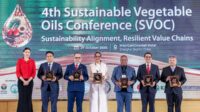


RSPO Director of Market Transformation Inke van der Sluijs calls on members to increase purchases of smallholder-generated RSPO Credits, stressing that fair prices and stronger market demand are essential to improving farmers’ livelihoods.
PALMOILMAGAZINE, JAKARTA – The Roundtable on Sustainable Palm Oil (RSPO) is calling on its members, particularly palm oil buyers, to provide stronger market support for certified smallholders by purchasing RSPO Credits generated through their sustainable palm oil production.
Dr. Inke van der Sluijs, RSPO Director of Market Transformation, said the success of sustainable palm oil production among smallholders depends not only on their commitment to meeting sustainability standards but also on tangible support from buyers and the global market.
Also Read: RSPO RT2026: Solidaridad and Henkel Win Excellence Award for Reaching 39,000 Palm Oil Smallholders
She emphasized that purchasing RSPO Credits generated by certified smallholders is one of the most direct ways for RSPO members to support their efforts and strengthen the economic viability of sustainable plantation management.
“Practical support is still needed from RSPO member buyers through the purchase of RSPO Credits generated by sustainable palm oil smallholders,” Inke said.
According to Inke, some buyers remain hesitant because smallholder-generated credits have yet to receive broad recognition across global markets. However, as a voluntary membership-based organization, RSPO provides an opportunity for its members to demonstrate collective commitment by purchasing credits generated by certified smallholders.
She stressed that the efforts made by smallholders to manage their plantations in accordance with RSPO Principles and Criteria deserve tangible recognition from multiple stakeholders. Purchasing their RSPO Credits, she said, is one way to translate sustainability commitments into meaningful economic benefits for farmers.
Smallholder-generated credits can be transparently tracked and purchased through RSPO’s official Certification, Trade and Traceability System (CTTS). RSPO members, particularly palm oil buyers, can also access smallholder credits through the PRISMA application, which connects buyers directly with sustainable palm oil smallholders.
“Purchasing RSPO Credits generated by smallholders is important because it provides tangible support for sustainable palm oil farmers,” Inke emphasized.
Also Read: RSPO, CPOPC and Kadin Strengthen Sustainable Palm Oil Collaboration
While the level of incentives depends on individual business agreements, Inke encouraged buyers to offer fair prices for smallholder-generated RSPO Credits to help improve farmers’ livelihoods.
She cautioned buyers against putting excessive pressure on credit prices in an effort to secure them at the lowest possible cost. Instead, she urged them to recognize the value of smallholders’ sustainability efforts through fair purchasing arrangements that deliver meaningful economic benefits.
The long-term viability of sustainable palm oil plantation management, she added, depends significantly on continued market support through the purchase of smallholder-generated RSPO Credits.
Also Read: Indonesia’s DSI Says Single Export Gateway Will Strengthen Palm Oil Trade Ahead of 2027 Launch
“We continue to encourage all RSPO members to get involved and help improve the livelihoods of palm oil smallholders,” she said.
On the sidelines of the RSPO Roundtable Conference 2026 (RT2026), Inke also held discussions with fellow members to encourage greater uptake of Certified Sustainable Palm Oil (CSPO) in global markets, including Indonesia.
She expressed hope that more RSPO members would actively participate in strengthening market demand for sustainable palm oil while ensuring that smallholders receive greater economic benefits from their sustainability efforts.
“We hope all members will be willing to get involved and support sustainable palm oil smallholders in achieving better livelihoods in the future,” she concluded. (P1)