PALMOILMAGAZINE, JAKARTA – Efforts to help Indonesian independent palm oil smallholders adopt sustainable plantation practices cannot rely solely on promoting the importance of certification. Access to financing and stronger farmer institutions are equally critical to enable growers to meet the requirements needed for certification.
Sutiyana, Chairman of KUD Tani Subur and an independent palm oil smallholder himself, said the biggest challenge facing smallholders today is not a lack of awareness about certification benefits, but limited access to funding.
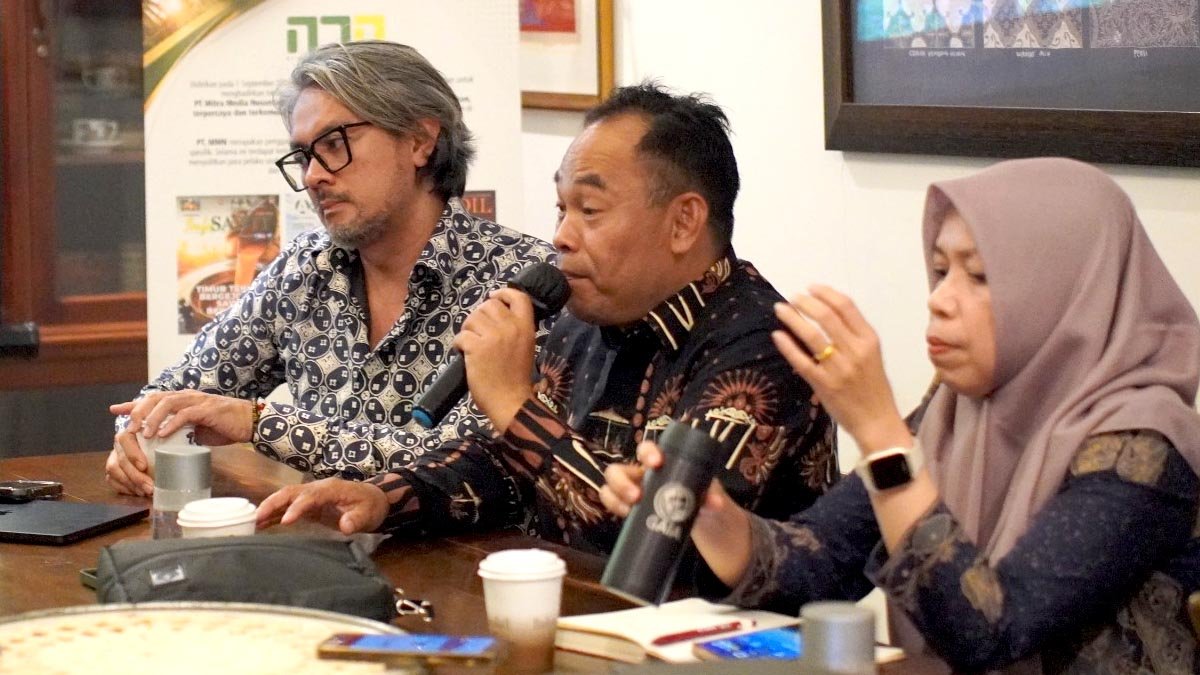
“When we talk about certification, farmers ask a simple question: who will pay for it? Many farmers actually want to improve their plantations, but they are constrained by costs,” he said during an RSPO Media Brunch attended by Palmoilmagazine.com on June 12, 2026.
Also Read: Riau Independent FFB Prices Jump Over IDR 400/kg in Strong Weekly Rebound
According to Sutiyana, many smallholder plantations still suffer from low productivity because of poor-quality planting materials and suboptimal cultivation practices. At the same time, the cost of replanting and improving plantation management remains significant for independent growers.
He noted that many farmers produce only limited volumes of fresh fruit bunches (FFB) because their trees are old or were not planted with certified superior seeds. With better agricultural practices, however, plantation productivity could increase substantially.
Sutiyana believes that farmer groups and cooperatives offer one of the most effective solutions to these challenges. Strong institutions can help farmers support one another, receive technical assistance, and gain stronger bargaining power when accessing government programs and financing.
Also Read: KPBN CPO Prices Drop Below IDR 15,000/kg as Global Market Sentiment Weakens
“Why not work together in groups? Through cooperatives, many things can be achieved collectively. The most important thing is building trust within the community,” he said.
The experience of KUD Tani Subur shows that continuous mentoring can gradually change farmers’ mindsets. Instead of focusing only on short-term harvests, many farmers are beginning to understand the importance of land legality, certified seeds, and plantation management aligned with sustainability principles.
Nevertheless, Sutiyana acknowledged that administrative requirements for obtaining financing remain a major hurdle. He called for broader collaboration to ensure farmers are not left to navigate the transition toward sustainable palm oil production on their own.
Also Read: FORTASBI Empowers Certified Smallholders as KUD Tani Subur Showcases RSPO Success Story
“There is still a lot of homework to do. This cannot be handled by farmers alone. Government, supporting institutions, the private sector, and all stakeholders concerned with sustainable palm oil must work together,” he said.
Beyond financing, farmer regeneration is also becoming a concern. Sutiyana observed that younger generations remain relatively reluctant to enter the palm oil sector, particularly when plantation businesses do not offer clear prospects for decent and stable income.
For that reason, he hopes future smallholder empowerment programs will go beyond certification and help create a business ecosystem that genuinely improves farmers’ livelihoods.
Also Read: Final Call: Registration for Indonesia’s 2026 Palm Oil Scholarship Closes on June 20
In his view, certification remains important as an entry point toward better plantation governance. However, successful implementation depends largely on whether farmers receive adequate support to meet the required standards.
“Indonesian farmers are capable of progressing. What they need is guidance, trust, and access to financing so they can move to the next level,” he concluded. (P2)