PALMOILMAGAZINE, BANDUNG – Indonesia is intensifying efforts to strengthen its position in the global palm oil market by enhancing diplomatic coordination, negotiation capacity, and science-based advocacy to address growing international trade and sustainability challenges.
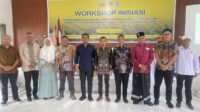
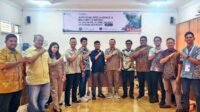
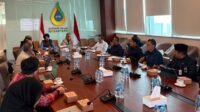
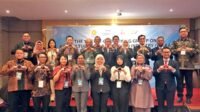
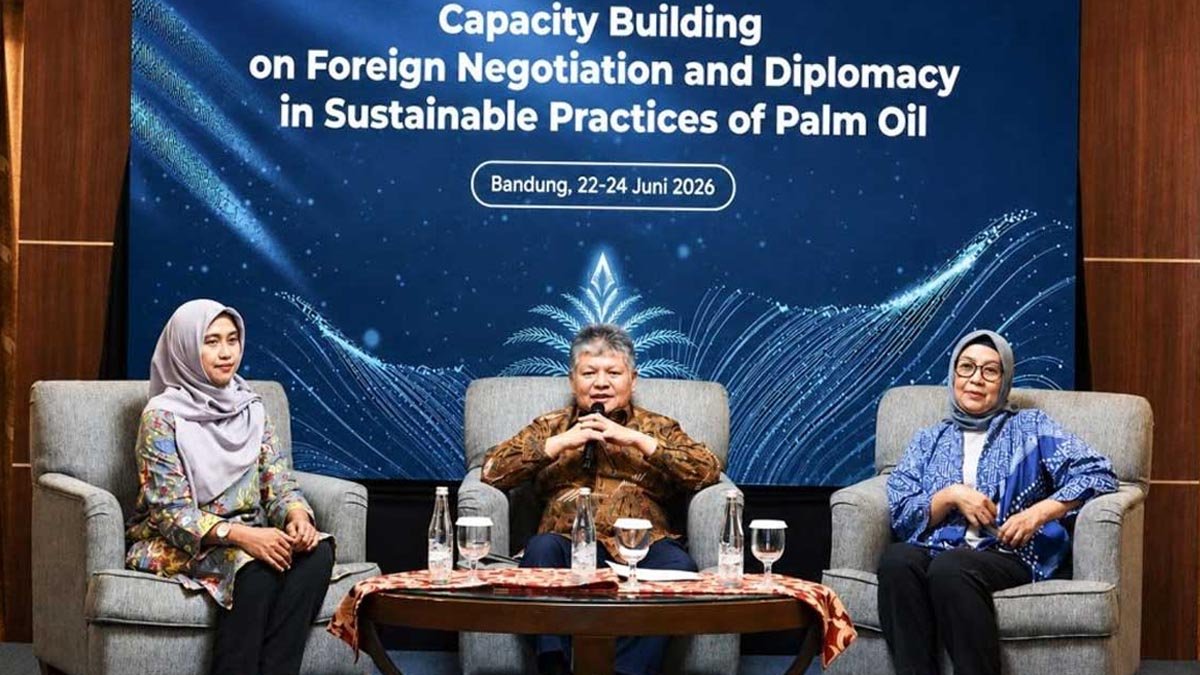
The initiative was highlighted during the second day of the Hybrid Training on International Negotiation and Diplomacy for Sustainable Palm Oil Practices, organized by the Center for World Trade Studies or Pusat Studi Perdagangan Dunia (PSPD) at Universitas Gadjah Mada (UGM) in collaboration with the FAST Project UNDP Indonesia and the Coordinating Ministry for Economic Affairs. The event brought together representatives from seven key ministries and government agencies to align Indonesia’s diplomatic strategy on palm oil.
According to information released by PSPD UGM, Dida Gardera, Senior Advisor for Connectivity and Services Development at the Coordinating Ministry for Economic Affairs, emphasized that palm oil remains one of Indonesia’s most important economic sectors, supporting national growth while providing livelihoods for millions of smallholder farmers.
He noted, however, that competition in the global vegetable oil market is no longer driven solely by prices and productivity. Environmental and sustainability issues have increasingly become instruments of trade barriers, requiring Indonesia to strengthen both its domestic governance and international engagement.
To address these challenges, the government continues to reform the palm oil sector through new policy measures, including the implementation of a single-window export system designed to improve transparency, streamline export procedures, and reduce transfer pricing practices that could undermine state revenues.
Also Read: When Europe Burns: A Reflection on Wildfires and Scientific Consistency
Science-Based Diplomacy Takes Center Stage
An international perspective was provided by Abi Ismarrahman of the UK Foreign, Commonwealth & Development Office (FCDO), who observed that palm oil has evolved into a geopolitical issue rather than merely a traded commodity.
He stressed that Indonesia’s international outreach should rely on evidence-based diplomacy, supported by scientific data presented in ways that are easily understood by policymakers and the global public.
The message was echoed by Musdalifah Mahmud, Deputy Secretary General of the Council of Palm Oil Producing Countries (CPOPC), who underscored the importance of stronger cooperation among palm oil-producing nations to counter what many producers view as discriminatory trade policies.
She highlighted the strengthening of the Indonesian Sustainable Palm Oil (ISPO) certification system—which now also covers downstream products—as a key asset in responding to increasingly stringent international regulations, including those introduced by the European Union.
Also Read: Airlangga: Research and Downstream Innovation Will Shape the Future of Indonesia’s Palm Oil Industry
Expanding Markets Beyond Traditional Destinations
Meanwhile, Miftah Farid, Director for Primary Product Export Development at the Ministry of Trade, outlined Indonesia’s strategy to expand international market access.
He explained that integrating trade data, improving transparency, and strengthening export promotion institutions are essential to transforming Indonesia from a price taker into a price maker in the global palm oil trade.
In addition to maintaining traditional export markets, Indonesia is actively exploring new opportunities in Africa and the Middle East as part of a broader market diversification strategy to reduce risks stemming from geopolitical uncertainty and supply chain disruptions.
Also Read: GAPKI Strengthens Indonesia–Russia Vegetable Oil Cooperation Through Strategic Agreement
Strengthening Indonesia’s Position Through Research
Participants also reviewed Indonesia’s experience in the WTO dispute DS593, with experts emphasizing that future diplomatic success will depend heavily on robust scientific evidence.
Dr. Rosediana Suharto, Dr. Gede Wibawa, and Dr. Petrus Gunarso argued that stronger research is needed to challenge allegations against Indonesia’s palm oil industry.
Rosediana called for deeper analysis of how sustainability issues are used by competing vegetable oil producers as trade protection tools.
Also Read: BPDP Backs Value-Added Palm Oil, Cocoa, and Coconut SMEs to Boost Global Competitiveness
Gede Wibawa emphasized the importance of challenging the Indirect Land Use Change (ILUC) methodology under the European Union’s Renewable Energy Directive II (RED II) by demonstrating Indonesia’s superior land-use efficiency compared with other vegetable oil crops.
Meanwhile, Petrus Gunarso highlighted the value of developing a comprehensive land-cover database covering the period from 1985 to 2025, which would strengthen Indonesia’s credibility in international negotiations.
The experts agreed that Indonesia should establish a permanent team of specialists backed by continuous academic research and a consistent narrative on the concept of “like products” to better defend the interests of the national palm oil sector and millions of smallholders.
Also Read: Can Indonesia’s Oil Palm Residues Power the Future of Aviation?
Collaboration Across Institutions
At the same forum, Fadil Hasan, a member of Indonesia’s National Energy Council and Chairman of International Affairs at the Indonesian Palm Oil Association (GAPKI), pointed to the resilience of Indonesia’s palm oil industry, supported by a balanced plantation ownership structure between companies and independent smallholders.
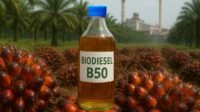
He added that continued downstream industrial development and the expansion of the domestic biodiesel program will remain critical in maintaining industry stability amid volatile global markets.
Also Read: GAPKI: Indonesia’s Palm Oil Output Slips in May 2026, but CPO Stocks Rise to 3.04 Million Tons
The training concluded with participants agreeing on the need to establish a permanent cross-ministerial consortium, deepen collaboration with academic institutions, and create a dedicated expert team capable of providing scientific support for Indonesia’s palm oil diplomacy.
The initiative reflects Indonesia’s broader commitment to strengthening its international position through science-based diplomacy, coordinated national policies, and enhanced negotiation capabilities to safeguard the long-term competitiveness of its palm oil industry. (P2)