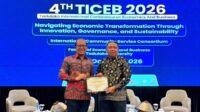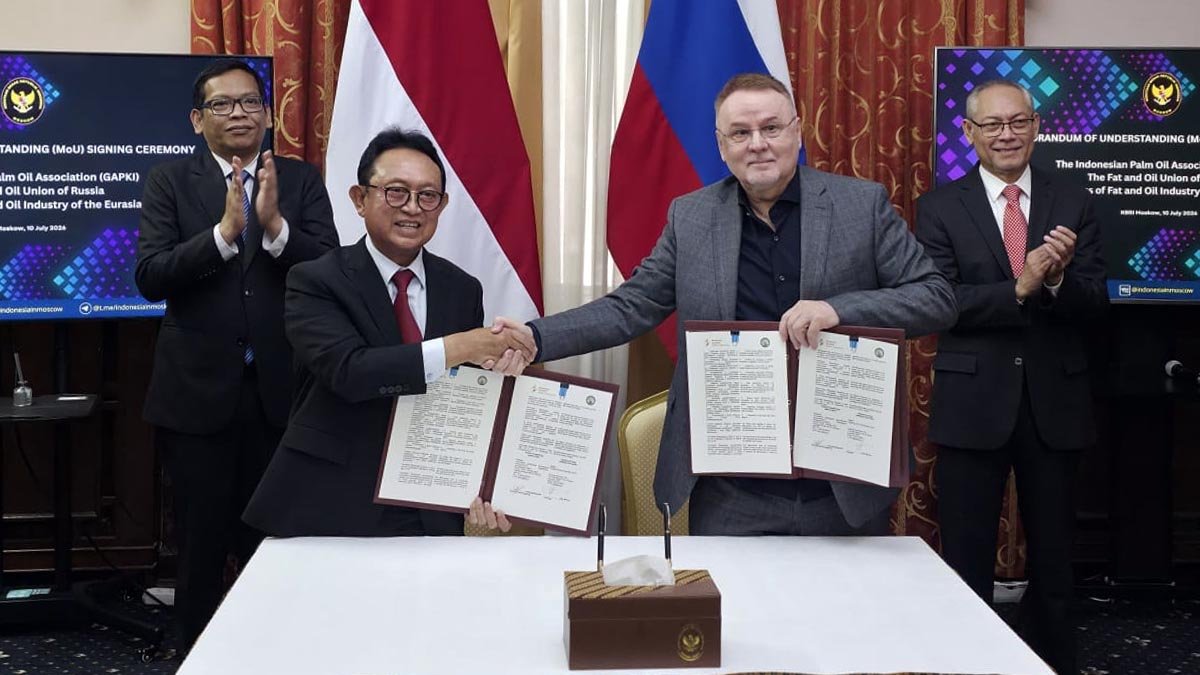
PALMOILMAGAZINE, MOSCOW – The Indonesian Palm Oil Association (GAPKI) has signed a Memorandum of Understanding (MoU) with the Fat and Oil Union of Russia and the Association of Enterprises of the Fat and Oil Industry of the Eurasian Economic Union (EAEU), marking a strategic milestone in expanding long-term cooperation between Indonesia’s palm oil sector and Russia’s vegetable oil industry.
According to GAPKI Chairman Eddy Martono, the agreement is designed to deepen institutional ties while creating broader opportunities for trade, investment, innovation, and market expansion.
“This MoU represents a strategic step toward strengthening a long-term partnership between the vegetable oil industries of Indonesia and Russia. We believe closer collaboration will unlock greater opportunities for trade, investment, and innovation while expanding market access and enhancing the competitiveness of both countries’ vegetable oil industries,” Eddy said in an official statement received by Palmoilmagazine.com on Monday (July 13).
Also Read: GAPKI: Existing Export Controls Are Sufficient, Focus Should Be on Enforcement
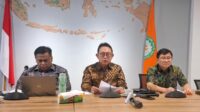
The signing ceremony was witnessed by Indonesian Ambassador to the Russian Federation and the Republic of Belarus Jose Tavares, the Trade Attaché of the Indonesian Embassy in Moscow, senior embassy officials, and representatives of Indonesia’s Palm Oil Plantation Fund Management Agency (BPDP).
Under the agreement, the organizations will promote mutually beneficial trade between Indonesia, Russia, and the wider EAEU through information exchange, joint promotional activities, sustainable business networking, and expanded market access for palm oil and downstream products.
The partnership builds on the growing economic relationship between Indonesia and Eurasian countries. On December 21, 2025, Indonesia and the five EAEU member states—Russia, Kazakhstan, Belarus, Armenia, and Kyrgyzstan—signed a Free Trade Agreement (FTA) in St. Petersburg. The agreement is expected to eliminate or reduce tariffs on more than 90% of Indonesian product categories, creating significant new export opportunities in a regional market of around 180 million consumers.
Also Read: GAPKI Ensures Palm Oil Remains Strategic Amid a Changing World
Against this backdrop, the MoU serves as a practical business-level initiative to capitalize on the FTA by strengthening trade, investment, market development, and information sharing.
The cooperation framework covers a broad range of strategic initiatives, including industry dialogue, knowledge exchange, sharing of market intelligence, establishment of joint working groups on strategic issues, investment promotion, technology and innovation development, policy advocacy, and expansion of bilateral business networks.
Eddy said the agreement lays an important foundation for stronger institutional relations and wider collaboration between industry players in both countries.
Also Read: Indonesia’s Palm Oil Stocks Edge Lower as Biodiesel Consumption Accelerates
“Through this MoU, GAPKI and the Fat and Oil Union of Russia are committed to building closer communication, strengthening information exchange, and encouraging mutually beneficial initiatives for both Indonesia and Russia. We hope this partnership will boost trade, investment, and innovation while supporting sustainable industry development,” he said.
Russia Remains a Strategic Export Market
Russia continues to be an important destination for Indonesian palm oil exports, although shipment volumes remain below key markets such as China, India, and Pakistan.
According to GAPKI, exports to Russia are dominated by refined palm oil (RBD Palm Oil), refined palm kernel oil (RBD PKO), and oleochemicals.
Also Read: AKPSI 2026: Gorontalo Calls for Stronger Palm Oil Partnerships to Boost Smallholder Prosperity
In 2025, Indonesia exported 689,000 tons of refined palm oil worth US$726 million, 81,000 tons of refined PKO valued at US$159 million, and 23,000 tons of oleochemicals worth US$34 million.
Total palm oil exports to Russia reached 792,000 tons valued at US$919 million in 2025, up from 680,000 tons worth US$681 million in 2024. Exports during January–April 2026 totaled 189,000 tons with a value of US$237 million.
Indonesia also shipped downstream products such as hydrogenated palm oil, shortening, vegetable ghee, and emulsifiers, although these accounted for a relatively modest 31,000 tons valued at US$57 million in 2025. Overall, exports remain heavily concentrated in refined palm oil products, particularly RBD Palm Oil and RBD Palm Stearin.
Also Read: MPOB: Palm Oil Stocks Rise 4.78% as Production Outpaces Export Growth
As global trade barriers and sustainability requirements—including the European Union Deforestation Regulation (EUDR)—continue to reshape export markets, Russia is increasingly viewed as a strategic alternative that can help diversify Indonesia’s palm oil exports.
GAPKI Highlights Sustainability at INNOPROM 2026
The MoU signing formed part of GAPKI’s official mission to Russia from July 6–10, 2026.
Earlier, the association participated in INNOPROM 2026 in Yekaterinburg, Russia’s largest international industrial exhibition, bringing together governments, investors, businesses, and industry organizations from around the world.
Speaking at the forum “Palm Oil and the Future of Sustainable Energy: Balancing Climate Goals, Energy Security and Economic Development” on July 8, GAPKI Head of International Affairs Fadhil Hasan presented “Sustainable Palm Oil: Strengthening Global Energy Security and Industrial Competitiveness.”
He emphasized palm oil’s strategic role in supporting the global energy transition while strengthening industrial competitiveness and energy security.
Indonesia’s combined crude palm oil (CPO) and palm kernel oil (PKO) production reached 56.6 million tons in 2025, up 7.2% from 52.76 million tons in 2024. Export volumes increased 9.5% year-on-year from 29.5 million tons to 32.3 million tons, while export earnings climbed from approximately US$27.8 billion to US$35.9 billion, reflecting stronger global demand and Indonesia’s competitive position in international markets.
Also Read: Mitigating impacts of ideological shift from a market economy to state capitalism
Fadhil also noted that the nationwide implementation of the B50 biodiesel mandate beginning in July 2026 is expected to increase domestic consumption while reinforcing the palm oil sector’s contribution to Indonesia’s energy security.
He highlighted Indonesia’s continued efforts to strengthen sustainability governance through the expansion of the Indonesian Sustainable Palm Oil (ISPO) certification system to include downstream industries and bioenergy, supported by enhanced traceability, transparency, and continuous improvement.
According to the Ministry of Agriculture’s third-quarter 2025 ISPO certification report, 1,169 companies and business entities held valid ISPO certificates as of October 2025, including 80 state-owned plantation companies, 931 private plantation companies, and 97 smallholder farmer groups.
Also Read: Indonesia Targets Higher Palm Oil Productivity and Downstream Growth in 2026
GAPKI expects that the combination of business engagement at INNOPROM and the MoU signed in Moscow will create fresh momentum for Indonesia–Russia economic cooperation in the vegetable oil sector, while encouraging greater trade, investment, technological collaboration, and the development of a more efficient, resilient, and sustainable vegetable oil supply chain. (P3)