PALMOILMAGAZINE, PONTIANAK – The Indonesian Palm Oil Association (GAPKI) West Kalimantan Branch and BPJS Employment’s Supervisory Board have reaffirmed their commitment to strengthening labor protection across the palm oil plantation sector, highlighting the importance of worker welfare in supporting the long-term sustainability of Indonesia’s palm oil industry.
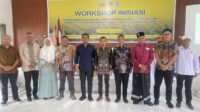
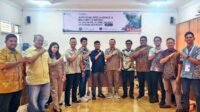
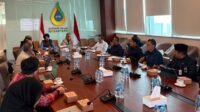
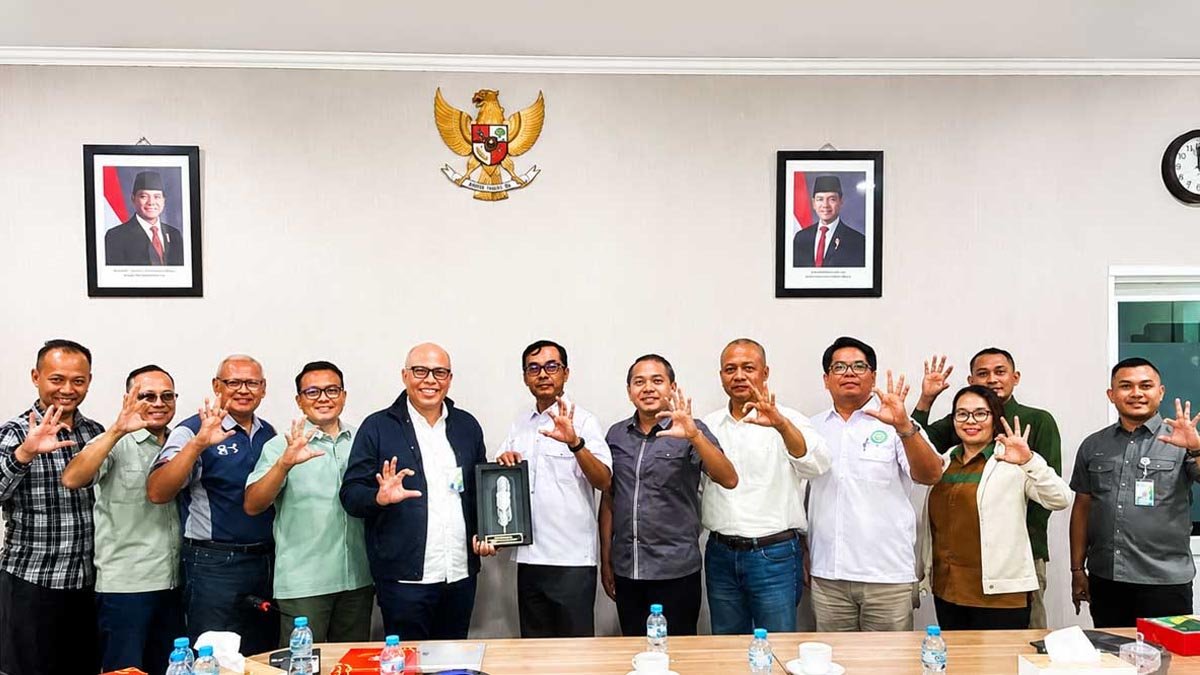
The commitment was underscored during a meeting held at the BPJS Employment West Kalimantan Office, where both parties discussed strategies to expand social security coverage and improve labor protection mechanisms for workers throughout the palm oil value chain.
Aris Supratman, Chairman of GAPKI West Kalimantan, emphasized that the success of the palm oil industry should not be measured solely by production performance, but also by the industry’s ability to ensure employee welfare and maintain harmonious industrial relations.
Also Read: GAPKI Ensures Palm Oil Remains Strategic Amid a Changing World
“Sustainable palm oil development must be built on a balance between productivity and worker protection. Ensuring labor welfare is no longer just a corporate obligation—it has become a shared necessity for safeguarding the future of the industry,” Aris said, as quoted by Palmoilmagazine.com from Antara.
According to Aris, most GAPKI member companies in West Kalimantan have already enrolled their employees in BPJS Employment programs. However, several challenges remain, particularly the high turnover rate among workers and the dynamic nature of short-term contract employment in plantation operations.
These issues, he noted, have become a key focus of discussions with BPJS Employment as both parties seek more practical and effective protection schemes that can be implemented across plantation companies.
Meanwhile, Sumarjono Saragih, a member of the BPJS Employment Supervisory Board, highlighted the significant role of the palm oil sector in Indonesia’s employment social security system. He revealed that more than 70% of BPJS Employment participants are connected to the plantation sector.
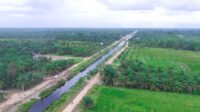
“The palm oil industry has unique characteristics, with many operations located in vast and remote areas. This requires a tailored approach to ensure social protection programs effectively reach all workers,” Sumarjono explained.
He added that strengthening Occupational Safety and Health (OSH) implementation remains a critical priority for improving worker protection standards in the palm oil sector. Effective OSH practices are expected to provide safer and healthier working environments while reducing workplace accidents and broader socioeconomic risks.
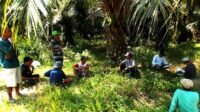
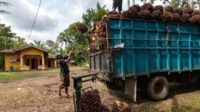
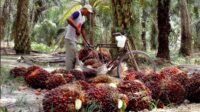
Beyond company employees, BPJS Employment is also encouraging broader protection coverage for informal workers linked to the palm oil supply chain. These include independent smallholders, fresh fruit bunch (FFB) transport operators, and loading and unloading workers, many of whom have yet to be fully integrated into the national social security system.
“We want to support the development of a sustainable palm oil industry that Indonesia can be proud of. West Kalimantan has strong potential to become a model region for expanding worker protection, including for informal workers and their families,” Sumarjono said.
At the same event, Suhuri, Head of BPJS Employment Pontianak, stressed that the palm oil plantation sector plays a strategic role in generating employment opportunities and driving regional economic growth. As such, collaboration with GAPKI is essential to ensure that all workers receive adequate social protection.
Also Read: Indonesia’s palm oil export reform risks leaving sustainability outside the gate
“The palm oil plantation industry is one of Indonesia’s largest employers. Through stronger collaboration with GAPKI, we hope to expand social security coverage, improve worker welfare, and contribute to the long-term sustainability of the palm oil industry, particularly in West Kalimantan,” Suhuri stated.
Both organizations concluded the meeting by agreeing to strengthen communication and coordination, increase awareness of employment social security programs, and encourage greater participation among plantation companies in building a broader, more inclusive, and sustainable worker protection framework across the palm oil sector. (P2)