PALMOILMAGAZINE, EAST KALIMANTAN – Every year on 12 July, Indonesia commemorates National Cooperatives Day, marking the first Indonesian Cooperative Congress held in Tasikmalaya in 1947. The congress affirmed cooperatives as a cornerstone of the newly independent nation’s economic development, positioning them not merely as another form of business entity but as the institutional foundation of Indonesia’s vision of economic democracy.
Nearly eight decades later, however, it is worth asking whether that vision has truly been realized. Have cooperatives become instruments through which ordinary citizens gain greater control over their economic lives, or have they increasingly been reduced to legal entities created to fulfill government programmes and administrative targets?
The question has become particularly relevant as the government rolls out the Merah Putih Village/Subdistrict Cooperative (Koperasi Desa/Kelurahan Merah Putih) initiative on a nationwide scale. The programme provides newly established cooperatives with institutional support, financing, retail outlets, warehouses, and other facilities backed by substantial public resources.
Meanwhile, cooperatives that have spent years building active memberships, developing markets, employing local workers, and creating viable businesses often receive little comparable assistance. They are expected to finance their own institutional development while simultaneously meeting increasingly demanding regulatory and sustainability requirements.
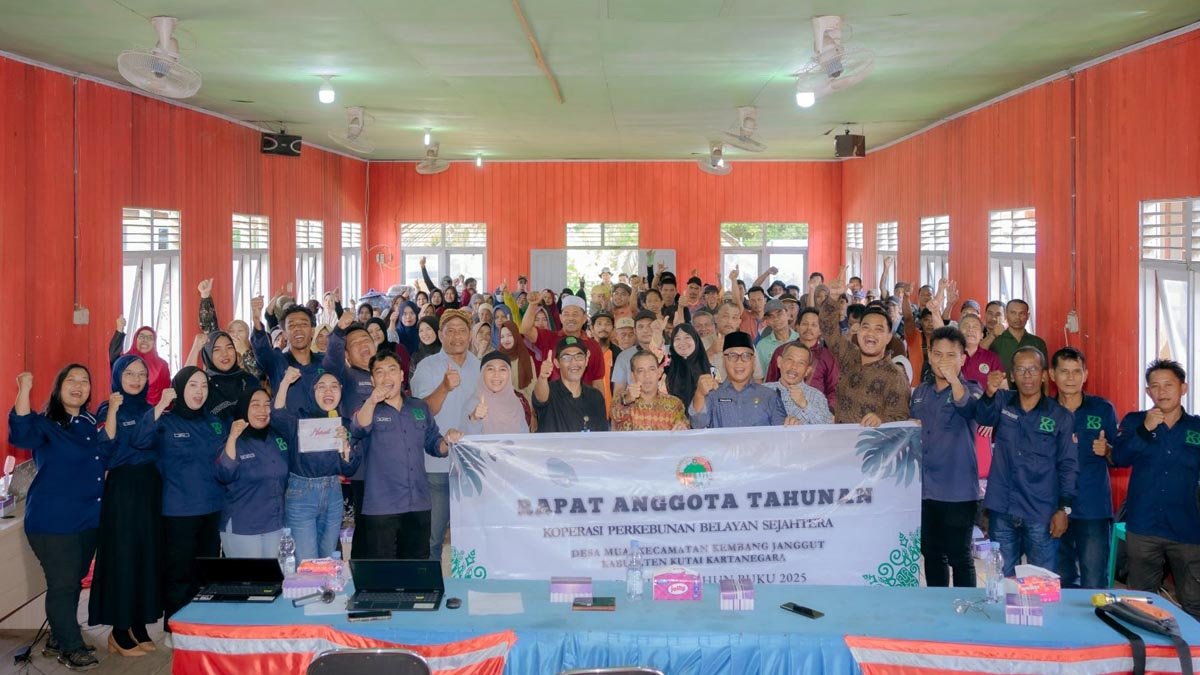
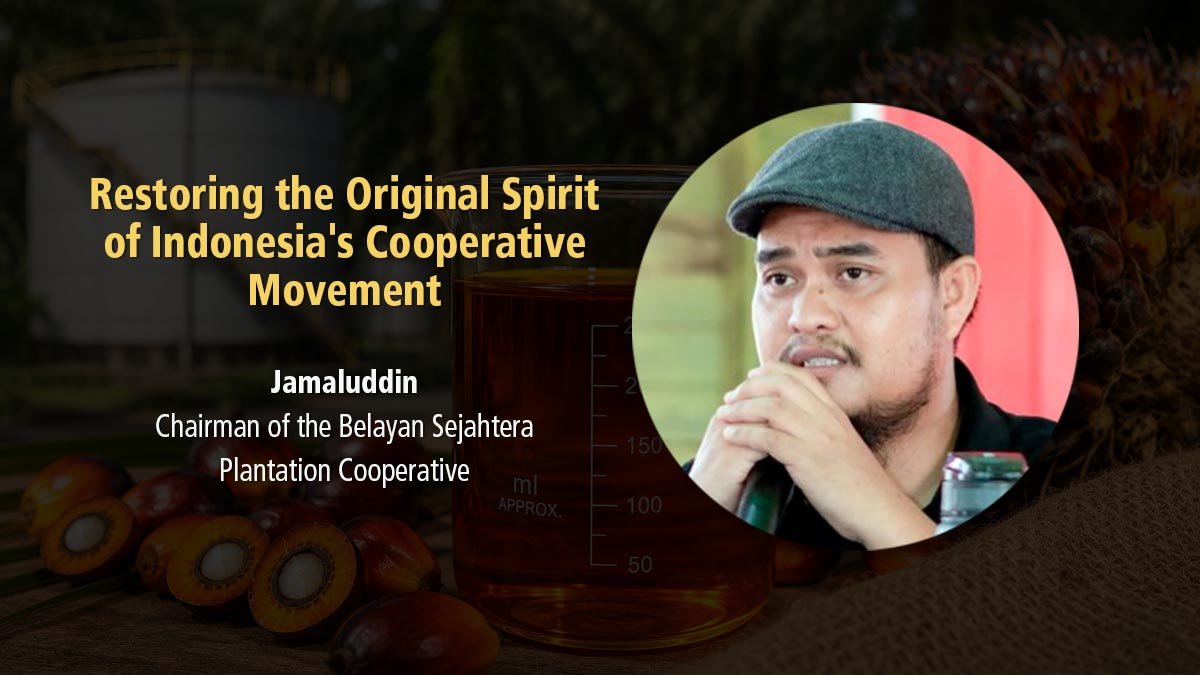
As Chairman of the Belayan Sejahtera Plantation Cooperative, I do not observe this issue as an academic or outside commentator. Our cooperative has been built through years of collective effort. We have financed certification independently, strengthened plantation governance, expanded business units according to members’ needs, and navigated increasingly unequal relationships with corporate partners whose notion of partnership has often drifted away from its original meaning.
These experiences have reinforced a simple but fundamental lesson: cooperatives cannot be created through government instruction. They emerge from genuine economic needs, grow through trust, and become resilient because they solve the everyday problems of their members.
This distinction defines the difference between a cooperative as a people’s economic movement and a cooperative as an administrative project of the state.
Also Read: MPOB: Palm Oil Stocks Rise 4.78% as Production Outpaces Export Growth
From Economic Transformation to the Need for Collective Organization
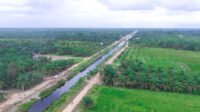
The Belayan Sejahtera Plantation Cooperative was established on 10 June 2002 by thirty founding members in Muai Village, Kembang Janggut District, Kutai Kartanegara Regency, East Kalimantan. Its creation was closely tied to the economic transformation that unfolded along the Belayan River—from the era dominated by the timber industry, through the expansion of rubber plantations, to the rapid growth of oil palm cultivation.
This transition was more than a shift from one commodity to another. It fundamentally reshaped how rural communities worked, managed their land, and earned their livelihoods.
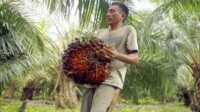
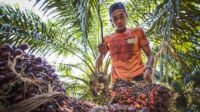
Oil palm cultivation undoubtedly created new economic opportunities for thousands of farming households. Yet it also introduced a new form of dependency. Smallholders owned their land and cultivated the crop, but they exercised little control over the processing mills, refining technologies, price formation, or downstream markets where most of the industry’s value is generated.
Also Read: Unila and South Korea’s Naysor Collaborate on Low-Ash Palm Biomass Pellets for Green Energy
Farmers bore the production risks, while significantly greater economic value was created only after fresh fruit bunches (FFB) entered the processing mills and were transformed into crude palm oil and its derivative products.
Within such a structure, land ownership alone does not translate into economic sovereignty. Farmers still depend on access to fertilizers, agricultural inputs, machinery, transportation, financing, market information, and reliable buyers. When these essential components remain controlled by others, smallholders become owners of only one relatively small segment within a much longer and more profitable value chain.
This is precisely where cooperatives become indispensable.
Individual farmers selling their harvest independently possess little bargaining power. But when production is aggregated, administrative systems are strengthened, market information is shared, and commercial relationships are negotiated collectively, their position gradually changes. The cooperative becomes more than a marketing organization; it becomes an institution capable of improving farmers’ leverage throughout the value chain.
Also Read: North Sumatra Palm FFB Prices Edge Up to IDR 3,881.83/kg for July 8–14, 2026
Belayan Sejahtera initially developed within the framework of a partnership with a palm oil company. However, it soon became clear that the cooperative’s role could not be limited to serving as an intermediary for selling fresh fruit bunches. As members’ needs evolved, the cooperative was compelled to expand its functions accordingly.
When farmers required fertilizers and agricultural supplies, the cooperative established an input distribution unit. When deteriorating plantation roads became a major constraint, it invested in heavy equipment to improve rural infrastructure. When transport vehicles required maintenance, the cooperative built its own workshop and spare-parts business. As sustainability standards became increasingly important, it developed internal control systems, plantation mapping, member databases, farm management systems, and certification programmes.
Over time, the cooperative diversified further by establishing financing services, a community retail store, a nursery, commercial facilities for local entrepreneurs, and a range of complementary business activities that reinforce one another.
Also Read: Jambi Raises Palm Fruit Benchmark Price to IDR 3,856.89/kg for Mid-July 2026
According to the cooperative’s organizational profile, Belayan Sejahtera serves approximately 1,129 independent oil palm smallholders, manages around 3,462 hectares of plantations, and employs 60 workers.
Viewed individually, these business units may appear to be separate commercial enterprises. Taken together, however, they form an integrated rural economic ecosystem.
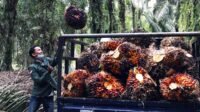
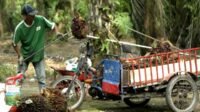
Agricultural input services support plantation productivity. Heavy equipment improves transportation infrastructure. The FFB collection unit consolidates production. Transport vehicles deliver harvests to processing mills. Workshops keep logistics operating efficiently. Financing services provide working capital, while retail operations help retain a greater share of economic activity within the local community.
Also Read: Riau Raises Independent Smallholder Palm Fruit Prices, 9-Year-Old Trees Near IDR 3,800/kg
Belayan Sejahtera therefore evolved from economic necessity toward institutional development—not the other way around.
This distinction is frequently overlooked in government-led programmes that seek to establish cooperatives on a large scale. Governments can issue legal certificates, construct office buildings, provide warehouses, and inject capital. Yet none of these measures automatically creates member ownership, entrepreneurial capacity, or public trust.
Living cooperatives are not built with concrete and bureaucracy.
Also Read: Central Kalimantan Raises Plasma Palm Fruit Prices for Late June, Mature Trees Reach IDR3,609/kg
They are built through real economic relationships, shared interests, and trust that is earned continuously through service and performance.