
The Indonesian palm oil industry association calls for tighter oversight of mills and loading ramps as Indonesia faces growing traceability and sustainability requirements ahead of the EU Deforestation Regulation’s implementation.
PALMOILMAGAZINE, JAKARTA — The Indonesian Palm Oil Association (GAPKI) has warned that the growing number of palm oil mills operating without their own plantations could undermine the integrity of Indonesia’s palm oil supply chain, particularly by creating risks related to fresh fruit bunch (FFB) theft, product quality and traceability.
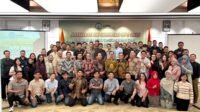
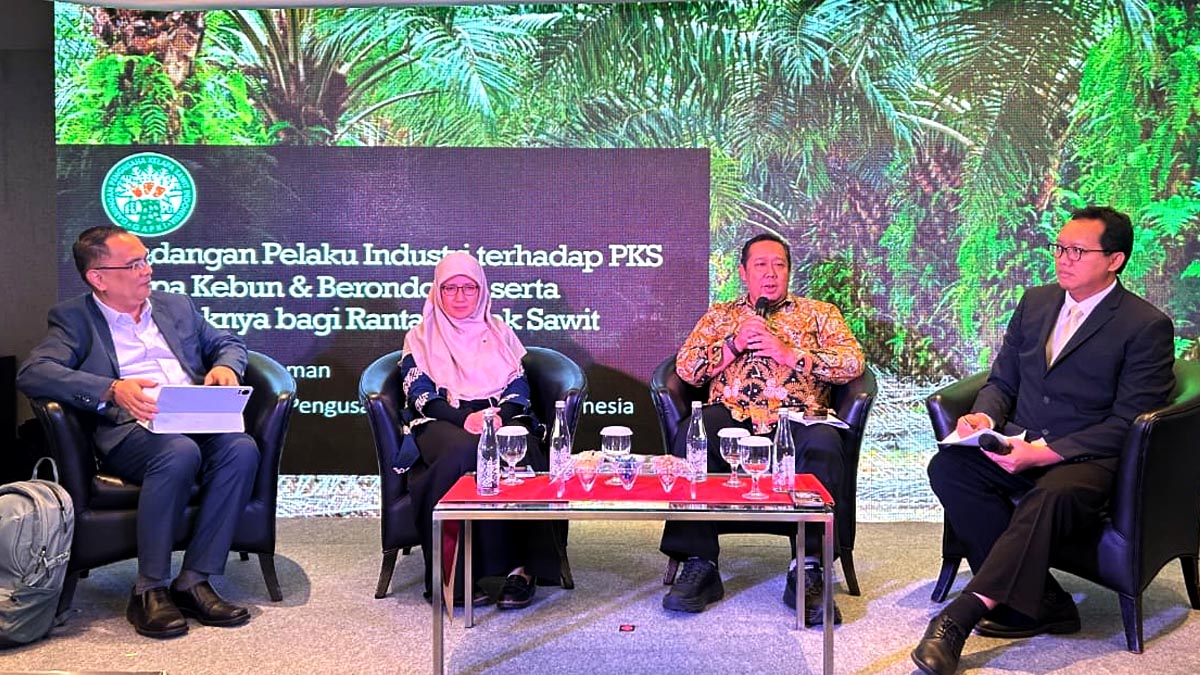
The issue was raised during a multi-stakeholder forum titled “Strengthening a Transparent, Inclusive and Sustainable Palm Oil Supply Chain,” organized by the United Nations Development Programme (UNDP) in Jakarta on Thursday (Sept. 10).
Also Read: GAPKI Strengthens Fire Prevention Efforts as Indonesia Faces 2026 Dry Season
The forum brought together officials from the Coordinating Ministry for Economic Affairs and other government ministries, palm oil farmer associations, international development partners, academics and civil society organizations.
GAPKI Deputy Chairman II Susanto said Indonesia’s palm oil industry remains a major pillar of the national economy and provides livelihoods for millions of farmers and workers.
“Transparency, inclusiveness and sustainability are no longer merely options. They are necessities as global markets increasingly demand accountability and social and environmental responsibility across every part of our production chain,” Susanto said in an official statement received by PalmOilMagazine on Friday (Sept. 11).
Also Read: GAPKI Backs Inpres 11/2026, Calls for Stronger Collaboration to Prevent Forest and Land Fires
He said transparency requires a reliable traceability system extending from plantations to finished products, while inclusiveness means ensuring that smallholders and other growers are treated as equal partners.
Sustainability, meanwhile, must serve as the long-term foundation for industry growth based on the principles of planet, people and prosperity without compromising forests or human rights.
GAPKI supports these three pillars through the implementation of the Indonesian Sustainable Palm Oil (ISPO) certification system, smallholder capacity building, supply-chain digitalization and open dialogue among stakeholders.
Also Read: Palm Oil Mills Without Plantations Raise Concerns Over Supply Traceability
Unregulated Mills Raise Supply-Chain Concerns
The issue of palm oil mills without plantations was discussed in detail by Agam Fatchurrochman, who oversees sustainability affairs at GAPKI.
“The palm oil ecosystem is actually one of the most organized ecosystems compared with other commodities,” Agam said.
Also Read: KUD Sejahtera Inaugurates Palm Oil Mill as Cooperatives Push Into Downstream Industry
He pointed to more than 1,200 palm oil mills, more than 80 refineries and export destinations in more than 150 countries as evidence of the highly integrated ecosystem that has been built around Indonesia’s palm oil industry.
However, he warned that the established trading system could be disrupted by the emergence of mills operating without their own plantations if they are not properly regulated and supervised.
Agam said theft and illegal harvesting of fresh fruit bunches had become increasingly widespread. In some plantations operated by GAPKI members, theft rates have reportedly reached 50% to 60%.
Also Read: Indonesia’s Palm Oil Consumption Hits 12.99 Million Tons, Boosting Sustainable Market
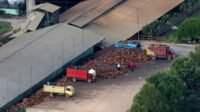
The situation has coincided with the emergence of informal or unlicensed loading ramps, which can turn previously secure plantation areas into locations vulnerable to disputes and conflict.
There are concerns that mills without plantations could become buyers of stolen FFB, Agam said, adding that the problem requires joint oversight and cannot be addressed by plantation companies alone.
He also identified unequal compliance requirements as a major structural issue. Conventional mills are subject to routine inspections, while non-conventional mills often face limited oversight.
Also Read: The Missing Link in Indonesia’s Palm Oil Traceability
Issues ranging from establishment permits and legal compliance to metrology and trading practices can also affect the quality of Indonesia’s crude palm oil (CPO), he said.
“Raw materials from loose fruit tend to have higher free fatty acid (FFA) levels and inconsistent quality,” Agam said.
Most Loading Ramps in West Kalimantan Unlicensed
Data presented by Aris Supratman of GAPKI’s West Kalimantan branch highlighted the scale of the loading-ramp issue.
Of 359 loading ramps identified in West Kalimantan in 2025, only 97 had permits, while 262 were still operating without permits.
Also Read: PalmCo PTPN 4 Benchmarks AI-Powered FFB Grading System at PGK Jambi Mill
GAPKI recognizes that loading ramps provide an important service for smallholders. However, the association believes they must be registered, regulated and supervised rather than established freely by anyone and anywhere.
GAPKI also does not oppose mills operating without plantations, Agam said, but their establishment and operations must be properly regulated.
As the world’s largest palm oil producer, accounting for around 61% of global CPO production, Indonesia faces increasing demands for plantation-level traceability under frameworks including the European Union Deforestation Regulation (EUDR), RSPO and ISPO.
Also Read: Strengthening Incentives Key to Advancing Smallholder Palm Oil Traceability in Indonesia
Agam questioned the extent to which non-conventional mills comply with No Deforestation, No Peat and No Exploitation (NDPE) principles and meet applicable traceability requirements as the EUDR takes effect on Dec. 30, 2026.
He said the requirements embedded in the EUDR should be treated as a major priority because failure to address supply-chain weaknesses could damage the sustainability reputation of Indonesian palm oil.
“GAPKI’s position is clear: freedom to conduct business must be supported because it is a foundation of Indonesia’s economy. But we cannot be permissive toward unclear supplies, practices that compromise quality, or systems that create room for theft and conflict,” Agam said.
Also Read: BRIN Pushes Palm Oil Downstream Diversification Through Research and Innovation
He stressed that GAPKI supports freedom of enterprise and smallholder inclusion, but not a permissive approach to supply-chain governance.
The association has proposed equal rules and standards for all supply-chain entities, including environmental impact assessments (AMDAL), UKL-UPL environmental management requirements and PROPER environmental performance standards.
It also called for consistent ISPO implementation, traceability mapping down to Tier 3 and stronger cross-agency supervision.
Also Read: Mitigating El Niño Impacts to Sustain Indonesia’s Palm Oil Industry
Independent Smallholders Face Long Supply Chains
PPKS researcher Ratnawati Nurkhoiry said independent smallholders account for around 69% of Indonesia’s smallholder oil palm plantations, equivalent to about 4.7 million hectares of the total 16.8 million hectares of smallholder plantations.
Independent growers face a series of recurring structural challenges, including unclear land legality, untraceable planting material, low productivity and long marketing chains involving intermediaries and loading ramps.
Also Read: KPBN Inacom CPO Price Falls IDR 57/Kg to IDR 15,900, CIF Rotterdam at US$1,600/Ton
“This is a vicious cycle,” Ratnawati said, explaining that low productivity limits farmers’ incomes and makes them increasingly dependent on intermediaries.
Loading ramps have emerged as a commercial response to the structural limitations faced by smallholders. However, the longer the marketing chain becomes, the smaller the share of the final value received by farmers.
Indonesia has an estimated 442 palm oil mills without plantations. Their presence can create risks of unhealthy competition for FFB supplies, although they can also provide opportunities for farmers to obtain better prices, she said.
Also Read: Indonesia Eyes Green Technology to Transform Palm Oil Downstreaming
Research by PPKS in North Sumatra, examining the transformation of a trading business into an RSPO-certified cooperative, showed improvements in farmer productivity and income, as well as a 55% reduction in production risks.
The findings suggest that improving loading-ramp governance could provide a practical pathway to improving the welfare of independent smallholders.
RSPO Perspective: Regulate Loading Ramps, Don’t Eliminate Them
Windrawan Inatha, Strategic Advisor at the Center for Environmental and Climate Technology (CECT) at Trisakti University and a professional with an RSPO background, said loading ramps would be difficult to eliminate because of their economic and social functions for smallholders.
“Those functions will probably be difficult to eliminate unless they are regulated. So it is the loading ramps themselves that need to be regulated,” Windrawan said.
Also Read: The Missing Link in Indonesia’s Palm Oil Traceability
He cited informal financing as one example, noting that smallholders can obtain quick loans through these networks that may be difficult to secure from formal financial institutions.
Windrawan said Indonesia has around 3.22 million oil palm growers, but only about 1.54 million have Smallholder Plantation Registration Certificates (STDB). ISPO compliance among smallholders also remains below 2%, he said.
He proposed incorporating loading ramps into the formal traceability system through standardized transaction records to prevent them from becoming channels for stolen FFB.
Also Read: Beyond Certification: The Next Chapter of Indonesia’s Sustainable Palm Oil
Windrawan also referred to the 2020 position of Indonesia’s Business Competition Supervisory Commission (KPPU), which found that palm oil mills without plantations could encourage healthy competition if adequately regulated.
He suggested that ISPO should gradually shift its focus from plantation ownership status toward monitoring companies’ supply bases.
A pilot project involving UNDP could serve as an initial step toward developing such an approach, he said.
The discussion underscored the need to balance smallholder access to markets and business opportunities with stronger supply-chain governance, particularly as Indonesian palm oil faces increasingly stringent international requirements on traceability, legality and sustainability. (P3)