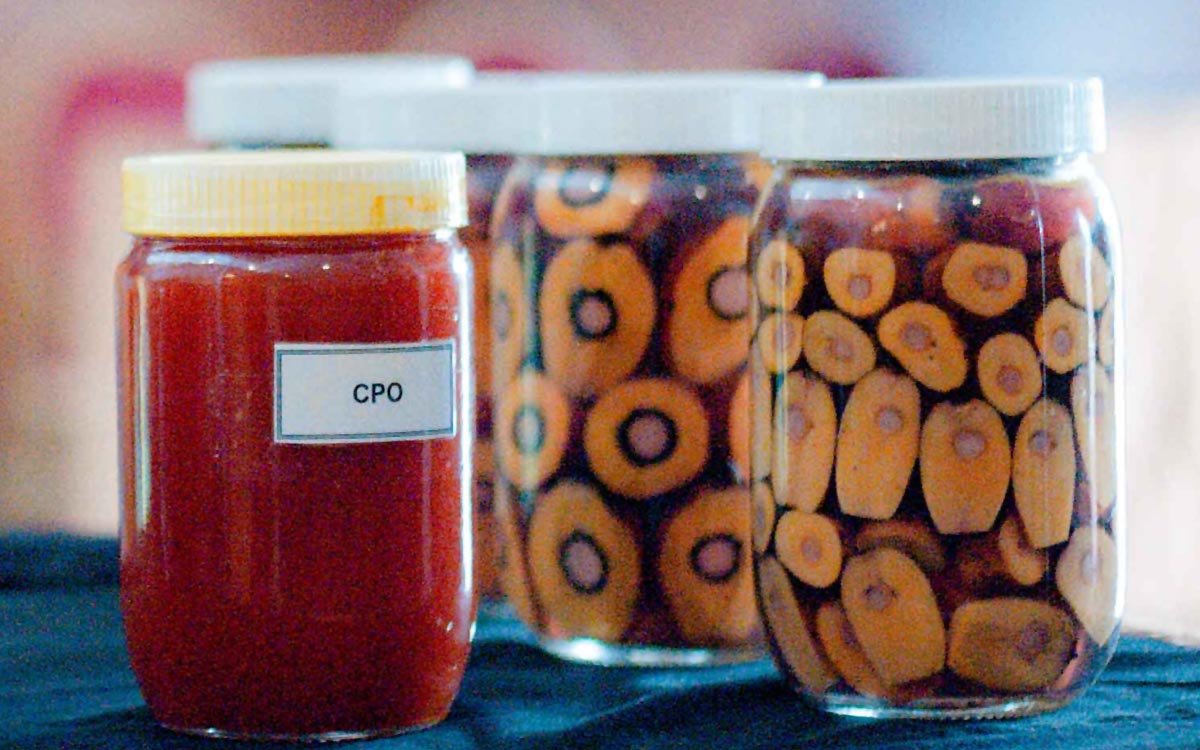
PALMOILMAGAZINE, JAKARTA – The crude palm oil (CPO) price set by PT Kharisma Pemasaran Bersama Nusantara (KPBN) rose to IDR 14,700 per kilogram on Wednesday (March 4, 2026), marking an increase of IDR 100/kg or 0.68% compared to Tuesday’s (March 3, 2026) level of IDR 14,600/kg.
According to information obtained from KPBN, the Franco Belawan & Dumai price was set at IDR 14,700/kg. Meanwhile, Franco Teluk Bayur stood at IDR 14,570/kg, and Loco Sei Tapung was recorded at IDR 14,361/kg.
In contrast, CPO futures trading on Bursa Malaysia weakened during Wednesday’s midday session after previously touching their highest level in nearly four weeks. The correction was driven by profit-taking activities and softer prices of competing vegetable oils in the global market.
Also Read: Polemic Over Land Use Rights Becomes an Obstacle to Palm Oil Investment
The benchmark May 2026 CPO contract on the Bursa Malaysia Derivatives Exchange fell by RM32 per ton, or about 0.76%, to RM4,154 per ton at the midday break. The decline came after the contract had posted gains for three consecutive sessions.
On other exchanges, the most active soyoil contract on the Dalian Commodity Exchange edged up around 0.26%, while palm oil futures on the same bourse slipped 0.04%, after earlier falling as much as 0.49%. Meanwhile, soybean oil prices on the Chicago Board of Trade rose about 0.11% following an earlier correction.
On the demand side, India’s palm oil imports reportedly climbed 10.1% in February, reaching a six-month high. The increase was attributed to palm oil’s widening price discount against rival vegetable oils, prompting Indian refiners to boost purchases and scale back sunflower oil imports.
Also Read: INSTIPER Students Practice Making Traditional Batik Using Palm Oil Wax During ‘Ngabuburit’
Global crude oil prices also rose about 1% on Wednesday, supported by supply concerns in the Middle East amid tensions involving the United States and Israel with Iran. However, gains were capped by reports suggesting the US Navy may escort vessels passing through the Strait of Hormuz, easing fears of potential supply disruptions. (P2)