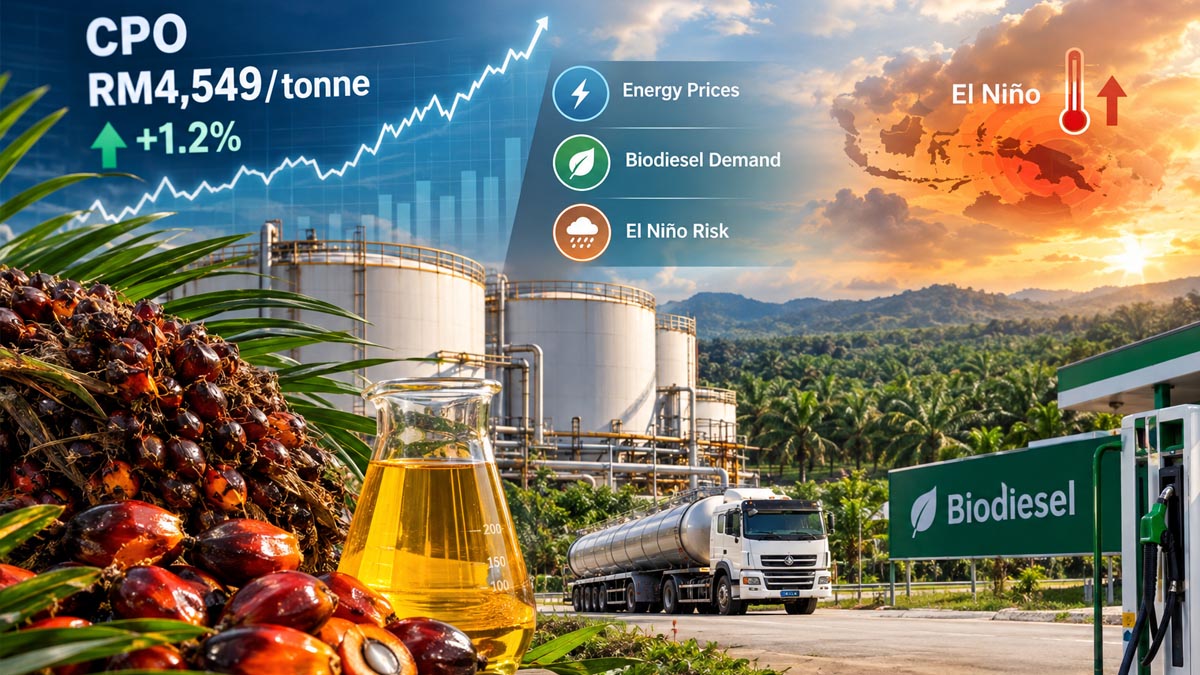
CPO prices are expected to remain elevated over the coming months, with energy markets, biodiesel demand and potential El Niño effects providing support despite seasonal production and rising Malaysian inventories.
PALMOILMAGAZINE, PETALING JAYA — Crude palm oil (CPO) prices are expected to remain firm in the coming months, despite the prospect of higher Malaysian palm oil inventories as production enters its seasonal peak.
Stronger energy prices, rising biodiesel demand and weather-related supply risks are among the factors expected to support the market, according to BIMB Research, as reported by The Star on Sept. 16, 2026.
Also Read: Indonesia’s CPO, Palm Oil Derivative Exports Rise 5.49% in January–July 2026
BIMB Research expects CPO prices to remain at elevated levels over the next three months, although the upside could be limited by seasonal production gains and relatively high palm oil inventories.
The research house maintained its average CPO price forecasts at RM4,400 per tonne for 2026 and RM4,500 per tonne for 2027, while noting that prices could potentially rise above those levels.
The 2027 outlook is also supported by the possibility of delayed effects from El Niño. The weather phenomenon could tighten regional palm oil supplies and put pressure on the market balance.
Also Read: Malaysia CPO Falls 0.77% to RM4,898/Ton Friday (18/9), Global Vegetable Oils Weaken
August CPO Price Reaches RM4,549 per Tonne
The strength of the CPO market was reflected in data from the Malaysian Palm Oil Board (MPOB).
Malaysia’s average CPO price rose to RM4,549 per tonne in August 2026, up 1.2% from July and 5.1% from a year earlier. It was the highest monthly average since April, despite continued pressure on Malaysia’s palm oil exports.
BIMB Research attributed the price increase mainly to supply-side risks, growing concerns over El Niño and energy-related factors.
Also Read: Malaysia Palm Oil Stocks Hit 2.63 Million Tonnes, but CPO Prices Stay Firm on El Niño Risk
Higher gas oil prices from August through early September also improved the competitiveness of palm-based biodiesel. The increase widened the discount of palm oil against gas oil to US$315 per tonne, compared with a five-year average premium of US$180 per tonne.
The wider price discount improves biodiesel economics and could encourage stronger demand for palm oil as a feedstock.
Average CPO prices during the first eight months of 2026 stood at RM4,413 per tonne, broadly in line with BIMB Research’s full-year forecast of RM4,400 per tonne.
Also Read: Super El Niño Threatens Malaysia Palm Oil Output in 2027, MPOC Sees Monsoon as Cushion
Malaysian Palm Oil Stocks Could Near 3 Million Tonnes
UOB Kay Hian (UOBKH) Research shares a broadly similar outlook, maintaining its CPO price forecasts at RM4,500 per tonne for 2026 and RM4,400 per tonne for 2027.
The forecasts are close to the average CPO price recorded by MPOB in August, at RM4,548.50 per tonne.
Also Read: Malaysia Palm Oil Stocks Rise 7.48% to 2.82 Million Tonnes in August 2026
On the supply side, UOBKH Research expects Malaysia’s palm oil production to peak in September and October. This could push palm oil inventories close to 3 million tonnes by the end of September.
Weather conditions remain another key factor for the market.
Malaysia recorded only 152 millimetres of rainfall in August, the lowest level so far this year. Rainfall in western Peninsular Malaysia and Sarawak was also below average, at 108 mm and 136 mm, respectively.
Also Read: Malaysia Palm Oil Stocks Hit 2.63 Million Tonnes, but CPO Prices Stay Firm on El Niño Risk
Although inventories are expected to rise, UOBKH Research said the current increase in stocks has been driven more by developments in exports than by a significant increase in supply.
With inventories potentially rising alongside seasonal production, stronger energy prices and weather-related risks, the Malaysian CPO market is expected to remain relatively firm.
Production trends and the potential impact of El Niño will remain key factors shaping the palm oil market as 2026 progresses toward 2027. (P2)