Rumah Sawit Indonesia and Universitas Sumatera Utara highlight stronger farmer institutions, fair partnerships and agribusiness development as key to improving the competitiveness of independent palm oil smallholders.
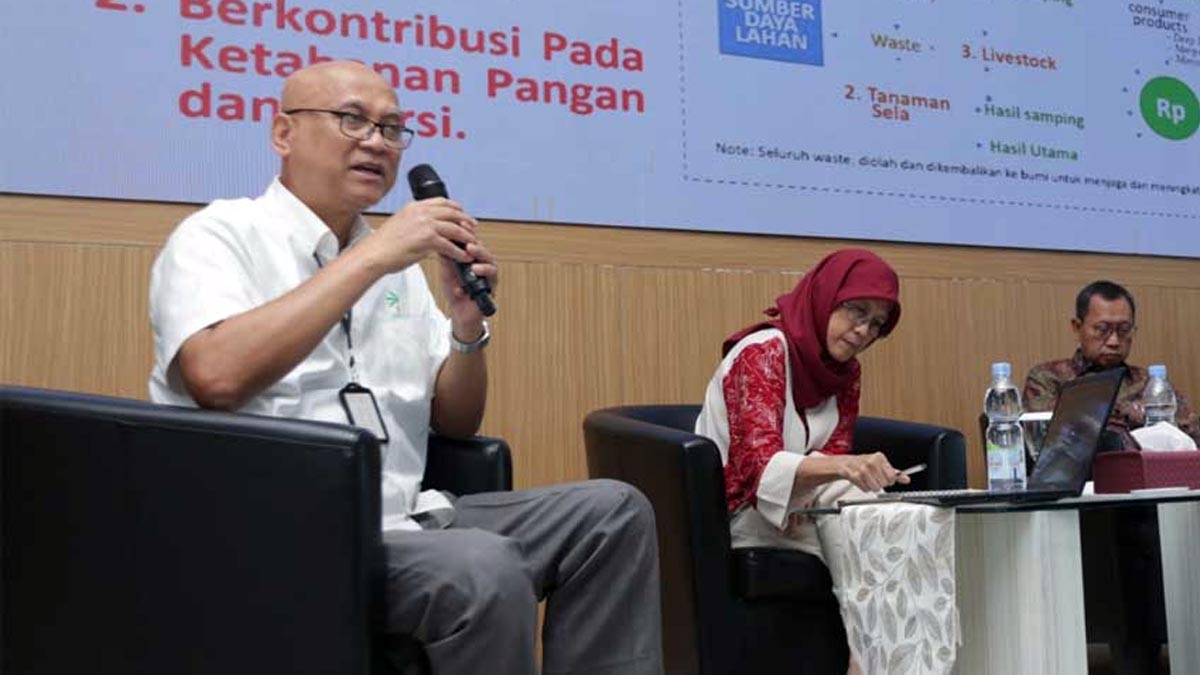
PALMOILMAGAZINE, MEDAN — Strengthening partnerships between palm oil companies and smallholders is essential to developing a more capable and competitive agricultural workforce, according to Rumah Sawit Indonesia (RSI) Chairman Kacuk Sumarto.
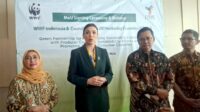
Kacuk made the remarks during a public consultation discussion titled “Farmer-Company Partnerships in Building Reliable and Competitive Farmers through Land Intensification and Industrialisation” at Universitas Sumatera Utara (USU) in Medan, according to an official statement received by PalmOilMagazine on Sept. 15, 2026.
He said existing regulations and institutional arrangements for palm oil smallholders remain weak in several fundamental areas.
Among the key challenges are land and business legality, weak farmer organisations, limited business vision and planning, dependence on state-owned land resources, as well as restricted access to financing and replanting funds.
“These fundamental conditions require strategic measures to strengthen the position of independent smallholders in a rational and sustainable manner,” Kacuk said.
Also Read: KPBN Inacom CPO Price Falls IDR50 to IDR15,708/kg, Malaysia CPO Also Weakens
Building Stronger Farmer Institutions
To address these challenges, RSI has developed an integrated framework for strengthening farmer-company partnerships, beginning with a preparation stage.
The initial phase prioritises resolving land status, business licences and land tenure documentation. At the same time, farmer organisations would be consolidated in cooperation with local governments and cooperative agencies.
Also Read: CPOPC and WWF-Indonesia Link Palm Oil Sustainability to Smallholder Income
The framework also includes the preparation of business master plans and roadmaps, the development of fair partnership models, organisational structures, financing arrangements, social and anthropological studies, and community-based programmes to strengthen collective capacity.
Once the foundation is established, the process moves into the development of stronger institutions and fully integrated partnership business models.
Kacuk said capacity building during this stage would focus on farmers’ soft skills, technical capabilities and personal development. The programme would also cover the development of new plantations and infrastructure, integrated businesses based on circular-economy principles, improved administration and monitoring systems, digital governance and sustainability certification.
Also Read: WWF-Indonesia and CPOPC Strengthen Sustainable Commodity Supply Chains
The next stage involves scaling up businesses and promoting farmer corporatisation.
Rather than remaining focused solely on upstream plantation activities, farmers would be encouraged to move into consumer-goods processing, expand local and regional markets and develop new products and market opportunities.
More mature partnerships could eventually establish new professional business entities while maintaining consistent compliance with sustainability certification standards.
Also Read: RSI Calls for Stronger Farmer Institutions to Speed Up Palm Oil Replanting Program
From Smallholders to Corporate Cooperatives
At the highest level, the framework aims to expand business activities on a larger scale through continued corporatisation and, ultimately, the development of large-scale business groups.
Kacuk said the long-term objective is to transform farmer institutions from conventional organisations into larger economic entities capable of competing in global markets.
He identified the establishment of an independent corporate cooperative, or Koperasi Korporat Mandiri, as the ultimate goal of the partnership and structural transformation process.
Under this model, farmers would not simply act as objects of development or passive partners. Instead, they would become shareholders and managers of cooperative-based corporate entities, giving them a stronger bargaining position within Indonesia’s palm oil industry.
The integration of partnerships, land intensification and industrialisation is intended to achieve three strategic objectives.
First, it aims to develop palm oil farmers who are capable, competitive and resilient enough to respond to changing market conditions.
Second, it seeks to strengthen the contribution of the palm oil sector to Indonesia’s food and energy security.
Third, the transformation is intended to respond to global sustainability requirements through the adoption of environmentally oriented regenerative agriculture practices.
“Through greater cooperation between businesses and farmers, the public consultation forum at USU is expected to help ensure that the industrialisation of Indonesia’s palm oil sector remains inclusive, sustainable and capable of delivering tangible benefits to palm oil farmers across the country,” Kacuk said. (P2)