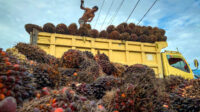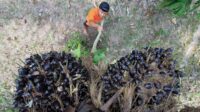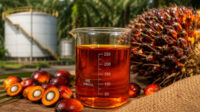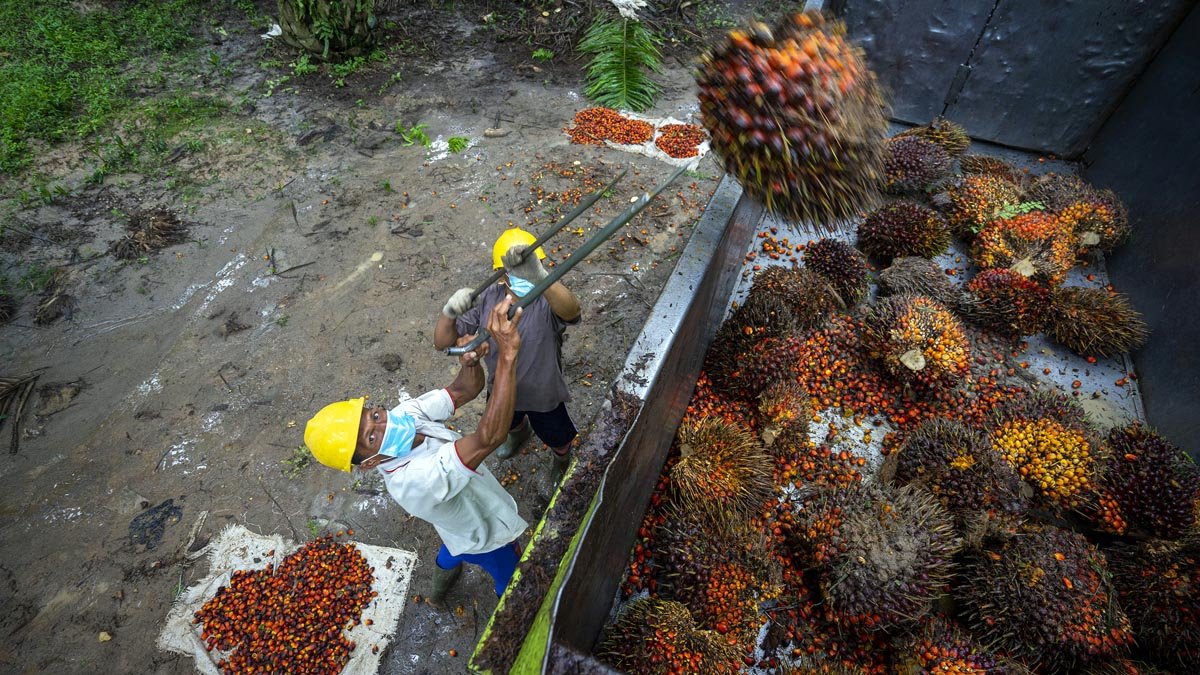
PALMOILMAGAZINE, JAKARTA – Indonesia’s efforts to restore fresh fruit bunch (FFB) prices at the smallholder level are beginning to show positive results, with the Ministry of Agriculture reporting that most palm oil companies have adjusted their purchasing prices in line with market conditions.
Following intensified monitoring and coordination led by the Ministry of Agriculture and the National Police Food Task Force, FFB prices in several palm-producing regions have reportedly increased and are gradually approaching the benchmark prices established by local governments.
According to an official statement issued by the ministry on Friday, the price recovery reflects the impact of direct interventions undertaken by Agriculture Minister Andi Amran Sulaiman and Deputy Agriculture Minister Sudaryono, who held discussions with industry players, business associations, and smallholder representatives.
Also Read: KPBN CPO Prices Jump to IDR 15,575/kg on June 26 as B50 Policy Boosts Palm Oil Market Sentiment
The government’s actions came after FFB prices declined in several regions despite rising crude palm oil (CPO) prices in global markets and the strengthening of the U.S. dollar, conditions that officials said should have supported higher prices at the farm level.
Agriculture Minister Andi Amran Sulaiman said that the majority of palm oil companies have now revised their FFB purchasing prices. Daily monitoring conducted by the ministry indicates that the number of companies that have yet to adjust prices continues to decline.
“FFB prices have already increased. Around 80–85 percent of companies have adjusted their prices, and currently the figure may have reached 90 percent. Those that have not yet increased prices will continue to be investigated together with the task force,” Amran said on Wednesday.
Also Read: Palm Oil as a Renewable Natural Resource
He noted that the development demonstrates that the government’s rapid intervention in the palm oil supply chain is beginning to deliver positive results for farmers.
Previously, approximately 270 companies were identified as purchasing FFB below levels considered appropriate based on prevailing market conditions. According to the latest data, that number has fallen to around 130 companies.
“Previously there were 270 companies, and now only a little over 100 remain, around 130 companies. Those that have not adjusted their prices will continue to be inspected. The positive signal is that prices are rising, but we will continue monitoring. We want to ensure that prices do not increase temporarily and then fall again. Monitoring is being conducted throughout Indonesia,” he said.
Also Read: SPKS Urges Stronger BPDP Funding to Expand Palm Oil Certification and Boost Smallholder Productivity
Amran emphasized that the government’s objective extends beyond achieving short-term price increases. Authorities also aim to ensure that the recovery remains sustainable and that farmers do not experience another period of unjustified price declines.
Monitoring of palm oil companies will therefore continue, with authorities seeking to maintain a fair and transparent marketing system that protects farmers’ interests.
According to the minister, support for farmers is a direct priority of the President, prompting the Ministry of Agriculture and the National Police Food Task Force to strengthen oversight of the palm oil trade to ensure greater transparency and fairness.
The policy also forms part of broader efforts to safeguard the livelihoods of approximately 15 million oil palm farmers who depend on the sector for their income. The government wants farmers to be among the first beneficiaries when international CPO prices rise.
Earlier, the ministry issued warnings to hundreds of companies that were still purchasing FFB below prevailing market prices. Together with the Food Task Force, authorities conducted inspections and monitoring activities targeting companies suspected of failing to comply with market-based pricing practices.
The results of those efforts are beginning to emerge across several major palm oil producing regions, where FFB prices have gradually increased and, in some areas, have already reached local government reference prices.
The improving market conditions have provided renewed optimism for farmers after a period of significant price pressure.
“We want a healthy palm oil ecosystem. Farmers should prosper, and businesses should also prosper. Most importantly, farmers must not suffer losses. Therefore, monitoring will continue until prices become truly stable and the benefits are felt by all Indonesian oil palm farmers,” Amran said.
With more companies adjusting their FFB purchasing prices and government oversight continuing to intensify, authorities remain optimistic that the price recovery will spread across all major palm oil-producing regions, helping improve farmer welfare while supporting the long-term sustainability of Indonesia’s palm oil industry. (P2)