PALMOILMAGAZINE, BOGOR – Regenerative agriculture practices increasingly adopted by independent oil palm smallholders have demonstrated significant potential to support climate change mitigation efforts. The use of organic fertilizers, recycling of plantation waste, and reduced dependence on chemical inputs have been shown to improve soil organic carbon levels while helping lower greenhouse gas emissions.
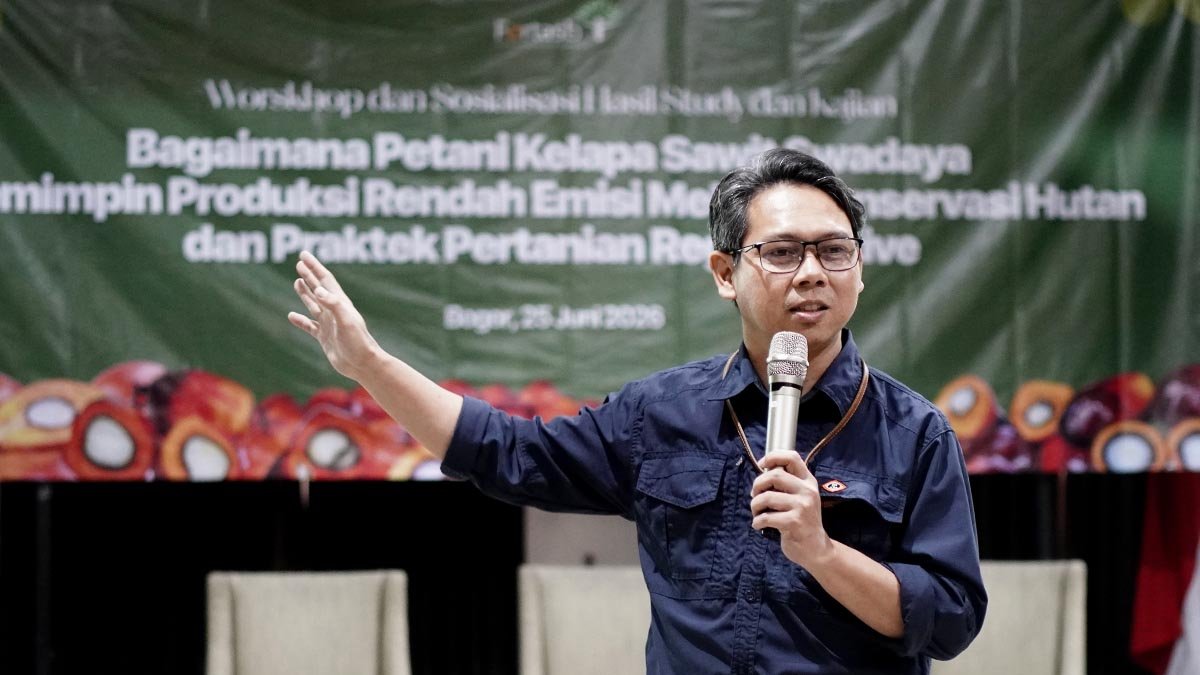
The findings were presented during a workshop entitled “How Independent Oil Palm Smallholders Lead Low-Emission Production through Forest Conservation and Regenerative Agricultural Practices,” organized by the Indonesian Sustainable Oil Palm Farmers Forum Foundation (FORTASBI) at the Royal Padjadjaran Hotel in Bogor on Thursday (June 25, 2026), which was attended by Palmoilmagazine.com.
During the event, researcher Dr. Yanto Rochmayanto presented a study titled “Assessing the Contribution of Independent Smallholders to Climate Change Mitigation through Regenerative Agriculture.” The research examined how independent oil palm farmers can contribute to emission reductions through improved management of soil organic carbon (SOC).
Also Read: FORTASBI Warns Palm Smallholders to Brace for Early 2026 Dry Season
According to Yanto, independent smallholders currently play a crucial role in Indonesia’s palm oil industry, accounting for approximately 40% of the country’s total palm oil production. At the same time, growing market demand for low-emission palm oil has accelerated interest in regenerative agriculture.
He explained that regenerative agriculture aims not only to maintain land productivity but also to restore ecological functions, improve soil health, enhance biodiversity, and strengthen the socio-economic resilience of farming communities.
“Regenerative agriculture represents a move beyond sustainability. It is not only about maintaining environmental conditions but also about improving them,” Yanto said.
Also Read: Building Climate-Resilient Farms: FORTASBI Guides Independent Smallholders Toward Low Emissions
The study was conducted in two major smallholder oil palm regions: Bandar Rejo Village in Simalungun Regency, North Sumatra, and Mekarsari Village in Tebo Regency, Jambi. Both areas were selected because farmers had already begun adopting various regenerative practices.
In North Sumatra, the research involved members of KPUD Lestari, which consists of approximately 945 farmers. Around half of the members have started implementing regenerative farming practices.
Meanwhile, the Jambi study focused on members of the Rimbo Ulu Oil Palm Farmers Association (PPSRU), which has 1,421 members, with roughly 40% of farmers practicing regenerative agriculture.
Also Read: FORTASBI Highlights Collective Action as Key to Sustainable Palm Oil Future
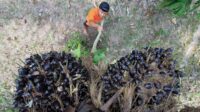
The techniques applied include the use of livestock manure, empty fruit bunches (EFB), compost, oil palm frond mulch, organic waste recycling, and reduced use of chemical herbicides and pesticides.
Research results showed that soil organic carbon levels were generally higher in plantations adopting regenerative practices compared with conventional farms.
In North Sumatra, SOC levels increased by 6.03%. Average SOC content in regenerative plots reached 41.35 tons per hectare, compared with 39 tons per hectare in control plots.
In Jambi, SOC increased by 2.09%, with treatments using empty fruit bunches producing better results than livestock manure applications.
Although some results have not yet reached statistical significance, Yanto noted that changes in soil carbon occur over relatively long periods.
“Changes in soil organic carbon take place over years or even decades. Therefore, short-term measurements often cannot capture significant changes,” he explained.
Also Read: Global Buyers Backing Smallholder Sustainability Earn FORTASBI Recognition at RSPO RT2025
The study estimated that soil carbon stocks could increase by between 1.35 and 2.35 tons of carbon per hectare. This increase is equivalent to reducing carbon dioxide emissions by approximately 4.94 to 8.62 tons of CO₂ per hectare.
According to Yanto, wider adoption of regenerative agriculture among smallholder plantations could make a substantial contribution to Indonesia’s national emission reduction targets.
Beyond climate mitigation, regenerative practices also offer numerous agronomic benefits, including improved soil health, better soil structure, increased organic matter content, enhanced moisture retention, and reduced dependence on chemical fertilizers.
Also Read: Riau Independent Smallholder FFB Prices Rise by IDR 11.28/kg for June 24–30, 2026 Period
Circular economy principles are also beginning to emerge among smallholders through the recycling of organic waste, livestock manure, and oil palm residues that are returned to plantations as nutrient sources.
However, the transition to regenerative agriculture still faces several challenges. Limited availability of organic materials, relatively high implementation costs, slow economic returns, limited farmer knowledge, and restricted access to financing remain major obstacles.
In addition, current government policies are still viewed as providing stronger support for inorganic fertilizer use than for the development of regenerative farming systems.
Also Read: Aceh Sets FFB Prices Up to IDR 3,537/Kg for Late June Period
The study therefore recommends expanding farmer education and training, strengthening farmer institutions, promoting circular economy approaches, providing incentives, and enhancing collaboration among government agencies, industry players, and farmer organizations.
Yanto emphasized that independent oil palm farmers should not be viewed solely as producers of palm oil, but also as important contributors to climate change mitigation.
“Independent oil palm farmers have tremendous potential to become part of the climate solution through soil carbon management and the adoption of sustainable regenerative agriculture practices,” he concluded.
Also Read: Riau Plasma FFB Prices Slip Slightly for Late June Trading Period
The workshop also featured a number of speakers and stakeholders, including Dr. Sri Mariati from the UI SDGs Hub, Lisma Safitri, Ph.D., from the Stiper Agricultural Institute in Yogyakarta, Eko Budiono, Sustainability Manager for Cargill’s Kalimantan Regions 3–4, and Dani Rahadian from SNV.
The event was also attended by representatives from palm oil companies, non-governmental organizations (NGOs), academics, research institutions, and independent smallholder palm oil farmers from various regions. The presence of these stakeholders underscores the importance of multi-stakeholder collaboration in promoting low-emission palm oil plantation practices, protecting conservation areas, and strengthening the role of independent smallholder farmers in sustainable development. (P3)