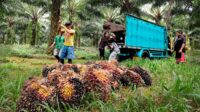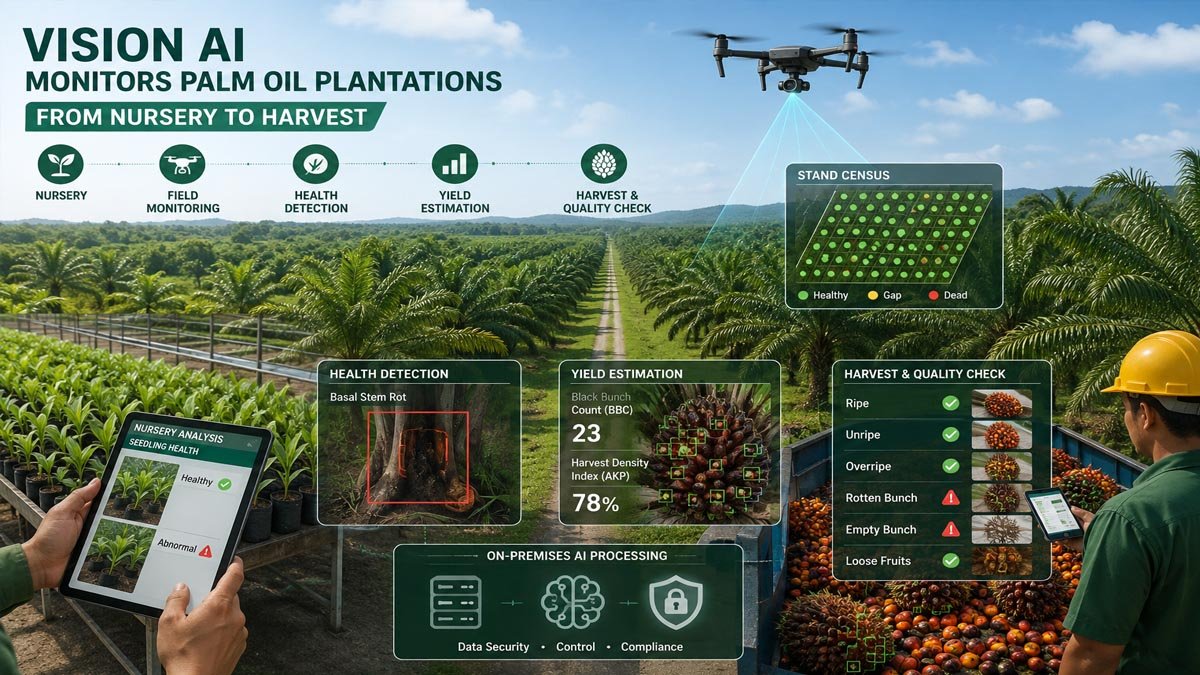
PALMOILMAGAZINE, JAKARTA, Indonesia — Artificial intelligence is beginning to play a broader role in supporting more integrated monitoring of oil palm plantations, from nurseries and field development to production forecasting and harvesting.
Vision AI, which uses image-processing and machine-learning technologies, is being developed to help identify crop conditions, count palm populations, estimate production and support quality inspections of Fresh Fruit Bunches (FFB).
Syarifarudin Afa, AI Advisor for oil palm plantations at PT Lembaga Aplikasi Teknologi (LAT) Trisakti, said one approach being developed is on-premises AI processing, where AI models and operational data are processed within a company’s own computing infrastructure.
Also Read: PalmCo Leverages AI Technology to Transform Palm Oil Management with Data-Driven Decisions
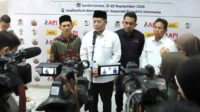
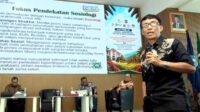
“On-premises processing through mySAP365 AIX gives companies the option to manage their data and AI models within their own infrastructure environment,” Afa said in a statement received by PalmOilMagazine on Wednesday (Aug. 12, 2026), on the sidelines of AIX Indonesia 2026 at JIEXPO Kemayoran in Jakarta, held from Aug. 11–13.
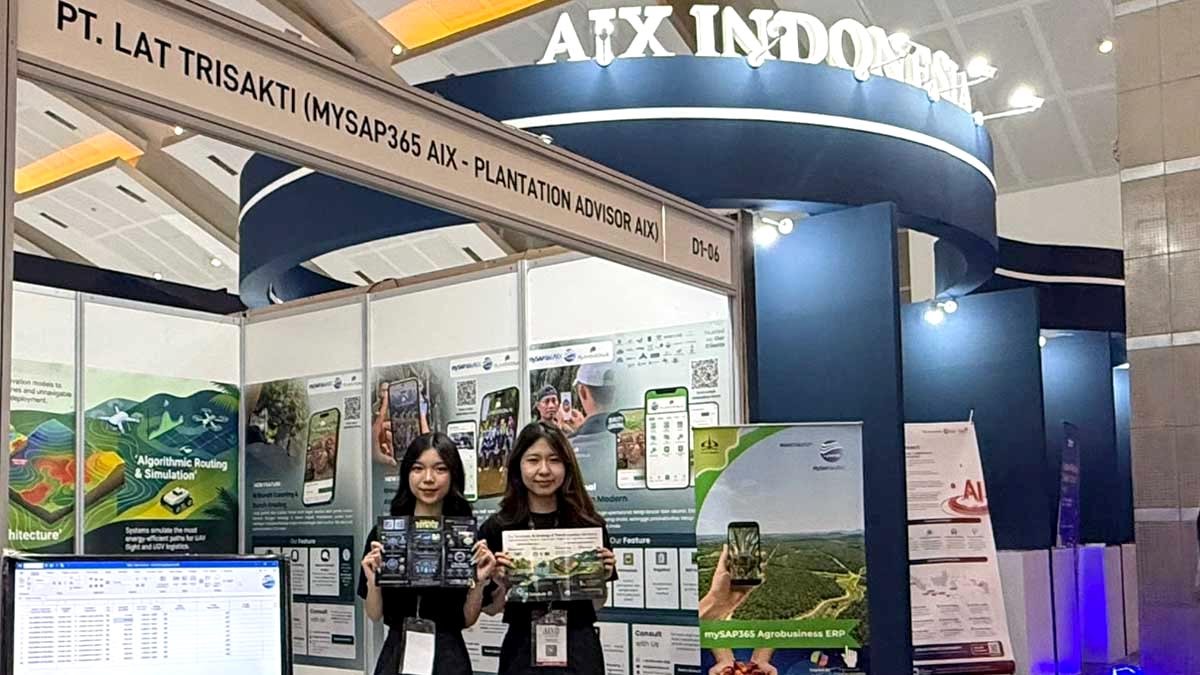
According to Afa, the approach could be an important consideration for plantation companies seeking greater control over operational data and crop imagery collected from the field.
Monitoring Begins in the Nursery
At the nursery stage, image analysis can be used to assess seedlings in both pre-nursery and main nursery operations.
Visual parameters such as leaf color, canopy condition and plant structure can be incorporated into AI-based analysis. The system can also be trained to identify seedlings showing abnormal growth or characteristics that differ from standards set by plantation operators.
Also Read: PROFOSS 2 Launches Real-Time FFA Monitoring to Enhance CPO Quality Control
The results can provide additional information during the seedling selection process before palms are transferred to the field.
According to Afa, the use of AI at an early stage also makes it possible to begin collecting crop-condition data from the nursery.
“Data from the nursery, plant growth and production stages can be developed into a connected flow of information. However, the analysis still needs to be validated against actual field conditions,” he said.
Also Read: PalmCo PTPN 4 Benchmarks AI-Powered FFB Grading System at PGK Jambi Mill
Once palms are planted in the field, monitoring shifts from individual seedling assessments to broader evaluations of plant populations and crop development.
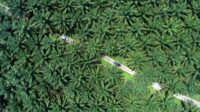
Images captured by drones or cameras can be used to support stand censuses, identifying dead palms, vacant planting points or gaps, as well as changes in canopy development. The information can be integrated with Geographic Information System (GIS) data to pinpoint areas requiring further inspection.
For plantation managers, such information can support replanning, replanting and monitoring of immature palms. Periodic image collection can also make it possible to compare changes in plantation conditions over time.
Also Read: Pioneering Digital Transformation: First Palm Oil IT Students Begin Plantation Internships
AI Supports Crop Health Monitoring
For mature and productive palms, Vision AI can be expanded to support crop health monitoring.
Indicators that can potentially be analyzed through imagery include canopy condition, frond numbers, signs of crop stress and weed presence. Image-processing systems can also be developed to recognize visual symptoms associated with pests and diseases.
One potential application is the identification of symptoms related to basal stem rot.
Also Read: KPBN CPO Price Rises to IDR 15,702/Kg on Aug. 11, 2026
However, the ability of AI systems to accurately recognize diseases depends heavily on the quality and diversity of their training data, as well as image conditions. Visually similar symptoms may also lead to misidentification, meaning field inspections remain essential.
AI is also increasingly being explored for production estimation. Two parameters that can be processed through image analysis are Black Bunch Count (BBC) and the Harvest Density Index, known locally as Angka Kerapatan Panen (AKP).
BBC measures the number of bunches that can serve as an indicator of future production potential, while AKP is one of the parameters traditionally used in harvest forecasting.
Also Read: Malaysia CPO Futures Rise as August Contract Hits RM4,562/Tonne
If data is collected regularly, the results can provide an additional source of information for updating production projections.
“BBC and AKP can become part of a regularly updated dataset, allowing production forecasts to consider not only previous calculations but also the latest crop conditions,” Afa said.
The approach is closely linked to the concept of a rolling forecast, in which projections are continuously updated based on the latest available information. In plantation operations, changes in production forecasts can affect labor planning, transportation, harvesting schedules and processing capacity.
Also Read: PTPN IV PalmCo Profit Jumps 54% to IDR 3.23 Trillion in H1 2026 on Higher CPO Prices
Vision AI Moves into Harvest and FFB Inspection
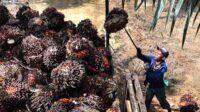
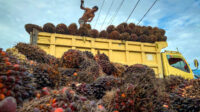
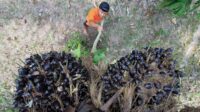
At the harvesting and FFB reception stage, Vision AI can also be used to support fruit quality assessment.
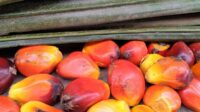
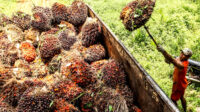
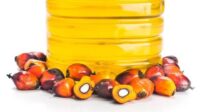
Image-processing systems can be trained to distinguish between different levels of FFB ripeness, including unripe, ripe and overripe fruit. The technology can also potentially identify rotten bunches, empty bunches and loose fruit left behind at collection points.
Such applications could help provide more standardized inspection data across plantation operations.
However, their accuracy must still be tested against actual field conditions, as image quality, lighting, camera angles and differences in fruit characteristics can all influence recognition results.
As AI adoption expands, Vision AI is increasingly being positioned as a supporting tool that can connect data from nurseries, field operations, crop monitoring, production forecasting and harvesting. The technology, however, is expected to work alongside — rather than replace — field inspections and human decision-making. (P2)