PALMOILMAGAZINE, JAKARTA — Indonesian President Prabowo Subianto has reaffirmed his commitment to strengthening national sovereignty over strategic commodities, particularly palm oil, which remains one of Indonesia’s most important economic pillars and a key contributor to global supply chains.
According to President Prabowo, Indonesia’s status as the world’s largest palm oil producer should be matched by stronger authority in determining pricing and trade direction for the commodity. He argued that Indonesia should no longer remain dependent on international pricing mechanisms controlled by foreign markets.
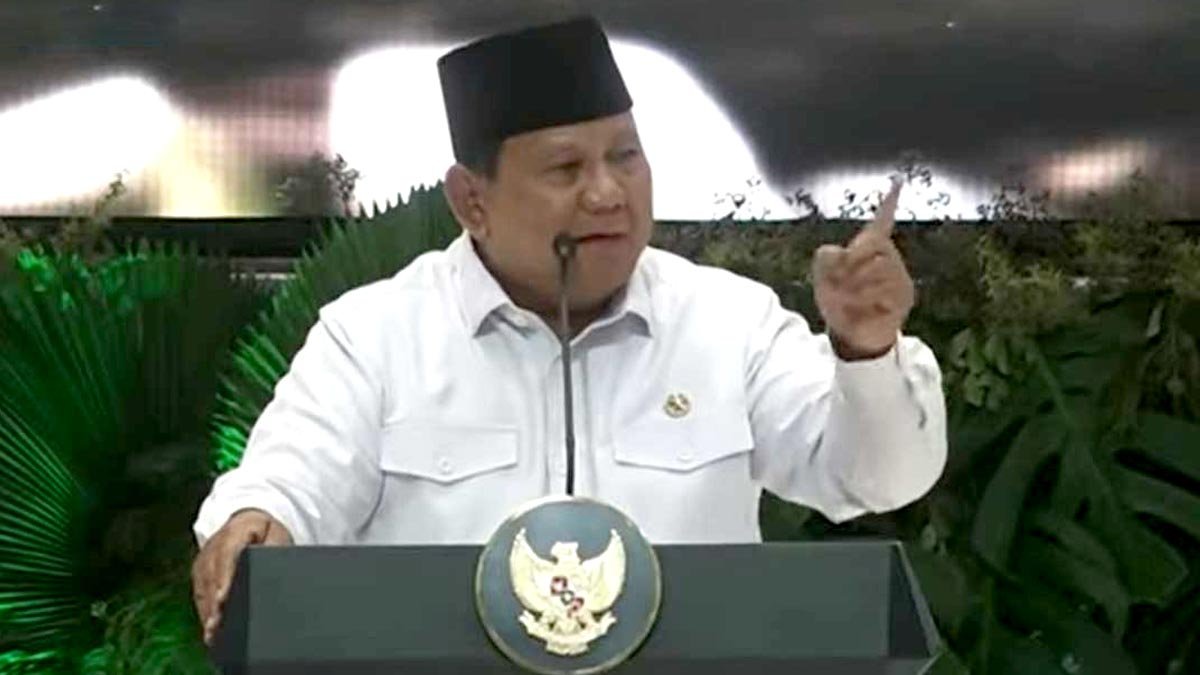
The statement was delivered during a plenary session of the House of Representatives discussing the 2027 Macroeconomic Framework and Fiscal Policy Priorities on Wednesday (20/5/2026).
In his speech, Prabowo highlighted what he described as a long-standing contradiction: Indonesia dominates global palm oil production, yet international pricing remains heavily influenced by other countries.
“We are the world’s largest palm oil producer, yet palm oil prices are determined elsewhere. I told my ministers this situation must not continue,” Prabowo said, as quoted by Palmoilmagazine.com from Indonesia’s Ministry of Agriculture website on Sunday (24/5).
The President emphasized that Indonesia must become more assertive in determining the value of its own natural resources.
Also Read: Prabowo Highlights Palm Oil Export Leakages, Warns of Under-Invoicing Practices
“I do not want our palm oil prices to be dictated by other nations. We must set our own prices, and if others refuse to buy at our price, then we can use our palm oil domestically,” he added.
His remarks signaled the government’s intention to shift Indonesia’s role from merely exporting raw commodities to becoming a nation with stronger bargaining power and greater control over strategic resources.
Prabowo also stated that the policy direction would extend beyond palm oil to other strategic commodities, including nickel, coal, rubber, and gold.
Also Read: Risky reawakening of the state-controlled commodity export
“I instructed my cabinet to formulate pricing mechanisms where all strategic commodities are priced domestically. If buyers refuse, that is fine. Better to leave the resources underground for future generations than sell them cheaply,” the President said.
According to Prabowo, Indonesia’s natural resources should not be treated merely as commercial goods, but as national assets that must be protected for long-term prosperity.
Palm oil itself plays a crucial role in Indonesia’s economy, generating export revenue while supporting millions of smallholders, workers, businesses, and regional economies.
Also Read: KPBN CPO Prices Fall Again on Friday (May 22), While Malaysian Palm Oil Market Rises
Indonesia remains the world’s largest exporter of palm oil products. In 2025, palm oil export earnings reached approximately USD23 billion, equivalent to around Rp391 trillion.
Indonesia’s palm oil industry also continues to show strong production performance. National output currently stands at around 56 million tons, while exports of processed palm oil products exceed 32 million tons annually.
The figures underline Indonesia’s dominant role in the global palm oil supply chain and reinforce its position as the leading player in the industry.
Also Read: CPO Prices on Bursa Malaysia Recover Amid Mixed Global Vegetable Oil Market
Earlier, Agriculture Minister Amran Sulaiman also noted that strategic commodities, including crude palm oil (CPO), continue to post positive growth and contribute to stronger national agricultural exports.
“Strategic commodities continue to show positive development. Palm oil exports, in particular, are strengthening overall agricultural export performance,” Amran said.
Supporting the President’s position, Vice Agriculture Minister Sudaryono stated that Indonesia is now at a critical turning point in reclaiming sovereignty over its natural resources.
Also Read: East Kalimantan FFB Prices Rise in Early May 2026 as CPO Market Strengthens
“For years, other countries dictated the prices of Indonesia’s commodities. We are the largest palm oil producer, yet we still follow foreign pricing rules,” Sudaryono said.
He added that President Prabowo’s directives to the Red and White Cabinet mark the beginning of major reforms in national commodity governance.
“Now is the time to change. Prices for nickel, palm oil, coal, rubber, and gold must be determined domestically,” he stressed.
Also Read: INSTIPER Strengthens Industry Linkages as Graduates Secure Jobs Ahead of Graduation
Sudaryono also argued that Indonesia should prioritize domestic utilization of natural resources if international buyers refuse to accept Indonesia’s pricing structure.
“If foreign buyers reject our prices, that is not a problem. We can use the resources ourselves. It is better to preserve our reserves than sell them cheaply,” he said.
According to Sudaryono, Indonesia’s natural wealth represents a legacy for future generations, making sovereign and responsible resource management essential for national resilience.
Also Read: POPSI Criticizes Government’s Single-Gate Palm Oil Export Plan
“We are the хозяин in our own land. It is time for Indonesia to set the rules,” he concluded.
The aligned statements from the President and senior government officials reflect a broader policy agenda aimed at strengthening Indonesia’s commodity sovereignty and improving its bargaining position in global markets.
For the government, palm oil is not only a major export commodity but also a symbol of economic independence and national strength. (P3)