

PALMOILMAGAZINE, JAKARTA – Indonesia’s palm oil industry has once again affirmed its role as a key pillar of the national economy. Amid ongoing global economic uncertainty, the sector continues to post positive growth, supported by rising exports, accelerated downstream development, and its direct impact on community welfare—particularly among smallholder farmers.
Dida Gardera, Expert Staff for Connectivity and Service Development at the Coordinating Ministry for Economic Affairs, stated that the palm oil industry contributes approximately 3.5% to Indonesia’s Gross Domestic Product (GDP), underscoring its strategic importance in sustaining economic growth.
“The palm oil sector contributes around 3.5% to our GDP, which is significant. Export performance in 2025 also reached a record high of approximately US$40 billion, with a volume of 38.84 million tons—an increase of 11%,” he said during a coordination meeting on the National Action Plan for Sustainable Palm Oil (RAN-KSB), as cited in an official statement on Friday (May 1, 2026).
This export achievement confirms palm oil’s continued dominance as one of Indonesia’s leading commodities in the global market. Beyond generating foreign exchange, the industry creates a multiplier effect on the domestic economy, particularly through improved fresh fruit bunch (FFB) prices that directly benefit oil palm farmers.
On the domestic front, palm oil utilization for renewable energy is also gaining momentum. Following the implementation of the B35 biodiesel program in 2024, the government advanced to B40 in 2025 and is now preparing for B50. These policies are seen as critical steps toward strengthening national energy security while reducing reliance on fossil fuel imports.
The government estimates that the biodiesel program could generate savings of up to IDR 48 trillion by cutting fossil fuel imports. In addition to boosting domestic palm oil absorption, the policy further solidifies palm oil’s role as a strategic commodity in Indonesia’s energy transition.
Also Read: Palm Oil as a Self-Sufficiency Model and Engine of Economic Growth
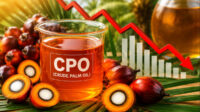
Meanwhile, downstream development strategies continue to deliver tangible results. A decade ago, crude palm oil (CPO) dominated exports, but today, the share of raw exports has dropped significantly to around 8%. This shift highlights the growing value-added created domestically through processed palm oil products.
From a sustainability perspective, the implementation of the National Action Plan for Sustainable Palm Oil is being strengthened to maintain a balance between production, domestic needs, and exports. Efforts to enhance Indonesian Sustainable Palm Oil certification are also ongoing, including regulatory improvements and better geospatial data governance.
According to Dida, strong collaboration among ministries, regional governments, industry players, and other stakeholders is essential to ensure the sector remains both competitive and sustainable.
Also Read: Palm Oil and Decarbonization
“Collective commitment is crucial to ensure palm oil continues to thrive as a leading commodity and a key driver of public welfare,” he concluded.
The coordination meeting was attended by representatives from various ministries, academics, RAN-KSB policy advisors, as well as United Nations Development Programme, all working together to strengthen sustainable palm oil policies from upstream to downstream. (P2)