The new law establishes a framework for agrarian reform covering priority locations, land redistribution, conflict resolution, recovery of land rights and the establishment of an agency under the President.
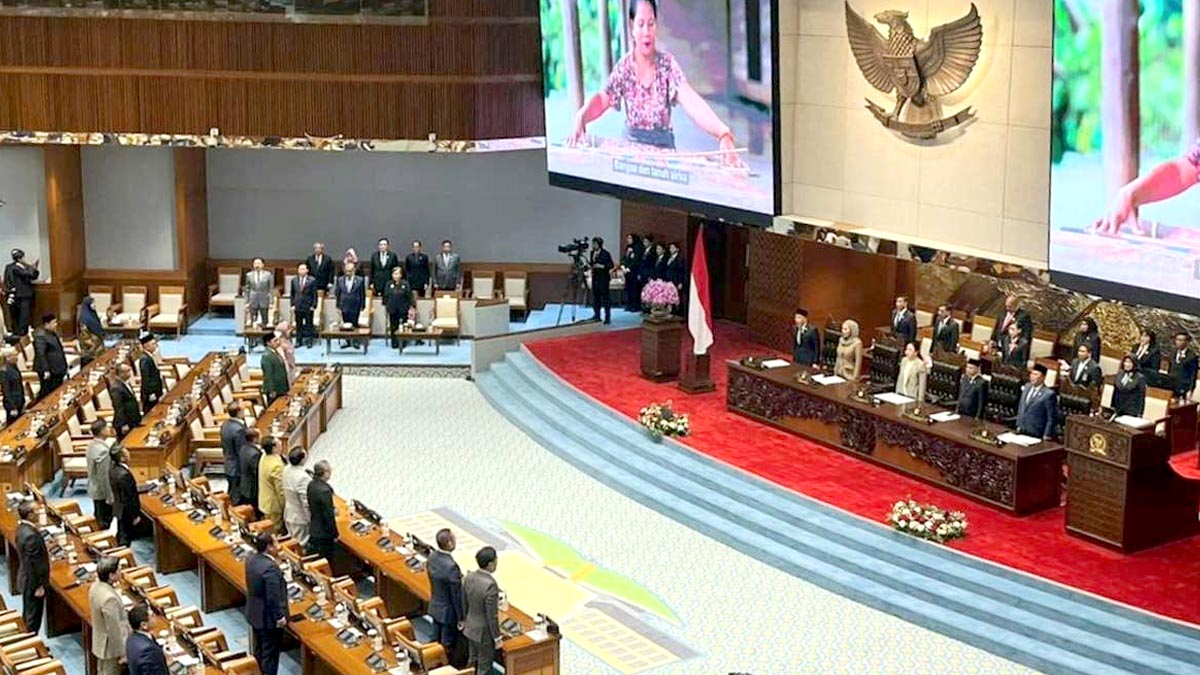
PALMOILMAGAZINE, JAKARTA — Indonesia’s House of Representatives (DPR RI) approved the Agrarian Reform Regulation Bill as law on Tuesday, September 22, 2026, following the completion of its first-stage deliberations between the DPR’s Legislative Body (Baleg) and the government a day earlier.
The approval was made during the DPR’s sixth plenary session of the first parliamentary sitting of the 2026–2027 session year. All factions and members present approved the bill before it was formally enacted as law.
Also Read: Indonesia’s Agrarian Reform Bill Draws Palm Oil Land Conflict, Worker Concerns
The legislation contains 14 chapters and 53 articles, covering the implementation of agrarian reform, institutional arrangements, priority locations, agrarian reform objects and beneficiaries, conflict resolution, land-rights recovery and land redistribution.
14 Chapters Covering Agrarian Reform
The scope of the law includes general provisions; principles and objectives; implementation of agrarian reform; the institution responsible for agrarian reform; a supervisory board; priority locations; agrarian reform objects and subjects; agrarian conflict resolution; recovery of land rights; land redistribution; empowerment of agrarian reform beneficiaries; land management, control and restrictions; public participation; reporting; funding; criminal provisions; transitional provisions; and closing provisions.
During the first-stage deliberations, the government submitted 596 problem inventories (DIMs) to the DPR. Of these, 164 were retained without changes, while 54 underwent editorial revisions and 57 involved substantive changes.
Priority Locations for Agrarian Reform
One of the key provisions concerns Priority Locations for Agrarian Reform (LPRA). The designation of such locations will take into account conditions including disparities in land ownership and control, agrarian conflicts, abandoned land, poverty, absentee land ownership and land holdings exceeding prescribed maximum limits.
The law also provides for agrarian reform planning through a roadmap containing policy direction, targets, implementation stages, priorities, strategies and performance indicators. The framework is intended to provide a more structured basis for implementing and monitoring agrarian reform.
Also Read: Agrinas Agrarian Disputes Escalate, PURAKA Calls on President Prabowo to Step In
New Agrarian Reform Institution Under the President
Institutional arrangements are another major component of the legislation.
During the deliberations, the DPR and government agreed to change the proposed institutional nomenclature from the National Agrarian Reform Agency (BRAN) to the Lembaga Penyelenggaraan Reforma Agraria (LPRA).
Also Read: Sawit Watch Call for Transparency, Sanctions, and Agrarian Reform After 28 License Revocations
The LPRA is designed to operate under and report directly to the President. Its responsibilities include planning, implementation, supervision and the resolution of agrarian conflicts. (JDIH DPR)
The legislation also provides for a supervisory board intended to support transparency, public participation, accountability and effectiveness in the implementation of agrarian reform.
Conflict Resolution and Land Redistribution
The new law establishes provisions concerning agrarian conflict resolution, recovery of land rights and land redistribution.
According to the DPR, the legislation addresses structural agrarian conflicts as well as the redistribution of land to people who do not own land. It also covers protection of land rights for groups including farmers, farm workers, fishers, Indigenous communities, women and other groups identified as beneficiaries of agrarian reform. (JDIH DPR)
Also Read: KPBN Inacom CPO Price Falls to IDR 15,621/kg on Tuesday (Sept. 22) as Malaysia CPO Drops 0.97%
Land designated as an object of agrarian reform may originate from both conflict-resolution processes and non-conflict sources. The framework also provides for empowerment and economic support for beneficiaries following land redistribution.
For Indonesia’s plantation sector, including oil palm smallholders, the new framework could have implications for land-rights certainty, land-use arrangements, agrarian conflict resolution and the empowerment of agrarian reform beneficiaries. The specific impact on plantation companies and smallholders will depend on the implementing regulations and how the provisions are applied.
From DPR Initiative to Law
The legislation was initially approved as a DPR initiative during a plenary session on September 8, 2026. Baleg and the government subsequently completed the first-stage deliberations before the bill was brought to the plenary session for final approval on September 22. (JDIH DPR)
With the enactment of the law, the government and DPR now face the next stage of implementation, including the establishment and operation of the agrarian reform institution and the development of regulations needed to put the new framework into practice.
For the plantation industry, the implementation of these provisions will be closely watched, particularly in areas involving land tenure, redistribution, agrarian conflicts and the legal position of smallholders. (P2)