A coalition of Indonesian smallholder organizations and civil society groups is urging the government to strengthen land rights, protect smallholders during forest-area enforcement and expand smallholder-owned palm oil processing to improve market access and incomes.
PALMOILMAGAZINE, JAKARTA — Indonesian palm oil smallholder organizations and civil society groups are calling for structural changes to the country’s palm oil sector, arguing that agrarian reform, legal certainty and greater smallholder participation in downstream processing are essential to improving rural livelihoods.
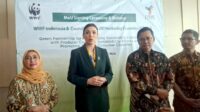
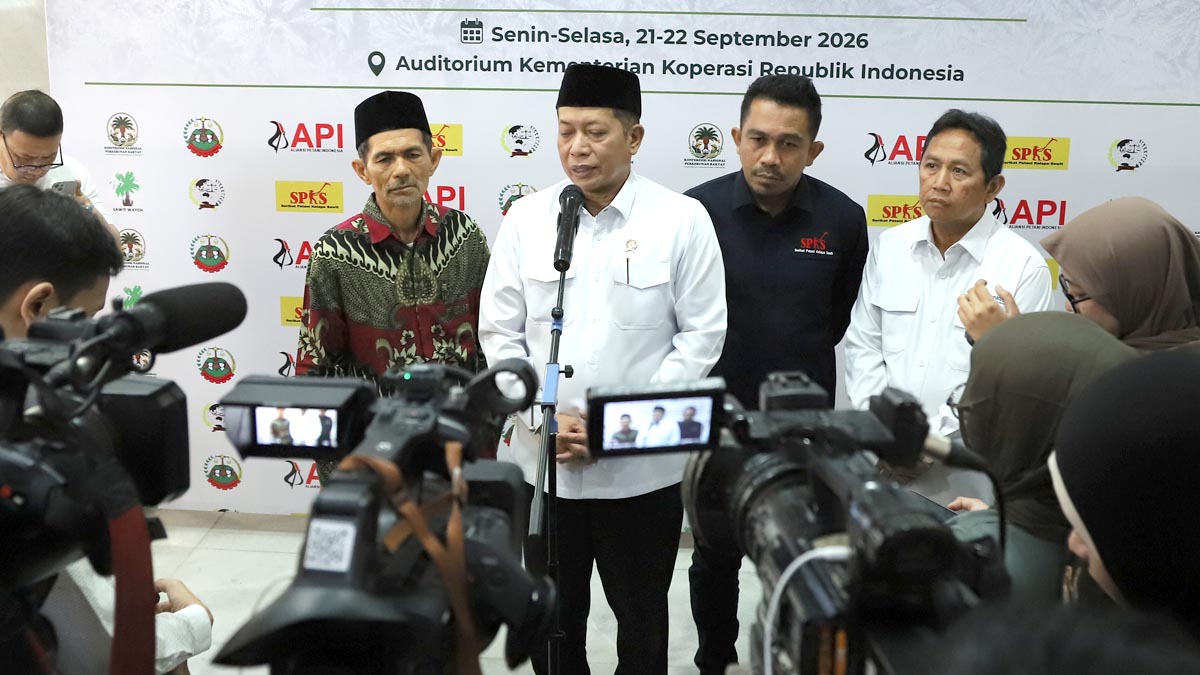
The demands were raised at the Second National Smallholder Plantation Conference in Jakarta on Monday (Sept. 21, 2026), organized by a coalition comprising the Indonesian Farmers Union (SPI), Indonesian Farmers Alliance (API), Indonesian Human Rights Committee for Social Justice (IHCS), Indonesian Palm Oil Smallholder Organizations Association (POPSI), Sawit Watch and the Palm Oil Smallholders Union (SPKS).
Also Read: PTPN IV PalmCo Accelerates Smallholder Replanting as Partnership PSR Reaches 27,000 Hectares
Held under the theme “Realizing Sustainable Smallholder Palm Oil Plantations Based on Agrarian Reform and Smallholder Cooperatives,” the conference brought together hundreds of smallholder representatives from various regions of Indonesia.
The forum, held at the Ministry of Cooperatives and opened by Cooperatives Minister Ferry Joko Juliantono, focused on smallholder rights, accelerated agrarian reform, the impact of forest-area enforcement on rural communities and the strengthening of cooperatives to give smallholders greater participation in the palm oil value chain.
“Agrarian reform is not only about land reform, but also about reforming access,” Ferry said in his opening remarks.
He said smallholder cooperatives could potentially enter the palm oil processing industry, including through ownership of crude palm oil (CPO) mills.
“Almost all CPO mills are owned by large corporations. But cooperatives can own CPO mills. We can learn from GAPKI. The Ministry of Cooperatives supports palm oil smallholder cooperatives in entering the downstream industry,” Feri said in a statement received by PalmOilMagazine on Monday (Sept. 21)
Smallholders Seek Greater Role in Palm Oil Downstreaming
Henry Saragih, chairman of the Indonesian Farmers Union and steering committee chairman of the conference, said government policy should provide greater support for smallholder welfare, market certainty and economic and legal justice.
“We are pushing for government policies oriented toward smallholder welfare, market certainty, and legal and economic justice as a necessity for national palm oil self-reliance,” Henry said.
He said the development of smallholder plantations should be linked to agrarian reform and strengthened through cooperatives that genuinely implement the principles of the reform agenda.
Also Read: SPKS Warns Indonesia’s Palm Oil Export Margin Fee Could Cut Smallholder FFB Prices
Sabarudin, chairman of the Palm Oil Smallholders Union (SPKS), said smallholders should have a greater role in the development and downstream processing of palm oil.
“The development and downstreaming of palm oil can be carried out by smallholder plantations. With around 40% of palm oil smallholders controlling plantation land, they should be included in downstream processing. We are ready to build small-scale palm oil mills,” Sabarudin said.
Jarot Indarto, director of food and agriculture at Indonesia’s Ministry of National Development Planning (Bappenas), said palm oil is considered a national priority commodity.
Also Read: Riau Palm Oil FFB Prices Fall IDR 17.54/kg, 9-Year Trees at IDR 3,976.56
“Palm oil is an economic activity that affects the livelihoods of many people. Therefore, at Bappenas, we place it among the national priority commodities,” Jarot said, adding that government institutions would provide the necessary support.
Three Demands for Indonesia’s Palm Oil Smallholders
The coalition formulated three main demands for the government.
- Agrarian reform to address structural rural poverty
The first demand is accelerated agrarian reform in the plantation sector to address unequal land ownership, which the coalition considers a major source of economic inequality.
According to data cited by the coalition, private large-scale plantations control 54.08%, or 8.61 million hectares, of Indonesia’s national palm oil area, while smallholder plantations account for 6.74 million hectares, or 42.29%.
Also Read: CPOPC and WWF-Indonesia Link Palm Oil Sustainability to Smallholder Income
The coalition said a proposal previously put forward by President Prabowo Subianto to achieve an 80% smallholder and 20% corporate plantation composition should be translated into measurable, transparent and accountable government policies.
The groups said land redistribution should be implemented as part of efforts to change the existing structure of land ownership and strengthen social and economic opportunities for smallholders.
Gunawan, senior adviser at IHCS, said agrarian reform should extend beyond land redistribution to include smallholders’ economic institutions.
Also Read: RSI, USU Push Stronger Palm Oil Smallholder Institutions Through Partnerships
“Palm oil plantation transformation must not stop at land redistribution. It must address the roots of economic control through smallholder cooperative institutions,” Gunawan said.
- Legal certainty and protection of smallholders’ managed land
The second demand concerns legal certainty for smallholders amid government enforcement against plantations located inside forest areas.
The coalition said enforcement by the Task Force for Land Use and Investment Arrangement and Forest Area Enforcement (Satgas PKH), including the seizure of plantations operating inside forest areas, needs close public oversight.
While supporting action against unlawful corporate practices, the organizations warned that enforcement without transparent land and spatial data could result in smallholders being affected by measures intended to target larger commercial operations.
Achmad Surambo, executive director of Sawit Watch, said forest-area enforcement should not result in the criminalization of smallholders.
“Forest-area enforcement must not become a mechanism that ultimately targets small farmers. It must be accompanied by transparent data to provide certainty over community-managed land,” Surambo said.
Also Read: Sawit Watch Questions 20-Year Requirement in Forest Community Protection Circular
He also called for stronger cooperative institutions so smallholders can become more independent and gain greater participation in downstream palm oil activities.
The coalition called for greater transparency in the implementation of the mechanism for resolving land occupation within forest areas (PPTKH) and in the role of state-owned or government-linked entities such as PT Agrinas Palma Nusantara.
It said the government should ensure that forest-area enforcement does not result in the eviction, criminalization or loss of livelihoods of smallholders who have cultivated their land for generations.
Also Read: Sawit Watch Call for Transparency, Sanctions, and Agrarian Reform After 28 License Revocations
- Smallholder downstream processing and fair FFB prices
The third demand focuses on strengthening smallholder participation in palm oil downstream industries and improving the fairness of fresh fruit bunch (FFB) pricing.
The coalition argues that smallholders remain vulnerable because many depend on mills owned by large corporations and have limited influence over the value chain.
Also Read: Indonesia Strengthens ISPO Certification Across the Palm Oil Value Chain for Sustainability
It called on the government to facilitate smallholder-led downstream industries through cooperatives, including the development and ownership of small-scale palm oil mills.
The groups also urged the government to provide easier access to financing so smallholder cooperatives can invest in processing facilities and supporting infrastructure.
For Indonesia’s strategic biodiesel program, including the B50 mandate, the coalition proposed integrating supplies directly from smallholder cooperatives to provide greater market certainty.
Such an arrangement, the coalition said, could strengthen smallholders’ bargaining position and support a fairer and more transparent FFB pricing mechanism.
IDR100 Trillion Funding Proposal
Muhammad Nur Uddin, secretary-general of the Indonesian Farmers Alliance, said implementing agrarian reform in priority areas would require significant government funding.
He proposed an allocation of IDR100 trillion to support the agrarian reform agenda, including institutional strengthening, agricultural infrastructure and assistance for smallholder cooperatives.
Without adequate state budget support, he said, agrarian reform risks remaining largely a policy commitment without sufficient impact on structural poverty in rural areas.
The coalition said its broader objective is to move palm oil smallholders beyond their traditional role as suppliers of fresh fruit bunches toward greater ownership and participation across the palm oil value chain.
The conference concluded with a call for government policies that provide smallholders with greater land security, stronger legal protection and opportunities to participate directly in palm oil processing and downstream markets. (P3)