Indonesia’s House of Representatives and government have agreed to establish the Agrarian Reform Administration Agency (LPRA) under the President, with authority covering agrarian reform planning, implementation, oversight and conflict resolution.
PALMOILMAGAZINE, JAKARTA — Indonesia’s House of Representatives and the government have agreed to change the name of the proposed National Agrarian Reform Agency (BRAN) to the Agrarian Reform Administration Agency (LPRA) as deliberations on the Agrarian Reform Regulation Bill enter their final stage.
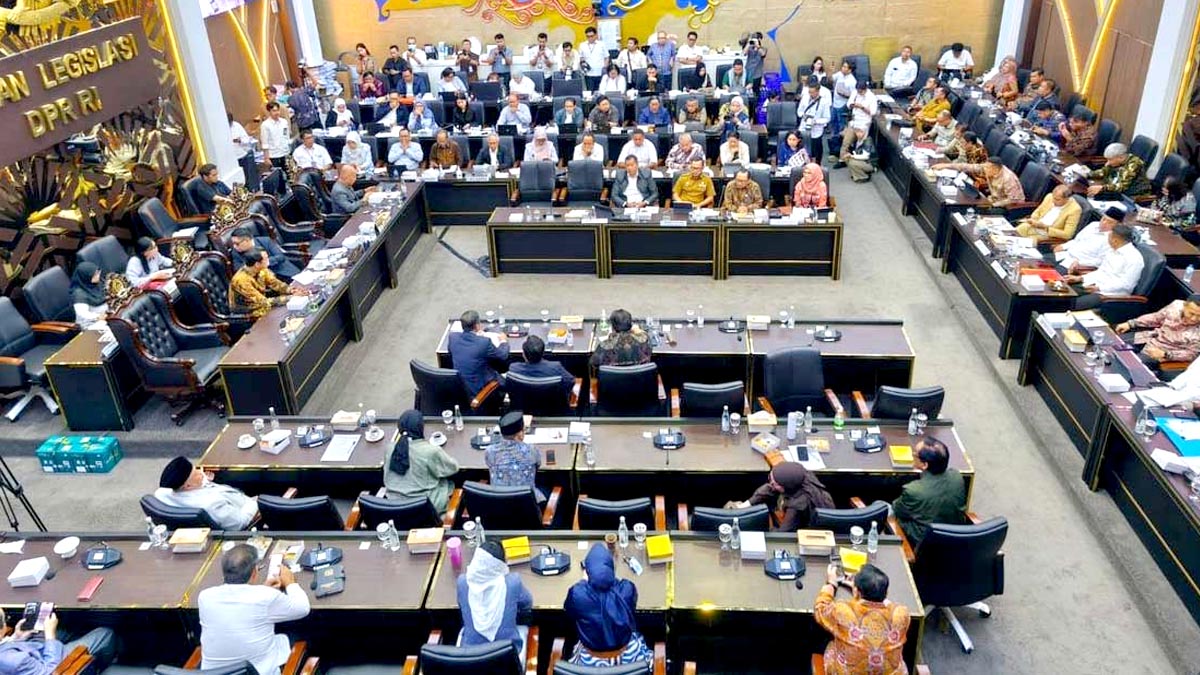
The agreement was announced by Sturman Panjaitan, deputy chairman of the House’s Legislative Body (Baleg), while presenting the report of the Drafting Team and Synchronization Team during a working committee meeting on the bill at the Parliament complex in Jakarta on Monday (Sept. 21, 2026).
Also Read: Indonesia Parliament Passes Agrarian Reform Law with 14 Chapters and 53 Articles
The change is stipulated in Article 1, Point 4 of the draft bill. The committee also agreed on several definitions related to the implementation of agrarian reform, including the definition of Priority Agrarian Reform Locations (LPRA) as areas prioritized for the implementation of agrarian reform.
The bill defines agrarian reform beneficiaries as parties receiving agrarian reform objects who meet the requirements to be formally designated as beneficiaries, according to the House’s official account.
Agency to Be Placed Under President
Ahmad Iman Sukri, chairman of the working committee, said the proposed agrarian reform agency would be placed under and directly accountable to the President.
The agency would have authority covering the planning, implementation and supervision of agrarian reform, as well as the resolution of agrarian conflicts.
Also Read: European Parliament Simplifies EUDR, Palm Oil Compliance Deadline Extended to 2027
The institutional framework is intended to give agrarian reform a dedicated mechanism extending beyond land redistribution, encompassing policy planning, implementation, oversight and the handling of disputes.
The bill also provides for a national agrarian reform roadmap as the basis for planning. The document would set out policy directions, targets, implementation stages, priorities, strategies and performance indicators.
A supervisory council is also included in the framework to support transparency, participation, accountability and effectiveness in the implementation of agrarian reform.
Also Read: KPBN Inacom CPO Price Falls to IDR 15,621/kg on Tuesday (Sept. 22) as Malaysia CPO Drops 0.97%
BRAN Name Had Been Under Discussion
The change from BRAN to LPRA had remained one of the issues under discussion between lawmakers and the government. On Sept. 18, the nomenclature of the proposed agency was still listed as pending during the working committee’s deliberations on the government’s list of issues.
The latest agreement resolves the naming issue by adopting Lembaga Penyelenggaraan Reforma Agraria (LPRA) in the draft legislation.
Also Read: Indonesia’s Agrarian Reform Bill Draws Palm Oil Land Conflict, Worker Concerns
The government had also discussed the possibility of determining the institution’s detailed form and nomenclature through a presidential regulation. The final legislative framework, however, now identifies the agency as LPRA in the draft bill.
The Agrarian Reform Regulation Bill has been agreed at the first-level deliberation stage and is set to proceed to a House plenary session. The draft consists of 14 chapters and 53 articles.
Implications for the Plantation Sector
For Indonesia’s plantation sector, including oil palm smallholders and plantation companies, the proposed framework could become part of the country’s legal architecture governing land rights, land management, agrarian conflicts and the institutional implementation of agrarian reform.
The eventual impact on plantation businesses will depend on the final provisions adopted by the House and government, as well as subsequent implementing regulations governing the authority and operation of the new institution.
Also Read: European Parliament Simplifies EUDR, Palm Oil Compliance Deadline Extended to 2027
The proposed agency’s authority over planning, implementation, supervision and agrarian conflict resolution would make its institutional role relevant to land-use disputes and overlapping claims involving agricultural and plantation areas. (P2)