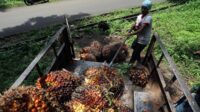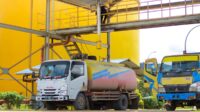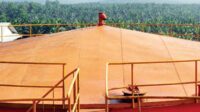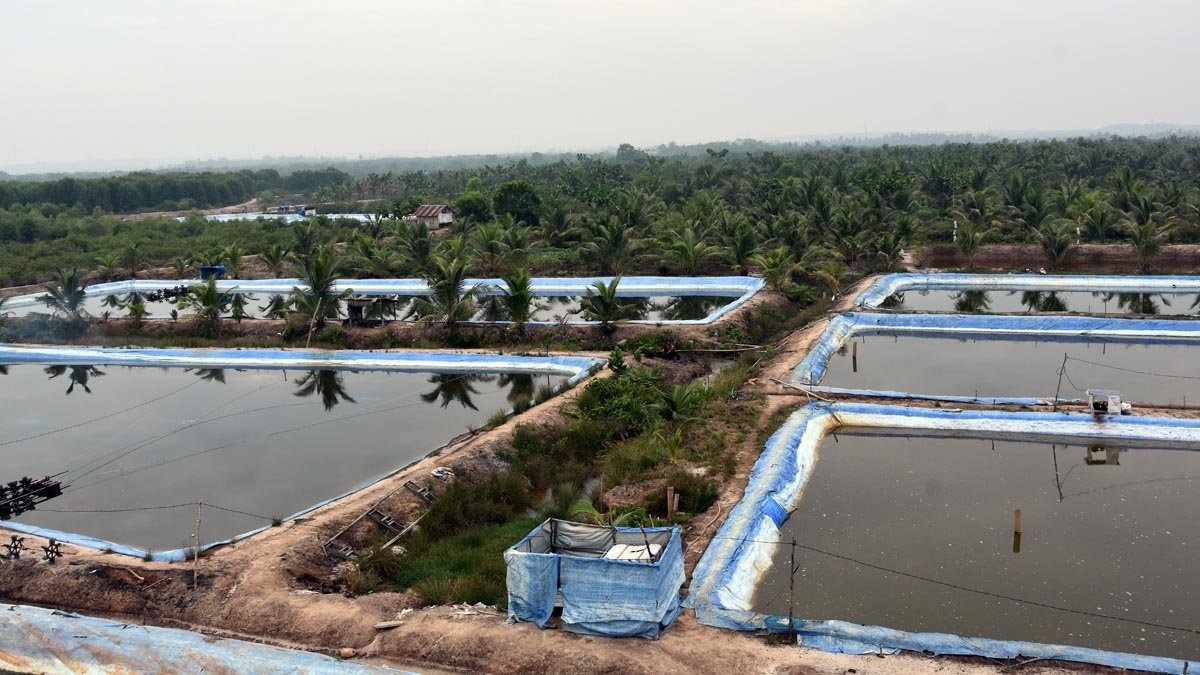
PALMOILMAGAZINE, JAKARTA – Every day, palm oil mills in Indonesia generate massive amounts of waste. It flows, accumulates, and eventually fades from attention—treated as a burden to be managed rather than an opportunity to be maximized. Yet behind its pungent odor and dark color lies an energy potential worth billions of rupiah that remains largely untapped.
This waste is known as palm oil mill effluent (POME), accompanied by piles of biomass such as empty fruit bunches, fiber, and shells. Numerous studies highlight that POME is rich in organic content that can be converted into biogas through anaerobic digestion. Meanwhile, biomass—often dismissed as a production residue—is למעשה a ready-to-use fuel that can be transformed into thermal energy or electricity.
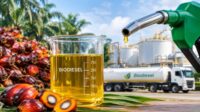
The technology itself is nothing new. Biogas reactors, biomass-based power plants, and energy utilization systems have long been available—and continue to evolve with increasing efficiency. However, in practice, adoption has been slow. Many mills still rely on conventional approaches: managing waste at a minimum level without transforming it into a source of value.
Also Read: Palm Oil Exports Jump Sharply, Strengthening Indonesia’s Non-Oil Trade Performance Early 2026
At this point, the issue is no longer about technology. It shifts into a quieter yet decisive domain: the business model.
Many palm-based bioenergy projects stall not because they are unfeasible, but because they are seen as insufficiently attractive. The internal rate of return (IRR) often falls below investor expectations, with perceived risks outweighing potential rewards. As a result, plans remain plans, and waste returns to its old cycle—flowing without economic meaning.
However, this landscape is beginning to change. A new approach is emerging to bridge the gap between technical potential and financial reality: Energy-as-a-Service (EaaS) through the Energy Service Company (ESCO) scheme.
Also Read: B50 Ambitions Face Supply Risks Without Upstream Palm Oil Reforms
Under this model, mills no longer need to worry about upfront investment. There is no capital expenditure (CAPEX) burden on their balance sheets. Investors or ESCOs step in, bringing both technology and financing. Mills simply pay for the energy produced, much like paying for a service.
This approach fundamentally shifts the perspective. Waste is no longer seen as an operational cost, but as an energy source that generates cash flow.
Simple simulations—based on conservative assumptions drawn from literature and industry practices—indicate potential revenues of up to IDR 16 billion per year from a combination of energy sales and carbon credits. In such a scheme, around 70 percent goes to the ESCO, while 30 percent flows to the mill—without any initial investment. Even more compelling, the IRR can reach 17–19 percent, a range that begins to resonate with investors.
Also Read: China Tightens Green Rules, Palm Oil Industry Faces New Global Standards
Here, waste takes on a new identity. It is no longer something to be disposed of, but something to be negotiated, calculated, and traded.
More broadly, if this model is widely implemented, its impact goes beyond energy efficiency. The palm oil industry could significantly reduce greenhouse gas emissions while creating new revenue streams. In a global context increasingly driven by sustainability standards and ESG principles, this is not merely an innovation—it is a necessity.
Yet, like many transformations, the greatest challenge is not always visible. It lies in the willingness to change the mindset: from merely producing to optimizing; from managing waste to monetizing energy.
Ultimately, the question is no longer whether the technology exists. The answer has long been clear. What remains is how to ensure that the business model is viable, attractive, and simple enough for widespread adoption.
That is where the future of the palm oil industry lies—not in expanding plantations, but in giving new meaning to every drop of its waste.
Author: Idad S. Haq / Lecturer in Palm Oil Processing Technology (ITSB) and trainer in GHG Emission Calculation
Disclaimer: This article reflects the author’s personal views and is solely their responsibility.