
PALMOILMAGAZINE, JAKARTA – The Indonesian Oil Palm Farmers Union (SPKS) has strongly opposed the government’s decision to increase the export levy on crude palm oil (CPO) to 12.5%, up from the previous 10%, as stipulated in Finance Ministry Regulation (PMK) No. 9 of 2026. The organization warns that the policy could put downward pressure on fresh fruit bunch (FFB) prices at the farmer level.
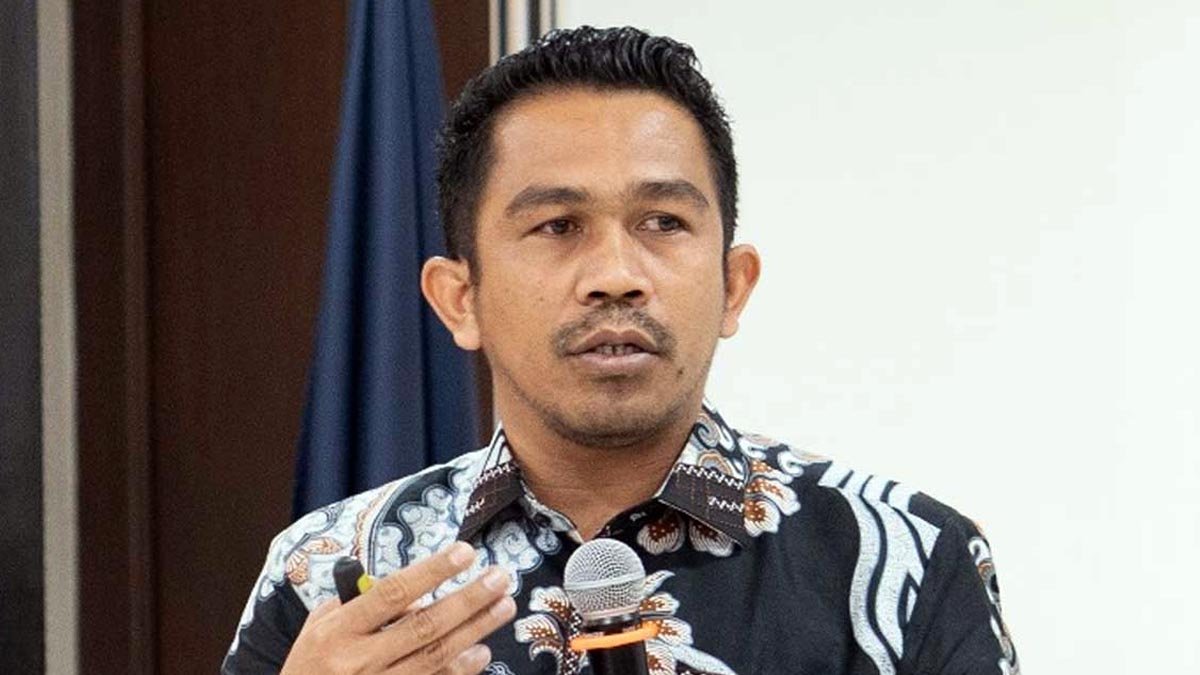
SPKS Chairman Sabarudin stated that the higher export levy could significantly reduce farmers’ income by lowering FFB prices. He referred to a study by the Prananta Center at the University of Indonesia, which found that every 1% increase in the export levy could reduce FFB prices by approximately IDR 333 per kilogram.
“If the CPO export levy increases by 2.5% to reach 12.5%, the impact on farmers could be substantial. FFB prices may decline by around IDR 500 to IDR 800 per kilogram,” Sabarudin said in an official statement received by Palmoilmagazine.com on Monday (March 16, 2026).
Also Read: Former PTPN III Chief Mohammad Abdul Ghani Takes Helm at Agrinas Palma Nusantara
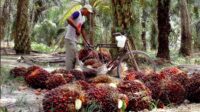
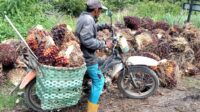
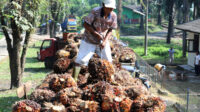
He added that such price declines would directly affect the income of smallholder palm oil farmers, particularly at a time when global economic conditions remain uncertain and plantation production costs continue to rise.
Potential Farmer Losses Could Reach IDR 1.2 Trillion Annually
SPKS believes the new policy could further increase the financial burden on palm oil farmers, who are already facing rising operational costs, including fertilizer prices and plantation maintenance expenses.
Based on the organization’s estimates, if FFB prices decline nationwide, the total losses for smallholder farmers could reach between IDR 85 billion and IDR 100 billion per month.
Also Read: Prabowo Highlights Palm Oil, Cassava, Corn and Sugarcane as Key to Indonesia’s Energy Security
“On an annual basis, the potential losses for palm oil farmers across Indonesia could reach around IDR 1.2 trillion,” Sabarudin said.
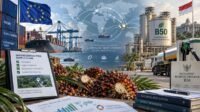
The government introduced the higher export levy partly to finance the expansion of the national biodiesel program, which aims to increase the blending mandate from B40 to B50.
However, SPKS argues that the policy disproportionately burdens farmers while offering limited direct benefits to them.
Also Read: Jambi Palm Oil FFB Price Climbs to IDR 3,669.78/kg for March 13–April 2, 2026 Period
The union also expressed opposition to the planned increase in the biodiesel blending mandate. According to Sabarudin, the biodiesel program has largely been financed through export levy funds collected from the palm oil industry, which ultimately originate from the production chain involving farmers.
“We urge the government to conduct a comprehensive evaluation of the biodiesel mandate policy. In our view, the program does not provide significant benefits to smallholder farmers and instead mainly advantages corporations involved in the biodiesel industry,” he said.
Sabarudin also highlighted structural imbalances within the palm oil supply chain at the farmer level. He noted that many palm oil mills affiliated with large corporations or biodiesel producers still purchase FFB through intermediaries or middlemen.
As a result, farmers often receive prices far below the government’s reference price.
“Ironically, many mills linked to major corporations still buy FFB through intermediaries. This causes farmers to sell their harvest at prices that are about 30% to 40% lower than the government’s benchmark price,” he explained.
Inequality in the Use of Export Levy Funds
SPKS also criticized the allocation of funds collected from the CPO export levy. According to Sabarudin, around 90% of the funds—equivalent to roughly IDR 40 trillion to IDR 50 trillion annually—have been used to support biodiesel subsidies.
“Palm oil farmers clearly feel the imbalance in how these funds are distributed. Most of the money is allocated to biodiesel subsidies for large corporations, while programs specifically benefiting farmers remain very limited,” the organization said in its report.
Also Read: SPKS Promotes Smallholder Replanting Program in Aceh Utara Through Partnership with PTPN IV
SPKS estimates that companies involved in the biodiesel sector may receive total subsidies of between IDR 50 trillion and IDR 60 trillion per year, much of which is financed by the CPO export levy.
In addition, the union pointed out that farmers still face significant barriers in accessing government programs, particularly the Smallholder Palm Oil Replanting Program (PSR).
One of the main obstacles is the requirement for additional administrative documents from government institutions such as the Ministry of Forestry and the National Land Agency (BPN), even though many farmers already hold land ownership certificates.
“The forest area status issue remains a major barrier for farmers trying to access the PSR program. Unilateral designation of forest areas has prevented many farmers from participating,” Sabarudin said.
SPKS also urged the government to increase the replanting assistance fund from IDR 60 million to IDR 90 million per hectare to help farmers cover their living expenses during the replanting period.
“Farmers must think carefully before joining the PSR program because during the replanting period they lose income from their plantations. Therefore, the assistance fund should be increased to help cover their living needs while replanting takes place,” he explained.
In closing, SPKS warned that raising the CPO export levy to 12.5% could contradict the government’s broader goal of reducing poverty.
“If this policy continues, smallholder palm oil farmers could face greater economic pressure. This would contradict President Prabowo’s commitment to poverty alleviation,” Sabarudin concluded.
SPKS hopes the government will reconsider the export levy increase in order to avoid placing additional burdens on smallholder palm oil farmers amid ongoing global economic uncertainty. (P2)