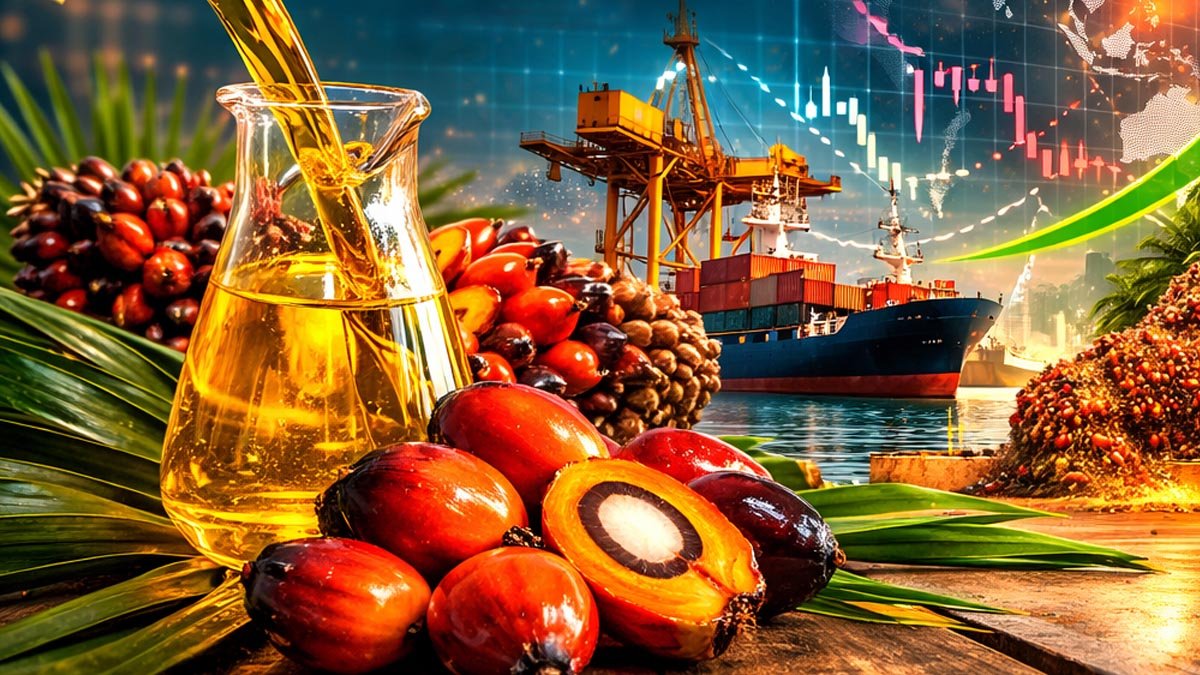
Palm oil futures on Bursa Malaysia Derivatives extended gains across all key contracts, while open interest increased despite lower trading volume, signaling continued market attention to vegetable oil prices, energy markets, and weather risks.
PALMOILMAGAZINE, JAKARTA, INDONESIA — Crude palm oil (CPO) futures on Bursa Malaysia Derivatives closed higher on Wednesday (August 19, 2026), supported by gains in soybean oil prices on the Chicago Board of Trade (CBOT), firmer energy market sentiment, and concerns over potential production declines linked to the El Nino weather phenomenon.
Higher global crude oil prices also provided support to palm oil market sentiment. The energy market remained in focus amid the ongoing conflict between the United States and Iran, contributing to broader strength across vegetable oil commodities.
Also Read: Malaysian CPO Prices Hit Highest Level Since April, KPBN Price Rises to IDR 15,835/kg
According to Bernama, all major CPO futures contracts ended higher at the close of trading.
The September 2026 contract rose RM38 to RM4,654 per tonne, while the October 2026 contract gained RM40 to RM4,794 per tonne. The November 2026 contract increased RM33 to RM4,893 per tonne.
Gains extended to contracts further along the curve. The December 2026 contract advanced RM29 to RM4,972 per tonne, while the January 2027 contract rose RM26 to RM5,033 per tonne. The February 2027 contract gained RM23 to RM5,071 per tonne, moving further above the RM5,000 level.
Also Read: KPBN Inacom CPO Prices Withdraw as Malaysian Palm Oil Futures Close Higher
The domestic Indonesian market moved in a different direction. CPO offered through PT Kharisma Pemasaran Bersama Nusantara (KPBN) Inacom ended in withdrawal (WD) during Wednesday’s trading session.
The highest CPO offer was recorded at IDR 15,755/kg, down IDR 80/kg or approximately 0.51% from IDR 15,835/kg in the previous session on Tuesday (August 18, 2026).
The contrasting performance between the domestic market and Bursa Malaysia highlights the range of factors currently influencing CPO prices, from domestic demand and physical market transactions to developments in global vegetable oil and energy markets. (P3)