

The UK government’s decision not to impose safeguard tariffs on subsidized US biodiesel imports is raising concerns over shrinking domestic production capacity, energy security and the future of the country’s renewable fuels industry.
PALMOILMAGAZINE, LONDON — The UK biodiesel industry is facing renewed pressure after the government rejected proposals to impose safeguard duties on subsidized biodiesel imports from the United States, raising concerns over the viability of domestic production capacity.
The decision follows an official assessment that tariffs of more than £250 per tonne could have provided additional protection for UK biodiesel producers. However, Business Secretary Jonathan Reynolds rejected the proposed duties in early September 2026 after a wider economic-interest assessment concluded that the measure would generate only about £3 million a year in benefits for UK producers, while imposing an estimated £46 million in additional costs on downstream industrial users and consumers.
Also Read: Indonesia Sets September 2026 Biodiesel HIP at IDR 15,025/Liter, Up IDR 101
The Renewable Transport Fuel Association (RTFA), which represents the UK renewable fuels industry, warned that the decision could place further pressure on domestic biodiesel production.
The association said the UK now has only three biodiesel production facilities, down from five in previous years.
RTFA Chief Executive Alex Wolfe said the policy could leave the UK increasingly dependent on imported renewable fuels, exposing the domestic market to greater risks from international price movements and changes in global trade conditions.
Also Read: Indonesia’s B50 Biodiesel Push Puts Smallholder Access to CPO Supply Chain in Focus
“The UK needs to expand domestic capacity for low-carbon fuels to support the energy transition, rather than see existing capacity decline,” Wolfe said.
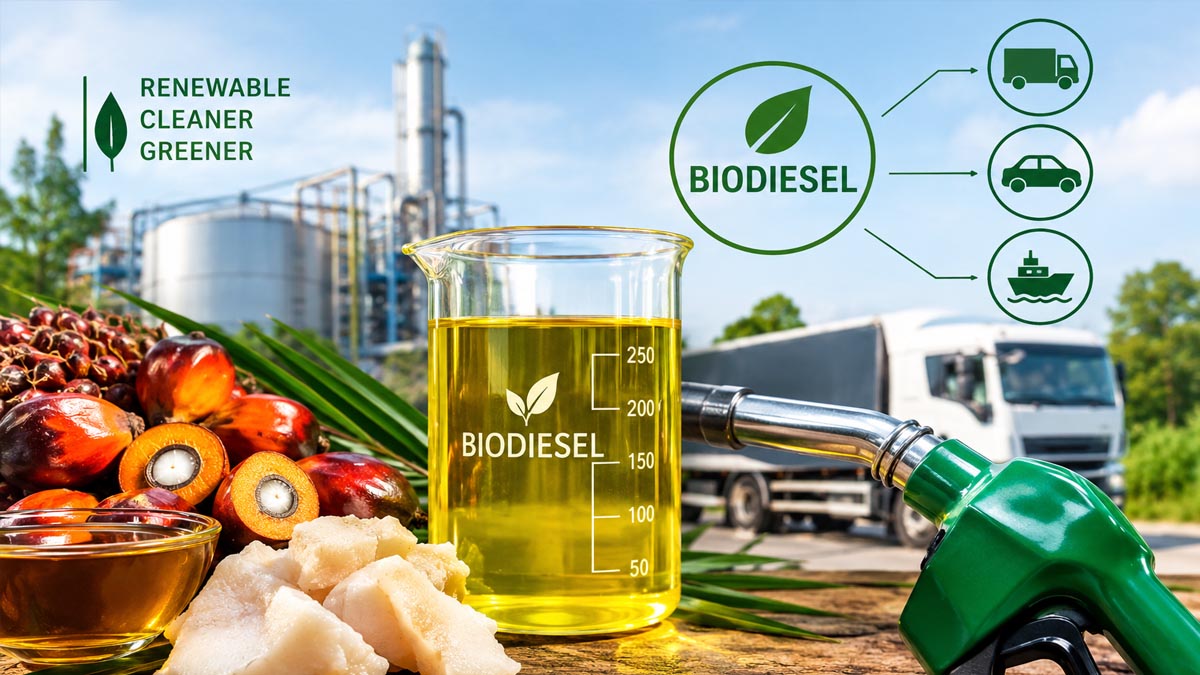
Biodiesel can be produced from a range of renewable feedstocks, including used cooking oil, waste oils and animal fats. It is blended with conventional fuels for use in road vehicles, trucks and marine transport.
The industry considers biodiesel an important component of efforts to reduce carbon emissions and support the UK’s net-zero ambitions.
Global Biodiesel Production Set to Rise
The pressure on UK producers comes as global biodiesel demand and production are expected to continue expanding.
The World Bioenergy Association, together with the Organisation for Economic Co-operation and Development (OECD) and the Food and Agriculture Organization (FAO), projects global biodiesel production to increase by nearly 40%, from around 71 billion liters in 2024 to 99 billion liters by 2035.
Also Read: Indonesia Agrarian Reform Law Raises Land Risk for Malaysian Palm Oil Companies
Despite that broader growth outlook, UK producers currently supply only about 7% of the country’s domestic biodiesel demand. Imports from the US are estimated to account for roughly one-quarter of the UK market.
Additional supplies come from other countries and regions, including China, the European Union and Malaysia.
The figures have added to the debate over the role of domestic production in strengthening the UK’s renewable fuel supply security.
Also Read: GAPKI Strengthens Forest and Land Fire Prevention, Expands Monitoring Around Palm Oil Concessions
Dickon Posnett, Corporate Affairs Director at Argent Energy, one of the UK’s remaining biodiesel producers, said the industry needs greater clarity over the government’s long-term policy direction.
He said greater policy certainty would be critical for companies deciding whether to invest in new capacity and maintain existing renewable fuel production in the UK.
Concerns Over Impact of US Imports
The dispute dates back to March 2025, when UK biodiesel producers filed a complaint with the Trade Remedies Authority, arguing that subsidized imports from the US were putting pressure on domestic producers.
The UK trade authority subsequently found evidence of injury to the domestic industry. However, proposed trade protection was ultimately not implemented after the government concluded that the requirements under its broader economic-interest test had not been met.
Also Read: Indonesia Accelerates Biofuel and Bioethanol Drive to Strengthen Energy Independence
Posnett has questioned whether wider considerations, including UK-US trade relations, may have influenced the decision. The comments, reported by the Financial Times, represent an industry perspective rather than an official government finding.
The biodiesel debate has also revived memories of the UK’s earlier trade-policy decisions involving bioethanol, a different type of renewable fuel.
Last year, the UK government agreed to a 1.4 billion-liter quota for US bioethanol imports as part of a trade arrangement with the administration of US President Donald Trump.
Also Read: Alleged POME Fraud in Indonesia Raises Red Flags Across Global Biofuel Supply Chains
Following the arrangement, the UK’s largest bioethanol plant was closed. The facility had previously been associated with around 4,000 jobs, leaving only one bioethanol production facility operating in the country.
Industry Calls for Long-Term Policy Certainty
The RTFA is now consulting legal advisers over possible action against the government’s decision and is calling for stronger measures to support domestic renewable fuel production.
The Department for Business, Innovation and Trade, meanwhile, said the government remains committed to developing a competitive UK low-carbon fuels industry.
Also Read: Palm Acid Oil Gains Ground in Europe Amid Biofuel and Oleochemical Expansion
The government also said domestic producers benefit from existing trade-remedy measures, while the Renewable Transport Fuel Obligation (RTFO) continues to support the use of sustainable renewable fuels, including biodiesel.
The UK debate highlights a broader challenge facing countries seeking to develop domestic renewable fuel industries. Imported fuels can provide users with additional supply at potentially lower costs, but maintaining domestic production capacity also factors into energy security, investment decisions and the long-term development of low-carbon industries. (P2)