From longer shelf life to cost efficiency, palm oil continues to be one of the most important ingredients in the global food industry.
PALMOILMAGAZINE, Jakarta, Indonesia — Palm oil has become one of the world’s most widely used vegetable oils in the food industry, particularly in packaged snack foods, bakery products, confectionery, and processed foods. Its popularity is driven not only by economic advantages but also by its unique functional properties that help manufacturers deliver consistent product quality.
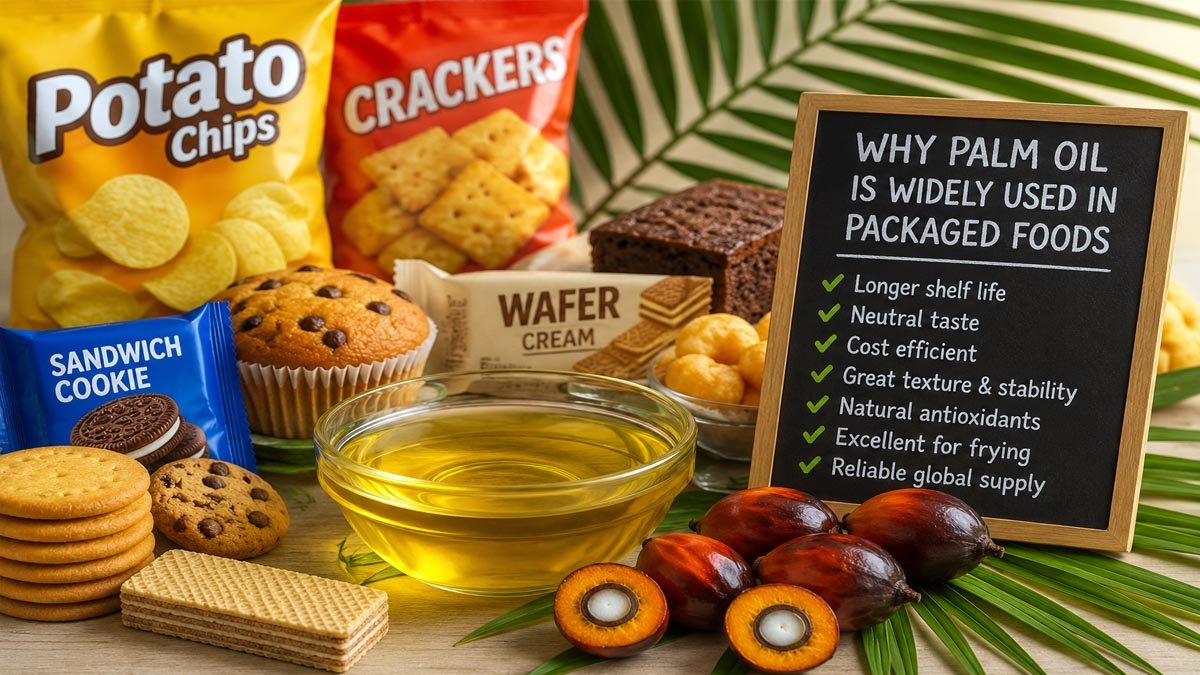
As consumer demand for convenient, affordable, and longer-lasting food products continues to grow, palm oil remains an essential ingredient for food manufacturers around the world. Here are seven key reasons why.
Also Read: China GACC Audit Boosts Indonesia’s Palm Oil Export Prospects
1. Longer Shelf Life
Palm oil has excellent oxidative stability, making it less susceptible to rancidity than many other vegetable oils. This helps packaged foods maintain their freshness, flavor, and texture for extended periods, reducing food waste throughout transportation, retail, and storage.
2. Neutral Taste
Unlike some vegetable oils that can alter a product’s flavor, palm oil has a mild, neutral taste. This allows food manufacturers to preserve the intended flavor profile of products ranging from biscuits and cakes to crackers, chips, and confectionery.
Also Read: Indonesia Cuts August CPO Reference Price to USD 996.52/MT as Export Charges Adjust
3. High Productivity and Cost Efficiency
Oil palm is the world’s most productive oil crop, producing significantly more oil per hectare than soybean, sunflower, or rapeseed. This high yield contributes to lower production costs, helping manufacturers offer competitively priced food products while using less agricultural land.
4. Superior Texture and Functionality
Palm oil’s naturally semi-solid consistency at room temperature makes it highly versatile in food processing. It enhances the crispness of fried snacks, improves the softness of baked goods, and provides stable texture in fillings, spreads, and other processed foods without requiring hydrogenation.
5. Natural Oxidative Stability
Palm oil naturally contains antioxidants, including tocopherols and tocotrienols, which help protect food products from quality deterioration. These properties can reduce reliance on artificial preservatives and support the growing demand for cleaner ingredient labels.
6. Excellent Performance for Frying
With a relatively high smoke point and strong thermal stability, palm oil performs well during commercial frying. It helps produce evenly cooked, crispy snack foods while maintaining product quality through repeated heating cycles commonly used in food manufacturing.
Also Read: Palm Oil Nutrition Program: From Cooking Oil to Supplements, A New Strategy Against Stunting
7. Reliable Global Supply
Indonesia and Malaysia account for the majority of global palm oil production, providing a stable supply for food manufacturers worldwide. In addition, the growing availability of Certified Sustainable Palm Oil (CSPO) allows companies to source palm oil that meets internationally recognized sustainability standards, supporting responsible production and supply chain transparency.
A Strategic Ingredient for the Global Food Industry
Palm oil continues to play a critical role in modern food manufacturing because it combines performance, affordability, versatility, and supply reliability. Its broad range of applications makes it difficult to replace in many food products without affecting quality, texture, or production costs.
At the same time, the industry is placing greater emphasis on sustainable sourcing through certification programs and responsible agricultural practices. As food manufacturers work to balance performance with environmental responsibility, sustainably produced palm oil is expected to remain a key ingredient in packaged foods for years to come. (P2)