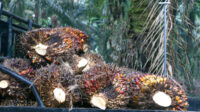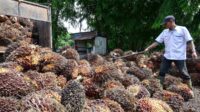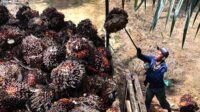


PALMOILMAGAZINE, JAKARTA — Five palm oil mills in Pesisir Selatan, West Sumatra, have been reported to the central government over alleged unfair Fresh Fruit Bunch (FFB) pricing practices that could be costing independent smallholders an estimated IDR 44 billion each month.
Novermal, a member of the Pesisir Selatan Regional Legislative Council (DPRD), submitted the complaint to the government, alleging that the mills have been purchasing FFB from independent smallholders at prices significantly below those received by farmers in other districts. He also questioned weight deductions of between 9% and 12%, which he said were considerably higher than the rates applied elsewhere in West Sumatra.
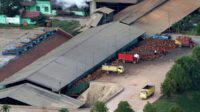
The five mills named in the complaint are PT Incasi Raya Sudetan POM in Teluk Ampalu, Inderapura; PT Sumatera Jaya Agro Lestari in Teluk Ampalu, Inderapura; PT Transco Energi Utama in Tiga Sungai, Inderapura; PT Kemilau Permata Sawit in Kubu, Tapan; and PT Muara Sawit Lestari in Lunang Selatan, Lunang.
Also Read: West Sumatra Sets Smallholder FFB Price at IDR 3,632/kg for November 15–21, 2026
Novermal suspects that the pricing practices could involve anti-competitive conduct, including possible agreements on FFB purchase prices and the application of weight deductions without clearly established standards.
He argued that independent smallholders in Pesisir Selatan have consistently received some of the lowest FFB prices in West Sumatra, despite the region’s substantial oil palm plantation area.
FFB Price Gap Widens Between Pesisir Selatan and Other Districts
Data cited in the complaint highlight a significant disparity between FFB prices received by independent smallholders in Pesisir Selatan and those in other parts of West Sumatra.
On May 30, 2026, the provincial government set the FFB reference price for plasma and partner smallholders at IDR 4,005 per kg for the May 22–31 pricing period.
Also Read: KPBN Inacom CPO Price Falls 2.50% to IDR 13,658/kg on Nov. 23 as Malaysia Futures Slide
Meanwhile, based on industry information presented by Novermal, independent smallholders in Sijunjung were receiving between IDR 3,080 and IDR 3,120 per kg, with weight deductions of 4%–5%.
In Pesisir Selatan, however, independent smallholder FFB prices during the same period reportedly ranged from just IDR 2,070 to IDR 2,350 per kg. Weight deductions were also significantly higher, reaching 9%–12%.
The disparity reportedly persisted into November 2026.
Also Read: Indonesia Secures 1.9 Million-Ton CPO Export Quota to EU Under IEU-CEPA, Effective January 1, 2027
For the November 15–21 period, the provincial government established the plasma FFB reference price at IDR 3,632 per kg. Independent smallholders in Sijunjung were reportedly receiving between IDR 3,200 and IDR 3,480 per kg, with deductions of 4%–5%.
By comparison, independent smallholder FFB prices in Pesisir Selatan reportedly stood at only IDR 2,665–IDR 2,875 per kg, while weight deductions remained at 9%–12%.
“Not only are the prices the lowest, but the weight deductions are also the highest,” Novermal wrote in his complaint, obtained by PalmOilMagazine on November 21, 2026.
Also Read: Indonesia-EU CEPA Signed: Palm Oil Exports Set to Gain Zero-Tariff Access to European Market
CPO Extraction Rates and Weight Deductions Under Scrutiny
Beyond the overall price disparity, Novermal also questioned differences in purchasing prices among the five mills.
According to information from local palm oil industry participants cited in his report, two mills associated with the Incasi Raya Group — PT Incasi Raya Sudetan POM and PT Sumatera Jaya Agro Lestari — allegedly purchased independent smallholder FFB at IDR 100–IDR 200 per kg below the prices offered by the other three mills.
Also Read: Indonesia Secures Zero-Tariff Access for 90.4% of Export Tariff Lines Under EU Trade Deal
Mill management, he said, had frequently attributed the lower purchase prices to the allegedly weaker crude palm oil (CPO) extraction rates of FFB produced by independent smallholders in Pesisir Selatan.
However, Novermal challenged that explanation by referring to a field-based extraction-rate assessment conducted in 2018 by the Pesisir Selatan Regency Government in collaboration with the Indonesian Oil Palm Research Institute (PPKS).
The assessment recorded a CPO extraction rate of 22.5% for oil palm trees aged 10 years, higher than the reported 21.8% extraction rate for plasma or partner smallholder plantations.
Also Read: Riau Independent Smallholder FFB Prices Fall IDR 117 to IDR 3,602/kg for November 18–24
The findings, he argued, raise questions about whether differences in extraction rates provide sufficient justification for the substantially lower prices paid to independent smallholders.
Weight deductions have also become a major point of contention. Novermal questioned the application of 9%–12% deductions in Pesisir Selatan, compared with the 4%–5% reportedly applied in Sijunjung.
He argued that deductions should be based on transparent and measurable criteria rather than unilateral decisions by mills.
Also Read: North Sumatra FFB Prices Drop IDR 109.36/kg to IDR 3,576.33 for Nov. 18–24
Independent smallholders, he emphasized, are seeking reasonable FFB prices that reflect actual CPO extraction rates, alongside clearly defined and mutually agreed weight-deduction standards.
Limited Access to Mills Weakens Farmers’ Bargaining Position
The potential financial impact is particularly significant given the scale of independent smallholder plantations in Pesisir Selatan.
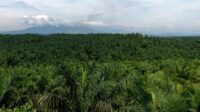
Novermal estimates that independent smallholder oil palm plantations cover approximately 44,000 hectares in the regency. Corporate plantations, including those operating under land-use rights (HGU), account for another 36,000 hectares and have reportedly entered the replanting stage.
Also Read: Jambi FFB Prices Drop IDR 62.31/kg to IDR 3,552.08 for Nov. 20–26, 2026
Plasma plantations, meanwhile, cover only around 700 hectares.
He also said that no independent smallholder plantations in the area had established formal partnerships with palm oil mills. This situation leaves farmers with limited marketing alternatives and makes them heavily dependent on the five mills identified in the complaint.
Using an estimated average FFB price gap of IDR 1,000 per kg between independent smallholders and plasma farmers, Novermal calculated that potential farmer losses could reach IDR 44 billion per month.
The estimate is based on 44,000 hectares of independent smallholder plantations, with average monthly production assumed at one tonne of FFB per hectare.
Also Read: Palm Oil Productivity: PASPI Sees 14 Million-Tonne Production Opportunity in Existing Plantations
Under this calculation, the price disparity represents a substantial economic burden for farmers, particularly given their limited bargaining power and dependence on nearby mills.
Government Urged to Investigate Five Palm Oil Mills
Novermal has called on the central government to conduct unannounced inspections of the five mills and summon their management teams to explain their FFB purchasing mechanisms, pricing formulas and weight-deduction policies.
He also urged the government to establish a more transparent and equitable pricing mechanism based on CPO extraction rates assessed through an open process involving farmer representatives.
In addition, he called for clear standards governing weight deductions, with the criteria agreed upon by both mills and smallholder representatives.
More broadly, Novermal wants the government to introduce additional regulations covering FFB pricing and weight deductions for independent smallholders who have yet to establish formal partnerships with palm oil mills.
He argued that independent smallholders in Pesisir Selatan have not received adequate protection from either the regency or provincial governments, making stronger intervention from the central government necessary.
The allegations of possible price-fixing arrangements and excessive weight deductions, however, remain claims presented by Novermal. Further investigation and clarification from the five companies and relevant authorities will be required to establish whether the alleged practices occurred.
The companies named in the complaint have yet to have their responses reflected in the report. (P2)