

PALMOILMAGAZINE, JAKARTA, INDONESIA — Indonesia’s palm oil production recorded a strong increase in September 2026, but the additional output did not translate into higher inventories as rising exports and domestic consumption continued to absorb supplies.
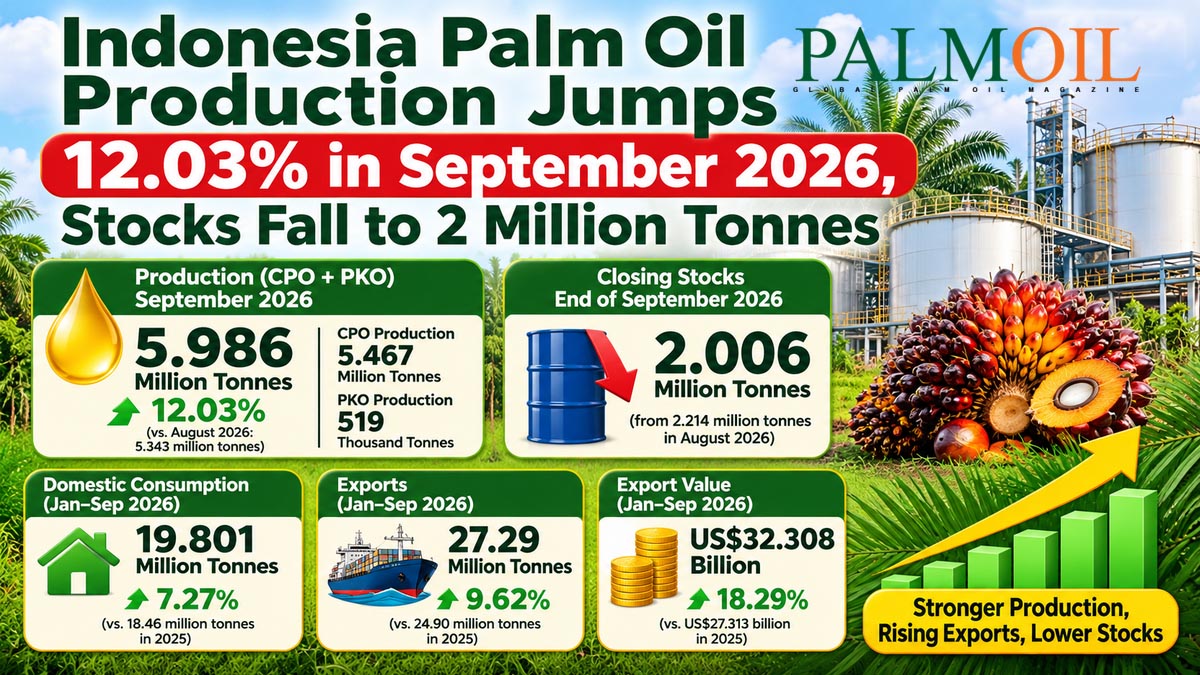
The Indonesian Palm Oil Association (GAPKI) reported that combined crude palm oil (CPO) and palm kernel oil (PKO) production reached 5.986 million tonnes in September, up 12.03% from 5.343 million tonnes in August.
Despite the monthly production increase, closing palm oil stocks declined to 2.006 million tonnes at the end of September, compared with 2.214 million tonnes a month earlier.
According to GAPKI Executive Director Mukti Sardjono, September CPO production reached 5.467 million tonnes, increasing from 4.88 million tonnes in August. PKO production also rose to 519,000 tonnes from 464,000 tonnes over the same period.
The latest figures were disclosed in GAPKI’s official report on Indonesia’s palm oil industry performance through September 2026, received by PalmOilMagazine on November 18, 2026.
On a cumulative basis, combined CPO and PKO production reached 46.984 million tonnes during January–September 2026, an increase of 8.42% from 43.335 million tonnes recorded in the corresponding period last year.
Also Read: Indonesia-EU CEPA Signed: Palm Oil Exports Set to Gain Zero-Tariff Access to European Market
Domestic Palm Oil Consumption Remains Substantial
While production accelerated, domestic palm oil consumption remained relatively stable in September.
GAPKI recorded total domestic consumption of 2.277 million tonnes, slightly below the 2.304 million tonnes reported in August.
Biodiesel remained the largest component of domestic demand, accounting for 1.323 million tonnes, although consumption declined from 1.35 million tonnes in the previous month.
Also Read: Indonesia Palm Oil Consumption and Exports Rise, August Stocks Reach 2.214 Million Tons
Food consumption also edged down to 764,000 tonnes from 775,000 tonnes in August. In contrast, demand from the oleochemical industry increased to 190,000 tonnes from 180,000 tonnes.
For the January–September 2026 period, total domestic palm oil consumption reached 19.801 million tonnes, representing 7.27% growth from 18.46 million tonnes in the same period of 2025.
The figures underline the continued importance of domestic demand, particularly the biodiesel sector, in absorbing Indonesia’s palm oil output.
Also Read: Indonesia Domestic Palm Oil Consumption Seen Surpassing Exports in 2026
Higher Exports Add Pressure on Palm Oil Stocks
Export performance provided another important factor in September’s supply and demand balance.
Indonesia exported 3.92 million tonnes of palm oil products during the month, up 9.26% from 3.588 million tonnes in August.
Cumulative exports for January–September 2026 reached 27.29 million tonnes, marking an increase of 9.62% compared with the corresponding period last year.
The combination of stronger exports and substantial domestic consumption contributed to the decline in inventories, despite the significant increase in monthly production.
Based on GAPKI’s cumulative supply and demand figures, Indonesia entered 2026 with initial stocks of 2.068 million tonnes. Production during January–September reached 46.984 million tonnes, while domestic consumption totaled 19.801 million tonnes.
Exports amounted to 27.29 million tonnes, with imports recorded at approximately 46,000 tonnes.
Against this supply and demand backdrop, closing stocks stood at 2.006 million tonnes at the end of September, down from 2.214 million tonnes in August.
The development indicates that higher production alone was insufficient to rebuild inventories as export shipments and domestic requirements continued to absorb available supplies.
Also Read: Indonesia Secures 1.9 Million-Ton CPO Export Quota to EU Under IEU-CEPA, Effective January 1, 2027
Palm Oil Export Value Rises to US$32.3 Billion
Indonesia’s stronger export performance was also reflected in higher trade earnings.
GAPKI reported that the export value of palm oil products reached US$4.762 billion in September 2026, increasing from US$4.289 billion in August.
The improvement was supported by higher export volumes and an increase in average CPO prices during the month.
Also Read: Indonesia Secures Zero-Tariff Access for 90.4% of Export Tariff Lines Under EU Trade Deal
For the first nine months of 2026, cumulative export earnings reached US$32.308 billion, up 18.29% from US$27.313 billion recorded during January–September 2025.
The faster growth in export value compared with export volume also highlights the contribution of improved average selling prices to Indonesia’s palm oil trade performance.
Overall, GAPKI’s latest data show an industry operating amid simultaneous growth in production, domestic consumption and exports. With inventories declining despite higher output, developments in production, biodiesel demand and international shipments will remain important indicators for assessing Indonesia’s palm oil supply and demand balance in the final months of 2026. (P2)