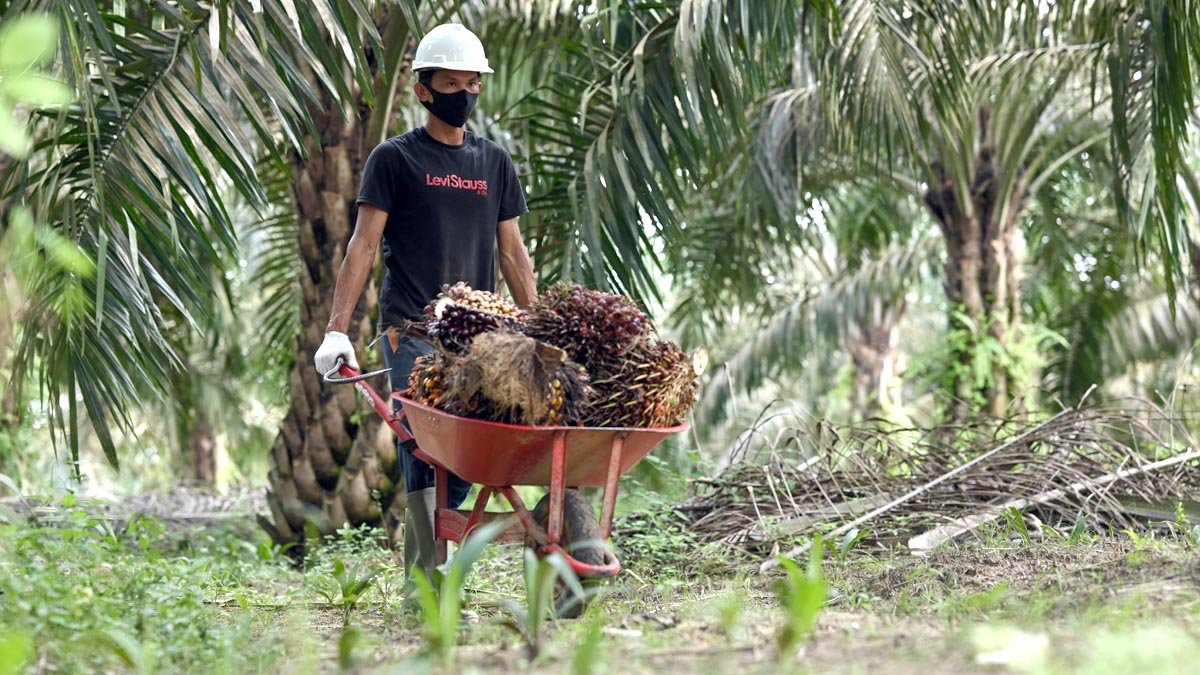
PALMOILMAGAZINE, JAKARTA – A member of Indonesia’s House of Representatives (DPR RI) has called on state-owned PT Agrinas Palma Nusantara to make smallholder palm oil cooperatives its primary partners in managing plantations reclaimed from forest enforcement operations, arguing that farmers should play a central role in the country’s evolving palm oil value chain.
Ateng Sutisna, a member of Commission XII from the Prosperous Justice Party (PKS), made the proposal during a meeting with Sawit Watch, the Indonesian Oil Palm Smallholders Union (SPKS), and other farmer organizations. The discussion gathered recommendations on improving palm oil governance, with the input expected to support policy refinement by the Ministry of Energy and Mineral Resources, particularly as Indonesia advances its B50 biodiesel program.
According to Ateng, independent palm oil farmers should not be limited to supplying fresh fruit bunches (FFB), harvesting services, or labor. Instead, they should become equal business partners with access to economic benefits, capacity-building opportunities, and participation in downstream palm oil development.
Also Read: South Sumatra Raises Palm Oil FFB Price to IDR3,769.58/kg for Early July 2026
He expressed support for the government’s efforts to reclaim illegally managed plantations through the Forest Area Enforcement Task Force under Presidential Regulation No. 5 of 2025, but stressed that the process must also ensure legal certainty, social justice, and sustainable livelihoods for communities that depend on the plantation sector.
“Reclaiming land should not simply change who controls it. This is an opportunity to build a more inclusive, transparent, and sustainable palm oil governance system where local communities remain at the heart of resource management,” Ateng said.
To achieve that goal, Ateng proposed that Agrinas adopt a partnership model centered on legally established producer cooperatives that operate transparently and accountably. Such a framework, he said, would better reflect fair business partnerships by allowing farmers to capture greater economic value while strengthening their position throughout Indonesia’s palm oil supply chain.
Also Read: BPDP Puts Research at the Heart of Indonesia’s Sustainable Palm Oil Future
He also cautioned against relying permanently on the vendor scheme currently being prepared by Agrinas to manage more than 130,000 hectares of community-owned oil palm plantations located within forest areas. While the arrangement may serve short-term operational needs, he argued that it should not become the long-term management model.
“Farmers must have opportunities to grow through stronger institutions, fair benefit-sharing, improved skills, and access to downstream industries. They should not remain vendors indefinitely,” he said.
Ateng further urged the government to prevent former land operators from regaining control through new contractual arrangements. He called for rigorous due diligence, greater transparency, and strong public oversight to ensure that previous management practices do not re-emerge under different structures.
He recommended that the government, Commission XII, the State-Owned Enterprises management body, and PT Agrinas Palma Nusantara jointly develop a policy framework that formally recognizes farmer cooperatives as strategic partners, improves transparency in land management, protects local workers, promotes fair FFB trade, and accelerates the resolution of agrarian conflicts through participatory approaches.
The proposal aligns with recommendations from Sawit Watch and SPKS, both of which advocate for smallholders to become active participants in Indonesia’s palm oil industry rather than remaining raw material suppliers.
Also Read: GAPKI Urges Industry-Driven Research to Strengthen Sustainable Palm Oil Innovation
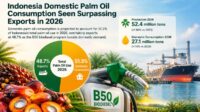
Looking ahead, Ateng emphasized that the long-term success of Indonesia’s B50 biodiesel program will depend not only on downstream processing capacity but also on strengthening upstream production. Millions of hectares of smallholder oil palm plantations, he noted, have yet to be fully integrated into the national biodiesel supply chain.
He concluded that empowering farmer cooperatives will be essential to ensuring the B50 program delivers broader economic benefits while supporting Indonesia’s long-term energy transition. (P2)