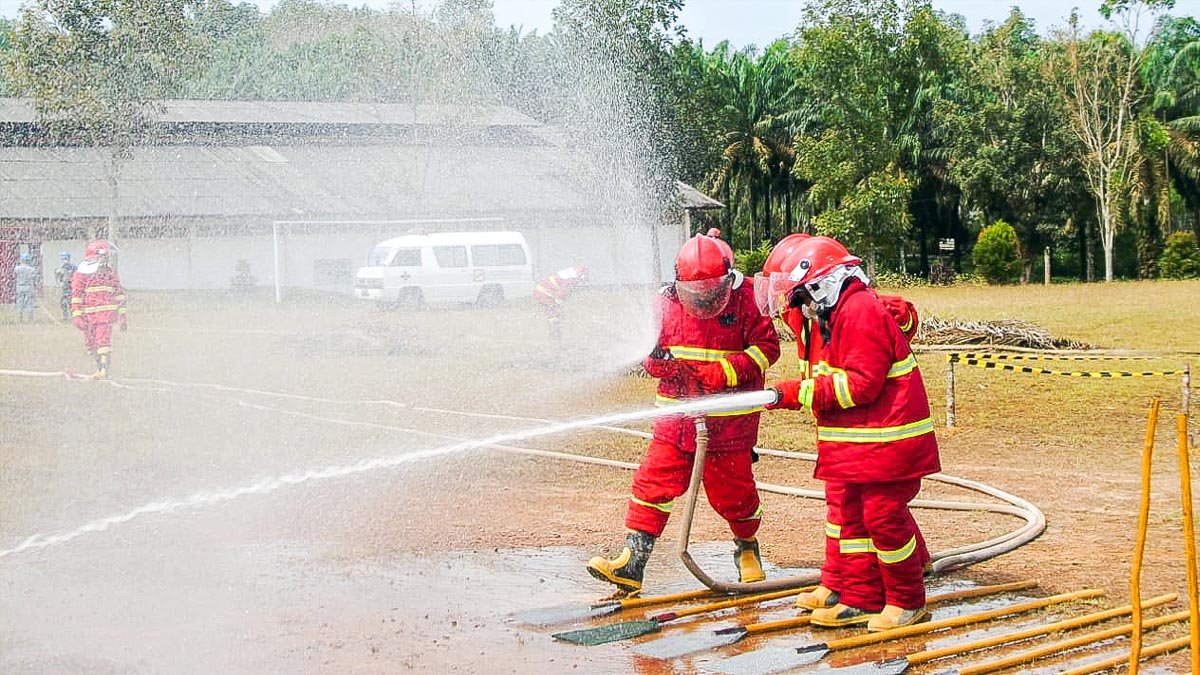
PALMOILMAGAZINE, JAKARTA — The Indonesian Forest Concessionaires Association (APHI) and the Indonesian Palm Oil Association (GAPKI) have urged their member companies to strengthen preparedness and take concrete measures to prevent forest and land fires, particularly in areas facing the dry season and elevated fire risks.
APHI Chairman Soewarso said fire prevention must be a priority for all companies holding Business Licensing for Forest Utilization (PBPH). APHI members are expected to ensure the readiness of personnel, equipment and infrastructure, early-warning systems, patrols, and coordination with local communities and regional governments.
“We urge all APHI members to remain vigilant and not wait until a fire occurs. Conduct early detection, regular patrols, check water sources, ensure equipment and personnel are ready, and immediately respond to every detected hotspot,” Soewarso said in a statement received by PalmOilMagazine on Thursday (13/8).
Also Read: Industry and Public Accountability in Efforts to Mitigate Forest and Land Fires
He said companies should also strengthen coordination with Manggala Agni, Regional Disaster Management Agencies (BPBD), local governments, law enforcement authorities and other companies operating in neighboring areas.
Such coordination is essential because forest and land fires do not recognize administrative or concession boundaries.
Soewarso also called on APHI members to strengthen engagement with communities around their operating areas through education on zero-burning land clearing, the development of Fire-Aware Communities and Villages, joint patrols and alternative livelihood programs.
Also Read: Indonesia Strengthens Dry Season Mitigation to Safeguard Palm Oil Productivity and Prevent Wildfires
“Forest and land fire prevention cannot be carried out solely within company areas. Communities must be involved as key partners because they are closest to the locations and can serve as the first line of defense in detecting and preventing fires,” he said.
APHI also encouraged members to provide timely and transparent information on field conditions and fire prevention measures. Greater transparency, it said, would help the government and public assess the preparedness and contribution of businesses to fire prevention efforts.
Companies are expected to document patrols, public outreach, training, equipment inspections, hotspot monitoring, wetting of fire-prone areas and community assistance. Such documentation can also serve as an evaluation tool for continuously improving fire prevention systems.
Also Read: When Europe Burns: A Reflection on Wildfires and Scientific Consistency
Meanwhile, GAPKI Chairman Eddy Martono Rustamadji said palm oil companies belonging to the association must also strengthen their preparedness, ensure that no land clearing or cultivation is carried out using fire, and tighten monitoring both inside and around plantation areas.
“We are asking GAPKI members to ensure that every prevention system is operating properly, from hotspot monitoring and field patrols to the readiness of firefighting teams, equipment and water supplies, as well as coordination with communities and local stakeholders,” Eddy said.
He emphasized that forest and land fire prevention is a shared responsibility because fires affect not only the environment, but also public health, social activities, the economy and business sustainability.
Also Read: CPO Price Falls to IDR 15,602/kg as KPBN Inacom Tender Ends in Withdrawal
GAPKI is also encouraging its members to strengthen engagement with farming and plantation communities, provide fire prevention facilities and infrastructure, and develop productive economic activities that can reduce the use of fire for land clearing.
“Companies must be present alongside communities, not only when fires occur. Education, training, joint patrols and alternative economic development must be carried out consistently so that prevention becomes a shared culture,” Eddy said.
Also Read: 9th Borneo Forum 2026: GAPKI Highlights Innovation and Productivity as Keys to Future Growth
Strengthening Early Warning and Weather Monitoring
APHI and GAPKI will strengthen cross-sector coordination through public education, integrated patrols, alternative livelihood programs, human resource development, early-detection technology and stronger Fire-Aware Community initiatives.
The two associations also highlighted the potential impact of El Niño and the resulting increase in forest and land fire risks. They called for more intensive dissemination of regional and local weather forecasts through mass media.
Also Read: GAPKI Strengthens Indonesia–Russia Vegetable Oil Cooperation Through Strategic Agreement
Company management is also encouraged to actively monitor weather developments through official channels operated by the Indonesian Meteorology, Climatology and Geophysics Agency (BMKG) and other weather information platforms.
Weather information is expected to serve as a basis for increasing vigilance, strengthening preparedness and carrying out early fire prevention measures.
Both associations further urged members to immediately report any signs of fire and deploy available resources for initial response to prevent fires from spreading.
Also Read: GAPKI: Indonesia’s Palm Oil Output Slips in May 2026, but CPO Stocks Rise to 3.04 Million Tons
Through the joint appeal, APHI and GAPKI reaffirmed the commitment of the forestry and palm oil industries to protecting the environment and preventing forest and land fires. (P3)