PALMOILMAGAZINE, BOGOR — The role of palm oil in Indonesia’s energy security should be further strengthened given the commodity’s potential to support domestic energy needs, according to Ateng Sutisna, a member of Commission XII of the House of Representatives (DPR RI).
He argued that palm oil-based energy should no longer be viewed merely as an alternative source but could become one of Indonesia’s major energy sources.
Also Read: Agrinas Palma Nusantara Delivers Aid to 1,560 Earthquake-Affected People in NTT
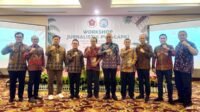
Ateng made the remarks during a limited discussion forum organized by Rumah Sawit Indonesia and IPB University in Bogor on Monday (Aug. 31, 2026).
According to Ateng, developing palm oil as an energy source should be incorporated into national policy discussions, particularly as the government and parliament work on revisions to Indonesia’s Environmental Law and prepare legislation on climate change.
Palm Oil for Food, Feed and Energy
Ateng said palm oil has significant potential because its development can involve communities while supporting Indonesia’s strategic national needs.
He said palm oil should not be viewed solely as a source of food and feed, but should also be developed to support national energy requirements.
Also Read: Organic Fertilizer Helps Indonesia’s Palm Oil Industry Cut Production Costs
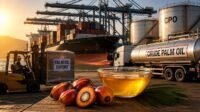
He pointed to President Prabowo Subianto’s policy of prioritizing palm oil-based biodiesel development, including the planned implementation of the B50 biodiesel program.
If implemented, Ateng said, B50 could help reduce Indonesia’s need to import certain petroleum-based fuels. This would further strengthen palm oil’s position as a strategic commodity in supporting the country’s energy security.
For this reason, he called for palm oil-based energy development to remain an important consideration in the formulation of national policies.
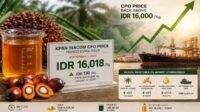
Also Read: KPBN Inacom CPO Price Edges Down to IDR 16,000 per Kg on Sept. 2
Expansion Must Avoid Conservation Areas
Ateng also stressed that palm oil plantation expansion must continue to take environmental and spatial planning considerations into account.
Palm oil development, he said, should not take place in conservation areas. However, he argued that opportunities remain on suitable land outside designated conservation zones.
Also Read: Study Finds Soil CO₂ Emissions Rise During First Three Years of Oil Palm Plantations on Peatland
He also pointed to degraded or critical land as one potential option that could be assessed for plantation development.
Such an approach would be important to ensure that efforts to increase palm oil production do not reinforce claims that the commodity is responsible for forest and environmental degradation, he said.
Environmental Regulations Should Not Undermine Palm Oil
Ateng also raised concerns over the ongoing revision of environmental regulations and the planned development of climate change legislation.
He expressed hope that the resulting regulations would not negatively affect the development of Indonesia’s palm oil industry.
Also Read: Indonesia Palm Oil Companies Strengthen Fire Prevention Ahead of 2026 Dry Season
Palm oil has made a significant contribution to Indonesia, he said. Therefore, environmental and climate policies should take into account the commodity’s strategic role in the national economy, food supply and energy security.
At the same time, he urged Indonesia to demonstrate internationally that palm oil development can be pursued while protecting forests, the environment and the climate.
Broadening the Nexus Approach
During the forum, Ateng also responded to the concept of a “New Nexus” previously presented by IPB University Professor Hariyadi.
He noted that discussions on the palm oil industry have traditionally focused on three major dimensions: ecological, economic and social considerations. As the industry has become increasingly complex, however, the framework needs to expand.
Also Read: Super El Niño Threatens Malaysia Palm Oil Output in 2027, MPOC Sees Monsoon as Cushion
Ateng proposed adding nationalism as another dimension of the New Nexus framework.
He said the additional dimension was important because disparities remain among smallholders, workers and business owners. He also highlighted what he described as unhealthy business practices, including underpricing.
For Ateng, a strong palm oil industry should not be measured solely by production volumes and corporate profits. The interests of smallholders and workers, as well as the equitable distribution of economic benefits, should also be incorporated into industry governance.
Also Read: Economic Independence and the Long Road Ahead for People’s Cooperatives
National Interest as an Additional Dimension
The proposal to include nationalism in the palm oil governance framework is intended to strengthen the industry’s alignment with Indonesia’s national interests.
Ateng said palm oil companies and business owners should develop their operations alongside the interests of communities that form part of the industry’s broader ecosystem.
Also Read: 4F and BRIN Research Highlights Links Between Forests, Soil, Oil Palm and Community Livelihoods
The gap between business owners, smallholders and workers needs greater attention, he said, to ensure that industry growth does not create benefits only for businesses but also delivers broader economic gains.
The development of palm oil as a strategic national commodity, therefore, should seek a balance among economic, environmental, social and energy interests, while also serving Indonesia’s broader national interests.
The push to strengthen palm oil’s role in the energy sector underscores the commodity’s expanding strategic importance. Beyond its traditional role in the global vegetable oil market, palm oil is increasingly being positioned as part of Indonesia’s efforts to strengthen domestic energy security. (P2)