PALMOILMAGAZINE, JAKARTA — PT Teladan Prima Agro Tbk (TLDN) continues to strengthen its sustainability commitments by advancing digitalization and operational optimization, ensuring stable production performance.
During its Annual General Meeting of Shareholders (AGMS) press conference on April 16, 2026, Finance, Accounting & Tax Director Mahirudin revealed that the company has implemented sustainable palm oil policies through a web-based application known as Teladan Greenmetric.
He explained that the system enables management to monitor sustainability performance in real time, identify areas requiring improvement, and enhance strategic decision-making.
Also Read: GAPKI Pushes for Palm Oil Industry Synergy Through the 6th Andalas Forum
“Through Teladan Greenmetric, management can closely track sustainability performance while identifying issues that require immediate attention,” he said.
In parallel, the company has optimized its Teladan Production System (TPS) as part of its broader operational transformation. This initiative is aimed at improving plantation management efficiency across both nucleus and plasma estates, which share relatively similar crop age profiles.
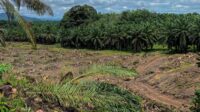
TLDN reported that its nucleus plantations have an average age of 16.1 years, with 98.4% classified as prime crops. Meanwhile, plasma plantations average 14.3 years, with 98.1% also categorized as prime, indicating strong productivity potential in the coming years.
Also Read: KPBN CPO Remains Withdrawn on Friday (April 17), Bursa Malaysia Extend Losses on Weak Demand
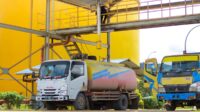
As of 2025, the company operates six palm oil mills with a combined processing capacity of 335 tons of fresh fruit bunches (FFB) per hour, along with kernel facilities capable of handling 43,500 tons per day. These operations are supported by two company-managed ports.
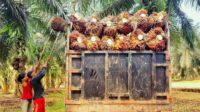
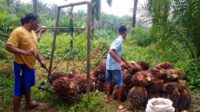
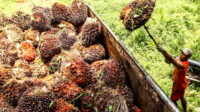
Throughout 2025, TLDN recorded improved production performance. FFB output from nucleus and plasma estates rose by 3.6% and 9%, reaching approximately 1.1 million tons and 161,476 tons, respectively. Additionally, external FFB purchases totaled 192,405 tons.
Mahirudin noted that the increase in FFB production was driven by the consistent application of best agricultural practices, supported by proper fertilization and maintenance standards.
Also Read: Andalas Forum VI: ISPO Gains Momentum, Indonesia Targets Global Market Trust
Overall, total FFB production reached 1,271,034 tons in 2025, marking a 4.2% increase compared to the previous year. However, the oil extraction rate (OER) declined to 22.8% from 25%, mainly due to suboptimal FFB quality.
On the other hand, kernel production also posted growth, reaching approximately 333,000 tons, up around 2% year-on-year.
With these results, the company views its operational performance as stable, demonstrating resilience in maintaining productivity levels across its mills throughout 2025. (P2)