PALMOILMAGAZINE, MEDAN – Indonesia’s House of Representatives is calling on state-owned plantation companies to place greater emphasis on local community involvement, particularly in palm oil operations. Strengthening downstream development, rather than continuing land expansion, is seen as a more strategic path for the industry’s future.
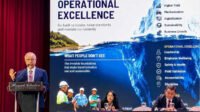
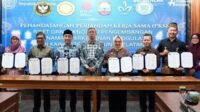
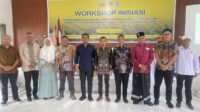
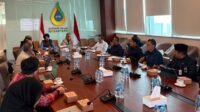
The message was delivered by Budi Sulistyono, a member of Commission VI of the DPR RI, following a meeting with plantation SOE authorities at the Regional Office I of PTPN IV in Medan, North Sumatra, on Wednesday (April 22, 2026).
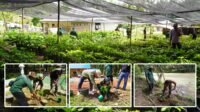
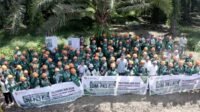
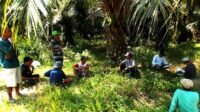
He highlighted persistent social inequality in palm oil plantation management, pointing to cases such as Rokan Hulu in Riau. According to him, since the mid-1990s, plantation development in the area has often excluded local communities, particularly customary landowners.
Also Read: GAPKI and the Government Strengthen National Preparedness to Mitigate Forest Fire Risks
“Since 1995, there have been plantation activities that did not involve local communities. It is as if customary landowners were left out, becoming mere spectators. They should have been active participants,” he said, as quoted from DPR RI on Friday (April 24, 2026).
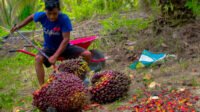
Budi stressed that addressing this issue remains a critical task to ensure that local communities can actively participate in and benefit economically from the palm oil sector.
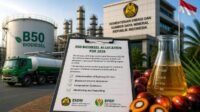
He also urged business entities such as Agrinas Palma Nusantara and PTPN Group to shift their focus from upstream expansion to strengthening downstream industries. Without developing value-added products, he warned, the economic potential of palm oil commodities will not be fully realized at the regional level.
Also Read: KPBN CPO Prices Edge Up on Friday (April 24), Global Market Strengthens, Malaysia Posts Weekly Gain
“We expect Agrinas and PTPN to establish dedicated units or directorates for downstreaming and diversification. The focus should not only be on expanding upstream operations,” he emphasized.
According to Budi, the creation of specialized directorates for downstreaming and diversification within plantation SOEs would be a crucial step to enhance the competitiveness of Indonesia’s palm oil industry, while ensuring a more equitable distribution of economic benefits.
Through this approach, the palm oil sector is expected to move beyond raw commodity production and generate higher value through advanced processing, with inclusive participation from surrounding communities. (P2)