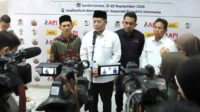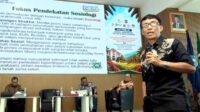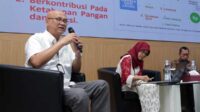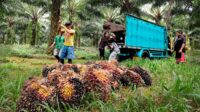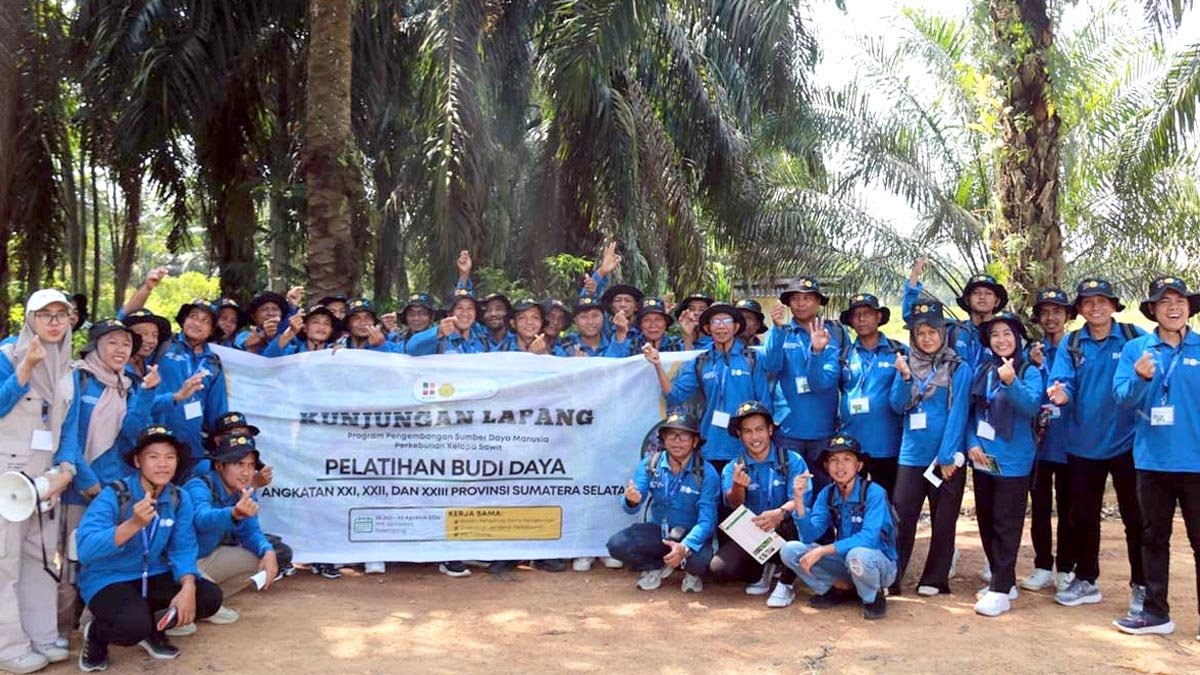
A BPDP-backed training program brought together 91 oil palm smallholders from Ogan Komering Ulu to enhance technical skills in modern cultivation. The initiative addresses key productivity challenges, including limited use of certified seedlings and farm management practices, while supporting the long-term competitiveness of Indonesia’s smallholder palm oil sector.
PALMOILMAGAZINE, BATURAJA, INDONESIA — Ninety-one oil palm smallholders from Ogan Komering Ulu (OKU) Regency, South Sumatra, have participated in an intensive training program on oil palm cultivation aimed at improving plantation productivity and promoting sustainable farming practices.
The program, conducted from July 28 to August 2, 2026, forms part of Indonesia’s Oil Palm Plantation Human Resources Development Program, funded by the Plantation Fund Management Agency (BPDP) in collaboration with the Directorate General of Plantations under the Ministry of Agriculture and IPB Training.
Also Read: Palm Oil Smallholders Plant 5,000 Trees to Restore Ecosystems in Aceh Tamiang
Participants from Batches XXI, XXII, and XXIII received technical instruction combining classroom learning, practical exercises, and field visits to strengthen their capacity to manage oil palm plantations more efficiently while adopting Good Agricultural Practices (GAP).
Joni Saihu, Head of the Ogan Komering Ulu Agriculture Office, said improving smallholder productivity remains a priority as the regency’s oil palm industry continues to expand rapidly.
He noted that oil palm cultivation in OKU is relatively new compared with other producing regions in South Sumatra, leaving considerable room for productivity improvements.
According to Joni, the regency’s planted area has expanded significantly from around 1,000 hectares in early 2022 to approximately 7,000 hectares today. As plantation acreage increased, production nearly doubled from about 6,100 metric tons in 2024 to 12,120 metric tons in 2025.
“Development has been encouraging, but productivity must continue to improve if we are to compete with other oil palm-producing regions,” Joni said in a statement received by PalmOilMagazine on Thursday (August 6).
Despite the positive growth, several structural challenges remain. Poor road infrastructure continues to hamper the transportation of fresh fruit bunches (FFB), while most growers cultivate relatively small holdings of only one to two hectares, limiting economies of scale and investment capacity.
Also Read: Indonesia’s KPBN CPO Price Eases on August 6 as Malaysian Palm Oil Futures Weaken
Access to certified planting materials is another concern. Limited financial resources have led many farmers to use uncertified seedlings, which can reduce yields and plantation performance over the long term.
The training program was designed to help address these issues by equipping participants with practical knowledge covering certified seed selection, nursery management, land preparation, planting techniques, crop maintenance, farmer institutional development, and marketing strategies.
“We hope participants will immediately apply the knowledge gained during the training to improve cultivation practices and increase plantation productivity,” said Hendra, representing the program organizers.
Also Read: Palm Oil Exports Remain a Key Driver of Indonesia’s Trade Performance
According to IPB Training expert Prof. Suwardi, sustainable productivity depends on several fundamental factors, including suitable land conditions, high-quality planting materials, balanced fertilization, and proper crop maintenance.
Throughout the program, participants attended classroom sessions, group discussions, practical workshops, and field demonstrations covering plantation regulations, nursery management, land preparation, replanting, the establishment of Legume Cover Crops (LCC), management of immature and mature palms, fertilization based on the 5R principles, and integrated pest and disease management.
Hands-on sessions also introduced participants to sprayer calibration, pesticide application techniques, nutrient deficiency identification, and Integrated Pest Management (IPM), emphasizing early detection and the use of biological control agents.
Also Read: From Waste to Wealth: Can Oil Palm Biomass Become Indonesia’s Next Green Growth Engine?
To reinforce practical learning, participants visited the Sembawa Research Center, where they observed best practices in nursery management, immature palm maintenance, castration techniques, pruning, and overall plantation management. The visit also enabled direct discussions with researchers and plantation practitioners on solutions to cultivation challenges commonly faced by smallholders.
Through the program, BPDP, the Directorate General of Plantations, and IPB Training aim to develop technically skilled smallholders capable of increasing plantation productivity while promoting efficient, competitive, and sustainable management practices across Indonesia’s palm oil industry. (P3)