Legal experts and academics warn that uncertainty over the implementation of Indonesia’s forestry regulations could delay investment, raise business costs and weaken the palm oil sector’s contribution to regional economic growth.
PALMOILMAGAZINE, BALIKPAPAN — The implementation of Government Regulation (PP) No. 45/2025 on administrative sanctions in the forestry sector is expected to provide greater legal certainty without undermining Indonesia’s investment climate, academics said.
Speaking at the Borneo Forum 2026 in Balikpapan on Thursday (Aug. 6), Dr. Zainal Abidin, Dean of the Faculty of Economics and Business at Mulawarman University, said legal certainty is a fundamental prerequisite for sustainable investment.
Also Read: 9th Borneo Forum 2026: GAPKI Highlights Innovation and Productivity as Keys to Future Growth
Investors, he said, assess not only potential returns but also the predictability of regulations that underpin their business decisions.
“When investors become uncertain, investment will be delayed. It could even trigger capital flight. Investment is one of the main engines of economic growth,” Zainal said in a statement received by PalmOilMagazine on Saturday (Aug. 8).
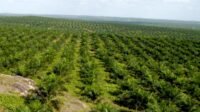
According to Zainal, the palm oil industry plays a strategic role as a growth pole for East Kalimantan’s economy. Palm plantations generate not only export commodities but also a broad multiplier effect across trade, services, transportation, processing industries and micro, small and medium-sized enterprises (MSMEs).
Also Read: Palm Oil Exports Remain a Key Driver of Indonesia’s Trade Performance
Unlike extractive commodities such as coal, which are non-renewable, palm oil can continue generating economic value through productivity improvements and replanting programs, he said.
Zainal therefore urged the government to implement PP 45/2025 carefully to avoid increasing perceived investment risks.
If regulatory uncertainty or additional administrative requirements increase investment costs, companies’ cost of capital could also rise, potentially pushing up production costs and weakening the competitiveness of Indonesia’s palm oil industry.
“Policy must strike a balance between law enforcement, state revenues, environmental protection and sustainable investment,” he said.
Forestry law practitioner Dr. Sadino, who also spoke at the forum, said the implementation of PP 45/2025 should be accompanied by efforts to resolve overlapping regulations concerning forest areas and land rights.
Many disputes, he said, stem from a lack of synchronization between administrative policies, leaving businesses uncertain about land status and legal rights.
Also Read: Indonesia’s Biodiesel Policy Emerges as a New Price Anchor for Global Palm Oil
Sadino stressed that the government needs to ensure that all legal and administrative aspects are resolved comprehensively, particularly when land management is transferred to state-owned enterprises.
This would ensure that legal certainty is maintained not only for existing businesses but also for future land managers, he said.
The Borneo Forum 2026 was supported by the Plantation Fund Management Agency (BPDP) and brought together stakeholders to discuss regulatory, investment and development challenges facing East Kalimantan’s palm oil industry. (P3)