
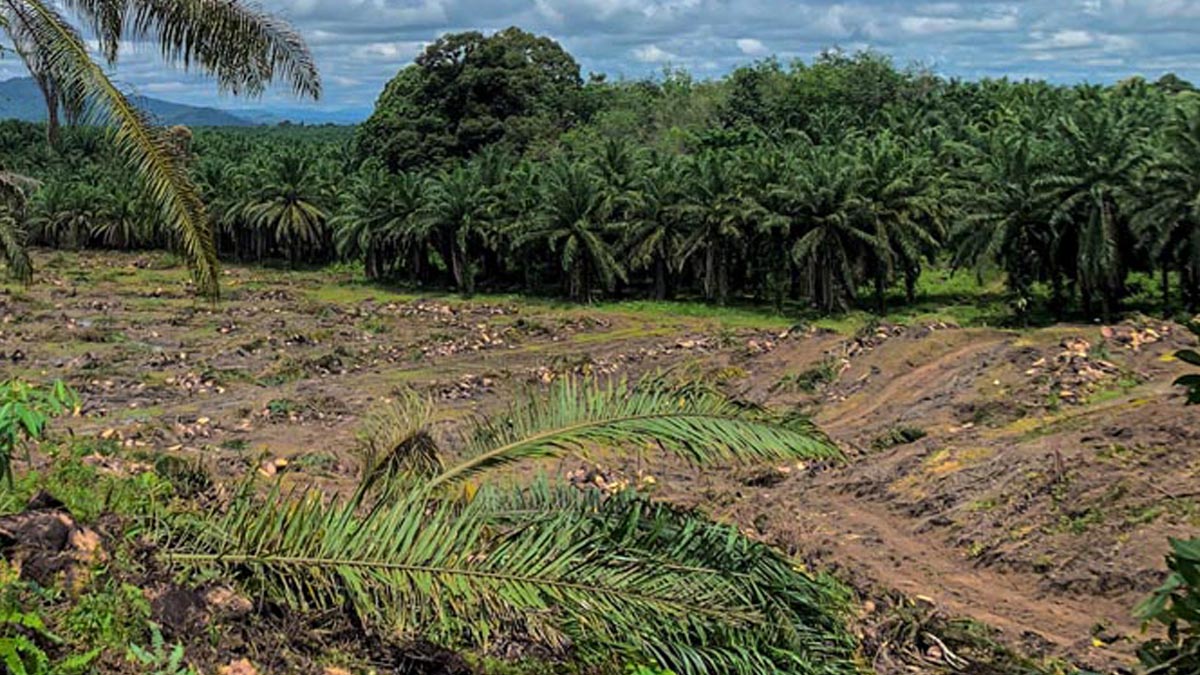
Indonesia’s Smallholder Palm Oil Replanting Program (PSR) has covered about 428,000 hectares over the past decade, with administrative requirements, land legality and forest-area overlaps continuing to slow implementation.
PALMOILMAGAZINE, JAKARTA — Indonesia’s efforts to accelerate the replanting of smallholder oil palm plantations continue to face implementation challenges, despite government steps to simplify administrative requirements under the Smallholder Palm Oil Replanting Program (PSR).
Suryanto Bun, Head of GAPKI’s Central Executive Board for PSR Acceleration, said the program had covered approximately 428,000 hectares over the past decade. The figure, he said, remains below the level needed to significantly accelerate the renewal of aging smallholder plantations nationwide.
Also Read: Bandung Sahari: Indonesia Still Lacks Research to Build the Palm Oil Narrative
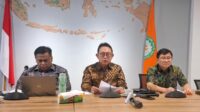
“Administratively, there have been improvements, and many requirements have been reduced. However, fulfilling those requirements on the ground remains a challenge,” Suryanto said at a GAPKI press conference attended by PalmOilMagazine on Friday (Oct. 9, 2026).
He said PSR implementation had shown some improvement this year, but the pace remained relatively slow when measured against the scale of Indonesia’s annual replanting needs.
One of the main obstacles is the ability of smallholders to complete the administrative documentation required to access the program. Farmers can face difficulties when land ownership, plantation legality or other documentation has yet to be fully established.
Also Read: GAPKI IPOC 2026 to Shape Indonesia’s Palm Oil Strategy Amid Global Trade and Geopolitical Risks
The challenge becomes more complicated for plantations located within or overlapping with forest areas. Unclear land status in such locations can make it more difficult for farmers to satisfy the administrative requirements needed to qualify for PSR support.
Suryanto said stronger partnership schemes could help address some of these constraints by providing farmers with assistance in preparing documentation and facilitating the submission of replanting proposals.
Cooperatives could also play a critical role, particularly in organizing smallholders, coordinating document preparation and bridging communication between farmers and the institutions involved in implementing the PSR program.
Also Read: IPOC 2026 to Strengthen Indonesia’s Palm Oil Strategy for Food, Energy and Economic Resilience
The experience highlights that accelerating smallholder replanting will require more than regulatory simplification. Effective field-level assistance, stronger institutional support and closer partnerships will be essential to help farmers complete administrative requirements and gain access to the program.
For Indonesia, faster PSR implementation is increasingly important not only to replace aging plantations but also to sustain smallholder productivity and strengthen the long-term resilience of the country’s palm oil sector. (P2)