PALMOILMAGAZINE, JAKARTA – The Indonesian Oil Palm Smallholders Union (SPKS) has raised concerns over the sharp decline in fresh fruit bunch (FFB) prices across several palm oil-producing regions following the government’s proposal to channel palm oil exports through a single-gate mechanism under Danantara Sumberdaya Indonesia (DSI).
According to SPKS, the proposed policy has started to create uncertainty in the market, causing panic among smallholders as FFB prices in some regions reportedly plunged to as low as IDR1,500 per kilogram within days.
The decline has been reported in multiple palm oil-producing provinces, with farmers saying prices have dropped drastically in a very short period.
Also Read: Indonesia to Launch New CPO Export Reporting System Through Danantara on June 1
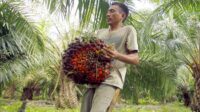
Yakobus Hariyanto, an oil palm farmer from Sintang, West Kalimantan, said FFB prices in his area had fallen by around IDR1,000 to IDR1,500 per kilogram.
“Farmers are panicking because FFB prices have collapsed very quickly within just a few days to around IDR1,500 per kilogram. Many companies have started taking a wait-and-see approach, with some temporarily halting purchases. Considering the huge volume of smallholder production, farmers’ losses could reach billions of rupiah every day,” Yakobus said in an official statement received by Palmoilmagazine.com on Sunday (24/5/2026).
Similar complaints were also reported from West Sulawesi. Supriyadi, an oil palm farmer from Mamuju, said FFB prices that previously stood at around IDR2,800 per kilogram had now dropped sharply to nearly IDR1,000 per kilogram.
Meanwhile, Parlindungan Sitorus from Labuhanbatu, North Sumatra, also reported price declines of up to IDR1,500 per kilogram at the farmer level.
Beyond falling prices, farmers are becoming increasingly concerned as several palm oil mills have reportedly begun reducing or temporarily stopping FFB purchases. The situation is considered highly risky because oil palm fruit must be processed quickly and cannot be stored for long periods.
SPKS Chairman Sabarudin said the sharp decline in FFB prices reflected a negative market response to the proposed single-gate export policy, which many fear could create a monopsony or single-buyer system.
Also Read: Prabowo Highlights Palm Oil Export Leakages, Warns of Under-Invoicing Practices
“The situation worsened after several companies started holding back purchases and temporarily suspending sales,” Sabarudin said.
According to SPKS, the situation has already caused substantial financial losses among oil palm farmers.
“We estimate farmers’ losses have reached tens of billions of rupiah per day,” he added.
Also Read: Indonesia Recovers IDR10.2 Trillion and Reclaims 5.8 Million Hectares in Forest Crackdown
SPKS believes the DSI-led single-gate export scheme could significantly pressure FFB prices if it leads to a concentrated buyer structure. Such a system, the organization warned, would not only reduce smallholders’ incomes but could also threaten the long-term sustainability of smallholder plantations.
The organization noted that some farmers are now considering reducing or even stopping fertilizer applications because they fear prices will continue falling while production costs become increasingly difficult to cover.
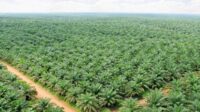
This development is particularly concerning because around 40 percent of Indonesia’s palm oil supply comes from smallholder plantations that rely heavily on stable prices.
Also Read: Prabowo Pushes Indonesia to Set Global Palm Oil Prices Instead of Following Foreign Markets
If price pressures persist over the long term, SPKS warned that smallholder productivity could decline and potentially disrupt the country’s palm oil supply.
Sabarudin also said farmers still carry trauma from the 2015 palm oil price crisis, when FFB prices dropped below IDR1,000 per kilogram.
“Farmers are traumatized by what happened in 2015 when FFB prices collapsed below Rp1,000 per kilogram. At that time, many farmers cut down their oil palm trees and switched to other commodities because they could no longer survive,” he said.
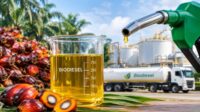
SPKS further warned that the proposed policy could undermine the government’s biodiesel B50 program. The organization argued that if smallholder productivity declines due to reduced fertilizer use and more farmers abandon oil palm cultivation, domestic feedstock supply for biodiesel could eventually be affected.
In addition, SPKS reminded the government not to repeat past commodity trade management failures that harmed farmers, including the experience under the former Clove Marketing and Buffer Agency (BPPC).
For that reason, SPKS urged the government to immediately review the proposed DSI single-gate export scheme before the situation among farmers worsens further.
Also Read: KPBN CPO Prices Fall Again on Friday (May 22), While Malaysian Palm Oil Market Rises
“We hope the government will listen to the concerns of millions of farmers across Indonesia before the situation deteriorates further,” Sabarudin concluded. (P2)