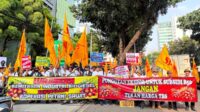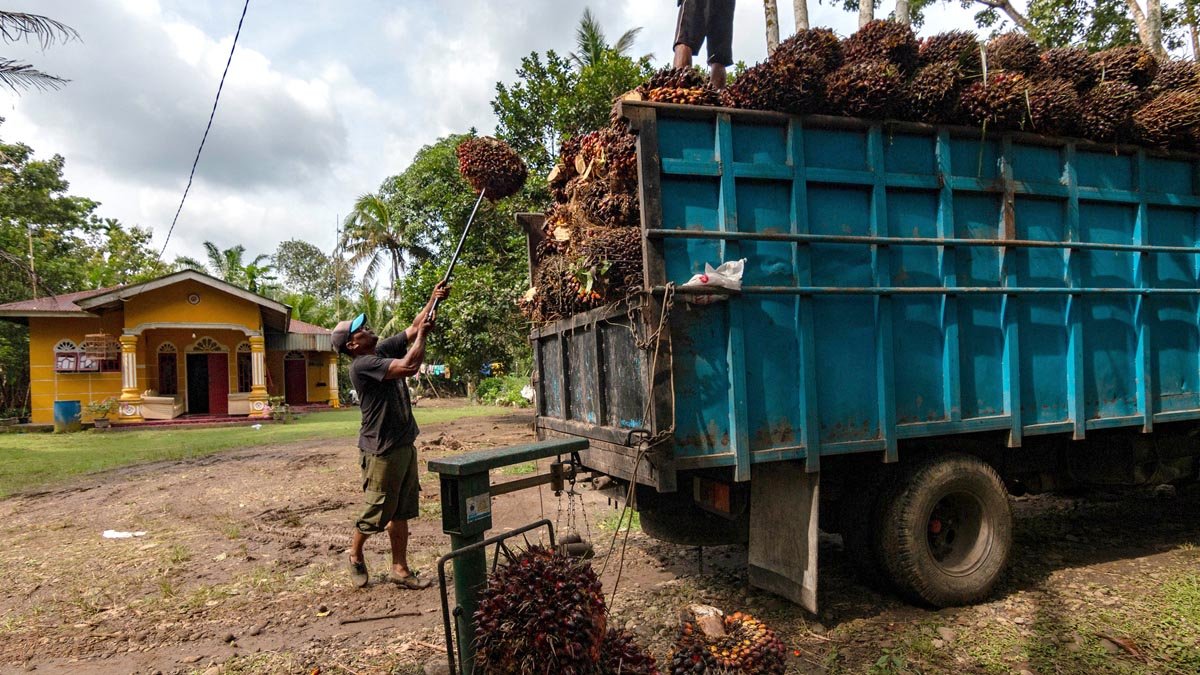
PALMOILMAGAZINE, JAKARTA — Indonesia’s palm oil farmer organizations have called on President Prabowo Subianto to reassess the role of Danantara Sumberdaya Indonesia (DSI), warning that the institution’s involvement in the national palm oil trade could add another layer to the supply chain and ultimately reduce smallholder farmers’ income.
The Indonesian Palm Oil Farmers Organizations Association (POPSI) and the Central Kalimantan chapter of the National Palm Oil Activists Network (JPSN) expressed concern that DSI’s participation in the industry may create additional costs within the trading system, potentially affecting fresh fruit bunch (FFB) prices received by farmers.
POPSI Chairman Mansuetus Darto stated that DSI should deliver tangible benefits to Indonesia’s palm oil industry. However, he argued that the implementation of Government Regulation No. 24 of 2026 has yet to demonstrate significant added value for the sector.
According to Darto, there is growing concern that DSI could become another intermediary within the already complex palm oil supply chain, which currently involves farmers, traders, palm oil mills, and exporters.
“If DSI enters trading activities and takes a margin, it could reduce the efficiency of the palm oil marketing system that stakeholders have been trying to improve,” Darto said in a statement received on Wednesday.
He argued that if the government’s objective is to prevent under-invoicing and improve foreign exchange earnings from exports, strengthening existing institutions would be a more effective approach. These institutions include the Directorate General of Customs and Excise, the Financial and Development Supervisory Agency (BPKP), and independent survey agencies responsible for verifying the quality and quantity of commodity exports.
Also Read: IESR Cautions Against Fiscal Risks as Indonesia Prepares for B50 Rollout
Darto emphasized that the primary challenge facing Indonesia’s palm oil industry is not the creation of additional institutions within the trading chain, but rather improving efficiency, enhancing transparency, strengthening sustainability practices, and increasing the economic benefits received by smallholders.
Echoing these concerns, Central Kalimantan JPSN Chairman Kobar Sembiring said a review of DSI has become increasingly important as communities in palm oil-producing regions continue to face mounting economic pressures.
He noted that rising prices of essential goods and persistently high logistics costs, partly driven by elevated non-subsidized fuel prices, have significantly narrowed farmers’ profit margins.
Also Read: Indonesia Continues Investigation into Alleged Palm Oil Export Value Manipulation
“Under current conditions, any policy that potentially lowers the fresh fruit bunch prices received by farmers would place an even heavier burden on rural communities,” Kobar said.
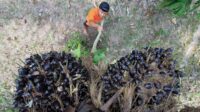
He added that policies affecting palm oil trade extend beyond farmers and have broader implications for rural economies. Indonesia is home to approximately 16,000 palm oil villages whose economic activities largely depend on the plantation sector.
Many of these communities have limited alternative sources of income outside palm oil production. As a result, any reduction in the economic value received by farmers could directly affect household purchasing power and slow economic activity in rural areas.
Despite their concerns, both POPSI and JPSN expressed support for government efforts to improve governance in the national palm oil industry. However, they recommended that DSI focus on functions related to transparency and oversight rather than direct involvement in trading activities.
Darto suggested that DSI should prioritize strengthening data systems, enhancing inter-agency coordination, improving monitoring mechanisms, developing complaint-handling systems, and increasing transparency throughout the palm oil supply chain.
Meanwhile, Kobar stressed the importance of implementing transparent and publicly auditable operating systems. He argued that transparency is essential to ensure that no additional costs or margins are ultimately transferred to farmers or other industry participants.
Also Read: Jambi FFB Prices Hold Steady for June 26–July 2, 2026 Pricing Period
Both organizations agreed that the success of Indonesia’s palm oil governance reforms should be measured by improved farmer welfare, stronger rural economies in palm-producing regions, and the establishment of a more efficient, competitive, and transparent trading system.
They expressed hope that the government would conduct a comprehensive evaluation of DSI’s role to ensure that future policies strengthen the competitiveness of Indonesia’s palm oil sector while safeguarding the economic sustainability of millions of farmers and communities that depend on the industry. (P2)