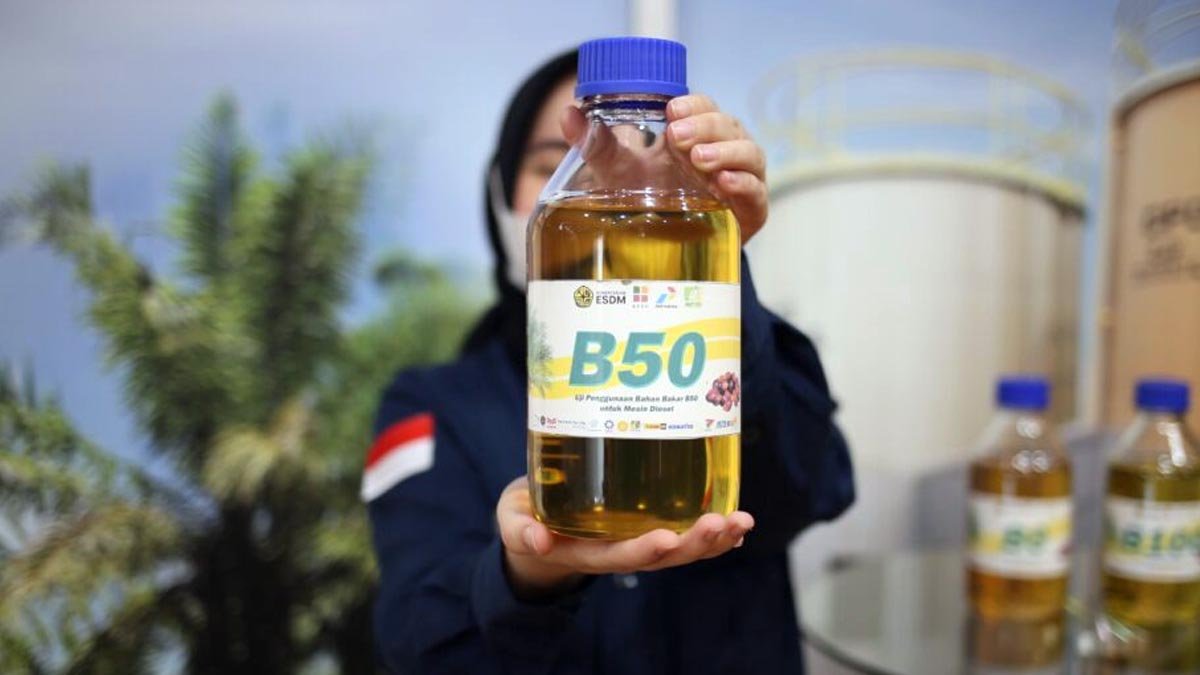
PALMOILMAGAZINE, JAKARTA – Indonesia’s plan to eliminate diesel fuel imports through the implementation of mandatory B50 biodiesel beginning on July 1, 2026, represents a major pillar of the country’s energy security strategy. The policy is expected to reduce dependence on imported fuels, strengthen energy independence, and generate significant foreign exchange savings.
However, energy analysts are warning that the ambitious program also carries economic and fiscal risks that must be carefully managed.
The Institute for Essential Services Reform (IESR) believes that the success of the B50 mandate will depend not only on the availability of biodiesel supplies but also on the government’s ability to maintain biodiesel price competitiveness against conventional fossil diesel.
Also Read: KPBN CPO Prices Jump to IDR 15,575/kg on June 26 as B50 Policy Boosts Palm Oil Market Sentiment
IESR Chief Executive Officer Fabby Tumiwa said fluctuations in global oil prices would play a decisive role in determining the effectiveness of the B50 policy. According to him, a decline in crude oil prices could widen the price gap between biodiesel and petroleum-based diesel.
“If biofuel prices become higher than diesel prices, the government may have to provide additional subsidies. Such a situation should be avoided because it could create new fiscal burdens,” Fabby said during a live broadcast on Nusantara TV on Wednesday, as quoted by Palmoilmagazine.com.
He explained that the B50 program would deliver the greatest economic benefits when global crude oil prices remain high, allowing biodiesel to compete economically with fossil fuels. Conversely, when oil prices decline while biodiesel feedstock costs remain elevated, the economic advantages of the program become increasingly limited.
According to Fabby, the primary objective of national energy policy should not only be reducing diesel imports but also ensuring efficient use of state finances.
Also Read: Palm Oil as a Renewable Natural Resource
Dynamic Blending Proposed
IESR recommends that the government consider implementing a dynamic blending mechanism, which would adjust biodiesel blending levels according to fluctuations in crude oil and crude palm oil (CPO) prices.
The think tank believes such a mechanism could help balance national energy objectives with the subsidy burden borne by the government while allowing greater flexibility in responding to changing commodity market conditions.
Fabby noted that current CPO prices are heavily influenced by global demand, particularly from major importing countries such as India and South Korea. As a result, biodiesel feedstock prices are increasingly determined by international markets rather than domestic conditions.
He estimated that if CPO prices remain around US$1,200 per ton, the B50 mandate would become economically competitive only if global crude oil prices rise above US$125 per barrel.
“If CPO prices remain high while oil prices decline, the production cost of B50 could become more expensive than conventional diesel,” he said.
Also Read: SPKS Urges Stronger BPDP Funding to Expand Palm Oil Certification and Boost Smallholder Productivity
Bioethanol Development Should Accelerate
Beyond palm-based biodiesel, IESR is also urging the government to accelerate bioethanol development as part of Indonesia’s broader renewable energy diversification strategy.
Fabby argued that bioethanol prices may be easier to manage than CPO-based biodiesel because they are less exposed to volatility in global palm oil export markets.
As a result, he believes gasoline blending programs such as E10 and E20 deserve greater attention in future energy policies.
Also Read: Indonesia Showcases Sustainable Palm Oil and Manufacturing Strength at INNOPROM 2026 in Russia
Palm Oil Supply Concerns
IESR also highlighted feedstock availability as another potential challenge for B50 implementation. One major concern is the impact of the recent Super El Niño phenomenon, which reduced palm oil productivity in several producing regions.
According to Fabby, lower palm oil production resulting from climate pressures could affect the availability of CPO for food, export, and energy needs simultaneously.
Also Read: West Sumatra FFB Prices Edge Higher in Late June, Peak Price Reaches IDR 3,754/kg
Indonesia currently implements a B40 mandate, which IESR considers relatively aligned with existing production capacity. The introduction of B50 would make Indonesia the country with the highest palm-based biodiesel blending mandate in the world, surpassing other major palm oil producers.
While supporting the government’s efforts to strengthen national energy security, IESR emphasized that the long-term success of B50 will depend on balancing feedstock availability, fuel price competitiveness, and the government’s ability to manage potential fiscal impacts.
ALso Read: North Sumatra FFB Prices Fall for June 24–30 Period as Benchmark CPO Price Drops to IDR 15,230/kg
Without such balance, the think tank warned, the economic benefits expected from the program could be offset by rising subsidy costs and increased pressure on public finances. (P2)