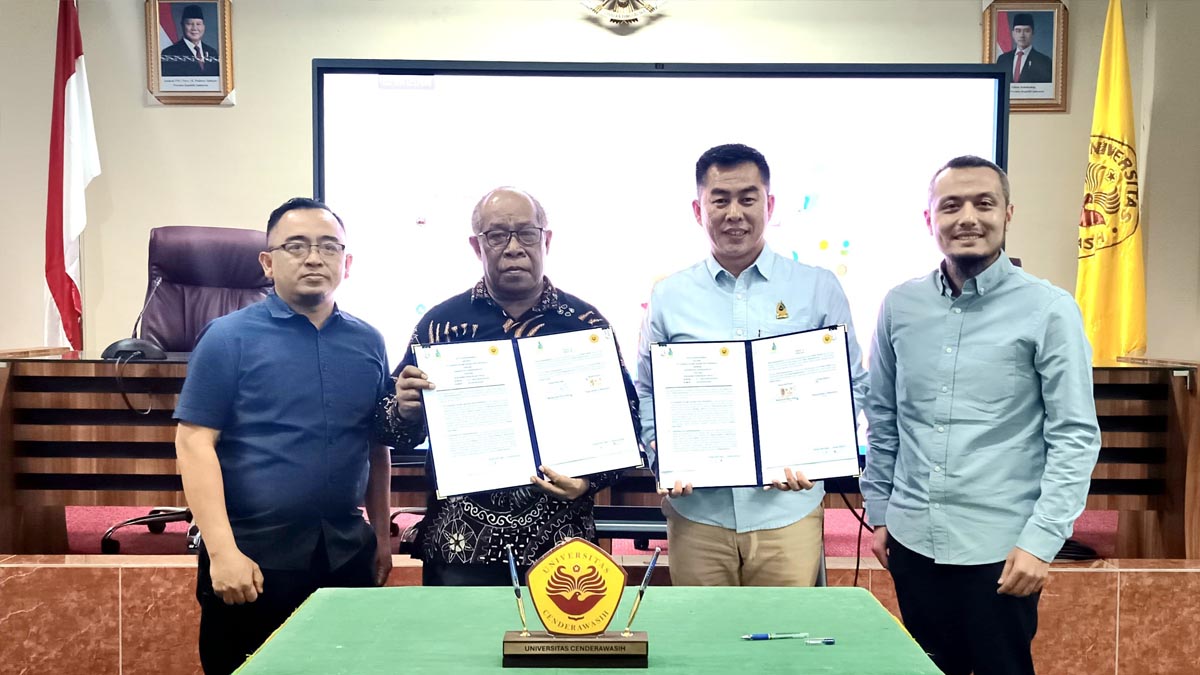
The partnership will examine land suitability, social and environmental conditions, technology and governance to support Agrinas Palma’s planned development in South Papua.
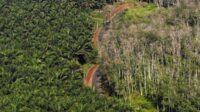
PALMOILMAGAZINE, JAYAPURA — State-owned plantation company PT Agrinas Palma Nusantara (Persero) has partnered with Cenderawasih University to conduct research and academic studies supporting a planned plantation and food development program covering around 400,000 hectares in South Papua.
The partnership will focus on strategic studies, research and technology development, and academic assistance. The scope includes productivity improvement, sustainable cultivation systems, agro-industrial downstream development, farmer empowerment, governance, and social and environmental considerations.
Also Read: Agrinas Palma: Indonesian Oil Palm Smallholders Still Lag Corporations in Productivity
The companies and university said the studies are intended to provide a scientific basis for development planning while taking into account local land characteristics, environmental conditions and community needs.
The partnership also places particular emphasis on the social dimensions of the planned development. Cenderawasih University’s Faculty of Social and Political Sciences will conduct anthropological and sociological studies covering local social structures, cultural values, customary rights and community needs.
The findings are expected to support Agrinas Palma in assessing land suitability and determining an appropriate development approach for the planned plantation and food-production areas.
Also Read: PTPN IV PalmCo Accelerates Smallholder Replanting as Partnership PSR Reaches 27,000 Hectares
“The partnership in research, studies and academic work is important to ensure that every development step has a strong scientific foundation. We want South Papua’s potential to be developed while taking local communities into account and generating benefits for both the region and the country,” Agrinas Palma Corporate Secretary Division Head Bambang Agustian said in a statement received by PalmOilMagazine on Wednesday (September 16).
Social and Environmental Considerations
Cenderawasih University Vice Rector IV Dr. Basir Rohrohmana, S.H., M.Hum., said the partnership provides an opportunity for the university to contribute expertise from multiple disciplines to the development planning process.
“Cenderawasih University is ready to support the studies and research required. Through anthropological and sociological research, we hope the development plan can better understand the conditions of communities in South Papua and produce recommendations that benefit them,” Basir said.
Also Read: Indonesia Tightens Environmental Oversight as New Rules Raise Compliance Bar for Palm Oil Industry
The social studies are expected to provide additional information on the characteristics of communities in the proposed development areas, including cultural values and customary rights that could be relevant to future planning.
Agrinas Palma plans to develop plantation and food-producing areas covering approximately 400,000 hectares in South Papua. The company said the development will be assessed and implemented progressively, taking into consideration the results of social studies and local environmental conditions.
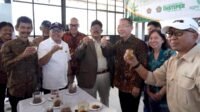
The partnership involved Agrinas Palma representatives Bambang Agustian, Head of Performance Management Division Khoirul Anam, and Head of Corporate Management Systems and Sustainability Division Muhammad Ichsan.
Also Read: KPBN Inacom CPO Tender Withdraws on Tuesday (Sept. 15), Highest Bid at IDR 15,702/kg
Cenderawasih University was represented by Vice Rector IV Dr. Basir Rohrohmana; Vice Rector I for Academic Affairs Dr. Dirk YP. Runtuboy, S.Pd., M.Kes.; Vice Rector II for General Administration, Human Resources and Finance Dr. Ferdinand Risamasu, S.E., M.Sc. Agr.; and Vice Rector III for Student Affairs and Alumni Dr. Septinus Saa, S.Sos., M.Si.
The parties expect the research and studies to serve as a basis for decision-making as the development plan progresses.
In the longer term, Agrinas Palma said the planned development is expected to contribute to agro-industrial raw material supplies, national food and energy security, as well as employment and partnership opportunities for local communities.
Also Read: Indonesia Tightens Land-Clearing Rules Under Inpres 11/2026, Limits Burning Practices
The partnership places academic research, land suitability, social considerations and environmental conditions at the center of the planning process for the proposed development in South Papua. (P3)