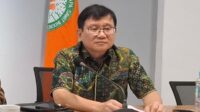
Agrinas Palma Nusantara President Director Muhammad Abdul Ghani says smallholders control 42% of Indonesia’s oil palm area but achieve only about half the productivity of corporate plantations.
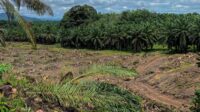
PALMOILMAGAZINE, BOGOR — Oil palm smallholders remain in a relatively weak position within Indonesia’s palm oil industry ecosystem, despite controlling around 42% of the country’s oil palm plantation area. Their productivity, however, is estimated to be only about half that of corporate-owned plantations.
“The industry ecosystem, in our view, is not working properly. First, in terms of ownership concentration, the principles of Article 33 are not being implemented. Smallholders control 42% of the area, yet their productivity is only half that of corporations,” said Muhammad Abdul Ghani, President Director of Agrinas Palma Nusantara (APN).
Also Read: Agrinas Plans Palm Oil Plasma Pilot Project with Cooperatives in North Sumatra
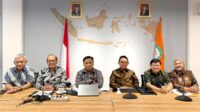
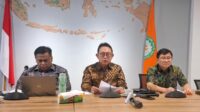
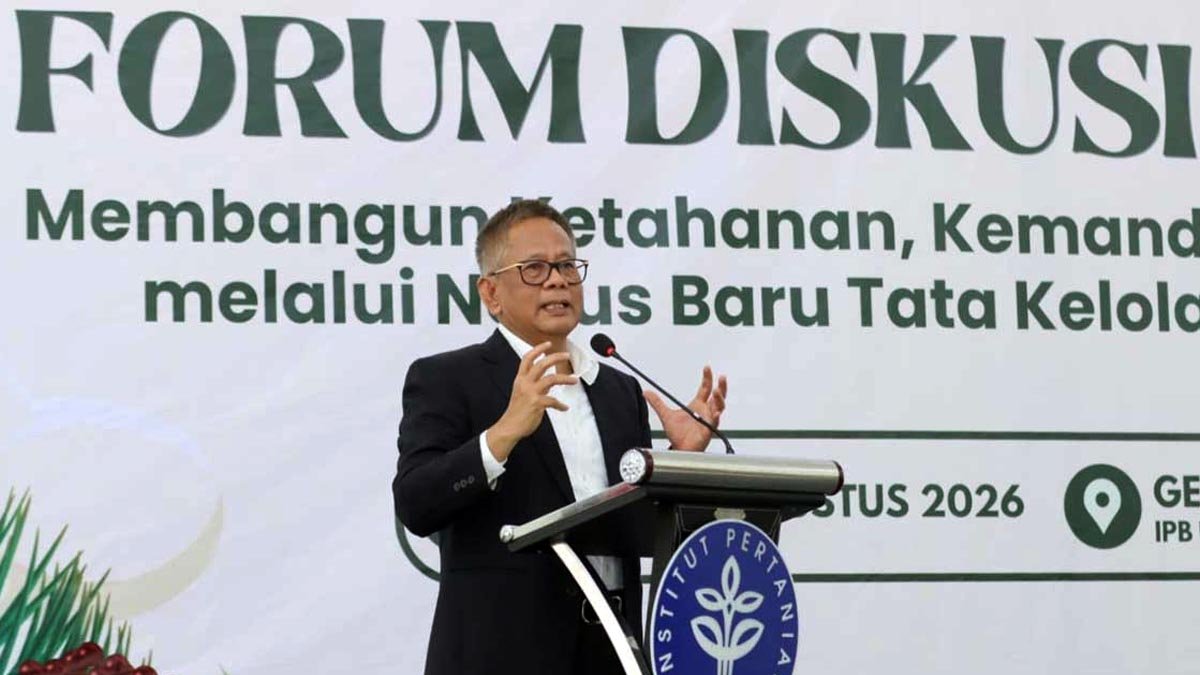
He made the remarks at a limited discussion forum organized by Rumah Sawit Indonesia (RSI) at IPB University in Bogor on Monday (Aug. 31), attended by PalmOilMagazine.
Ghani said smallholders remain disadvantaged within the country’s palm oil industry ecosystem, with an unequal bargaining position compared with larger plantation companies.
“When palm oil prices rise slightly, smallholders are squeezed heavily. So, we cannot expect much from a system like this,” he said.
Also Read: Agrinas Palma Strengthens Cooperative-Based Plasma Partnerships with Government Support in Riau
Investment Must Also Create Wider Economic Benefits
Ghani said the government is targeting economic growth of up to 8% by 2029, while also seeking to reduce the Gini ratio and improve income distribution.
Against this backdrop, he argued that Danantara, Indonesia’s state-owned investment entity, should develop an investment philosophy that balances corporate profitability with broader wealth distribution.
Also Read: Beyond Certification: The Next Chapter of Indonesia’s Sustainable Palm Oil
Investment decisions, he said, should not only be measured by the profits generated by a company but also by their ability to create economic opportunities for a larger segment of society.
“For example, if we build a refinery to process crude oil into gasoline or diesel, the investment could reach Rp50 trillion. But perhaps fewer than 500 people would be employed,” Ghani said.
“However, if Rp50 trillion were invested in oil palm cultivation, it could potentially create jobs for 5,000 people.”
Also Read: Indonesia CPO Price Edges Higher to IDR 15,888/Kg in KPBN Inacom Tender
Ghani stressed that the figure only represents employment generated in the upstream plantation sector.
“It does not yet include the supply chain connected to the palm oil industry,” he said.
He described this approach to investment as part of the government’s broader Asta Cita development agenda.
Ghani made the remarks during the forum, themed “Building Food and Energy Resilience and Self-Reliance Through a New Nexus of Sustainable Palm Oil Governance.”
Also Read: Agrinas Palma Nusantara Reports Strong 2025 Performance with IDR2.86 Trillion Operating Surplus
Companies Must View Communities as Part of Sustainability
Ghani said plantation and mining industries have a direct intersection with community interests. The relationship can generate mutual benefits, but it can also create conflict if local communities do not share in the economic benefits.
He argued that corporate social responsibility (CSR) requirements under Indonesia’s Company Law alone are insufficient to address the issue.
“If it is only based on the Company Law, which requires plantation and mining companies to provide CSR, that is not enough. Under a law on indigenous communities, for example, a certain percentage of corporate profits should be allocated to surrounding communities,” he said.
According to Ghani, economic inequality around plantation and mining operations can also create security challenges.
“When people living around plantations or mining operations remain poor, it is difficult to create security,” he said.
Companies, therefore, need to view surrounding communities as part of the broader ecosystem that supports the long-term sustainability of their businesses.
He said corporate perspectives toward local communities need to change, particularly by strengthening the role and economic capacity of smallholders.
“The corporate mindset going forward needs to change. My thinking has always been about how to empower smallholders and make them more economically resilient,” Ghani concluded. (P2)