PALMOILMAGAZINE, JAKARTA – Indonesia’s palm oil industry is entering a new phase as the government officially implements the mandatory B50 biodiesel program beginning July 1, 2026. The policy is expected to strengthen national energy security, increase domestic value creation within the palm oil sector, reduce fuel imports, and support the country’s transition toward cleaner energy.
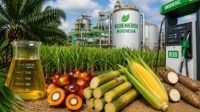
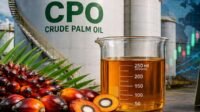
The B50 program consists of a blend containing 50 percent biodiesel derived from crude palm oil (CPO) and 50 percent conventional diesel fuel. The initiative represents the latest stage in Indonesia’s biodiesel roadmap, following the successful implementation of B20, B30, and B40 blending mandates.
Speaking in Jakarta, Minister of Energy and Mineral Resources Bahlil Lahadalia said all technical testing stages had been completed and delivered positive results. The testing process was coordinated by the Directorate General of New, Renewable Energy and Energy Conservation (EBTKE) under the Ministry of Energy and Mineral Resources.
Also Read: Indonesia to Launch B50 in July as Prabowo Pushes Palm Oil-Led Energy Transition
“Technical trials have been carried out by our team from the Ministry of Energy and Mineral Resources, led by EBTKE Director General Prof. Eniya. The results have been very encouraging,” Bahlil said in an official statement received by Palmoilmagazine.com on Saturday (June 27, 2026).
According to Bahlil, one of the key findings from the testing phase is that B50 demonstrates better fuel quality than B40, particularly regarding water content. Lower water levels are expected to improve fuel stability and operational performance during use.
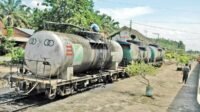
The B50 trials have also been conducted across a wide range of transportation and industrial applications, including commercial vehicles, mining heavy equipment, excavators, marine vessels, trains, agricultural machinery, and other operational equipment.
Also Read: SPKS Urges Stronger BPDP Funding to Expand Palm Oil Certification and Boost Smallholder Productivity
“The trials have been conducted on various types of vehicles, including heavy equipment, ships, trains, and other vehicles. Mining equipment, excavators, and agricultural machinery have all undergone testing,” Bahlil explained.
Based on these results, the government remains optimistic that full B50 implementation during the second half of 2026 will proceed according to schedule. The policy is expected to significantly reduce Indonesia’s dependence on imported diesel fuel and could potentially eliminate imports of certain diesel products if implementation proceeds successfully.
Beyond energy security, the palm oil-based biodiesel program is projected to generate substantial economic benefits. The government estimates that B50 implementation could create approximately IDR24.68 trillion in added value for the domestic palm oil industry while supporting employment for more than 2.2 million workers throughout the palm oil and energy supply chains.
Also Read: KPBN CPO Prices Jump to IDR 15,575/kg on June 26 as B50 Policy Boosts Palm Oil Market Sentiment
From an environmental perspective, increased biodiesel utilization is expected to support Indonesia’s energy transition goals through lower greenhouse gas emissions. The government estimates that B50 could reduce emissions by approximately 46.72 million tons of carbon dioxide equivalent (CO₂), contributing to the country’s climate commitments and emissions reduction targets.
At the macroeconomic level, reduced imports of fossil fuels are projected to generate foreign exchange savings of approximately IDR157.28 trillion, further strengthening Indonesia’s energy trade balance.
Throughout the first half of 2026, the government maintained the B40 program as a transitional measure before moving to B50 in July. Total biodiesel allocation for the year is estimated to reach approximately 17.60 million kiloliters (kL).
Also Read: Palm Fruit Prices Rebound Across Indonesia Following Government Intervention
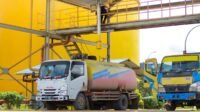
Government data show that as of April 13, 2026, biodiesel distribution had reached around 3.90 million kL, equivalent to 24.9 percent of the annual allocation. Distribution activities are supported by 26 biofuel business entities and 32 fuel distribution companies, as well as 85 delivery points located across Indonesia to ensure stable and efficient biodiesel supplies.
Through the implementation of B50, the government expects the palm oil industry to become not only a pillar of national energy security but also a stronger driver of downstream industrial development, domestic value creation, and Indonesia’s position as the world’s leading producer of palm oil-based biodiesel. (P2)