The local government plans field verification of PT Equator Sumber Rezeki’s spatial-use approval following concerns raised over land-use planning, customary forests, peatland and protected orangutan habitat.
PALMOILMAGAZINE, PUTUSSIBAU — The Kapuas Hulu Public Works and Spatial Planning Agency (PUPR) will review the spatial-use approval held by PT Equator Sumber Rezeki (PT ESR), a subsidiary of First Borneo Group, following concerns raised by indigenous communities, academics, civil society organizations and government agencies.
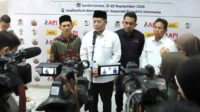
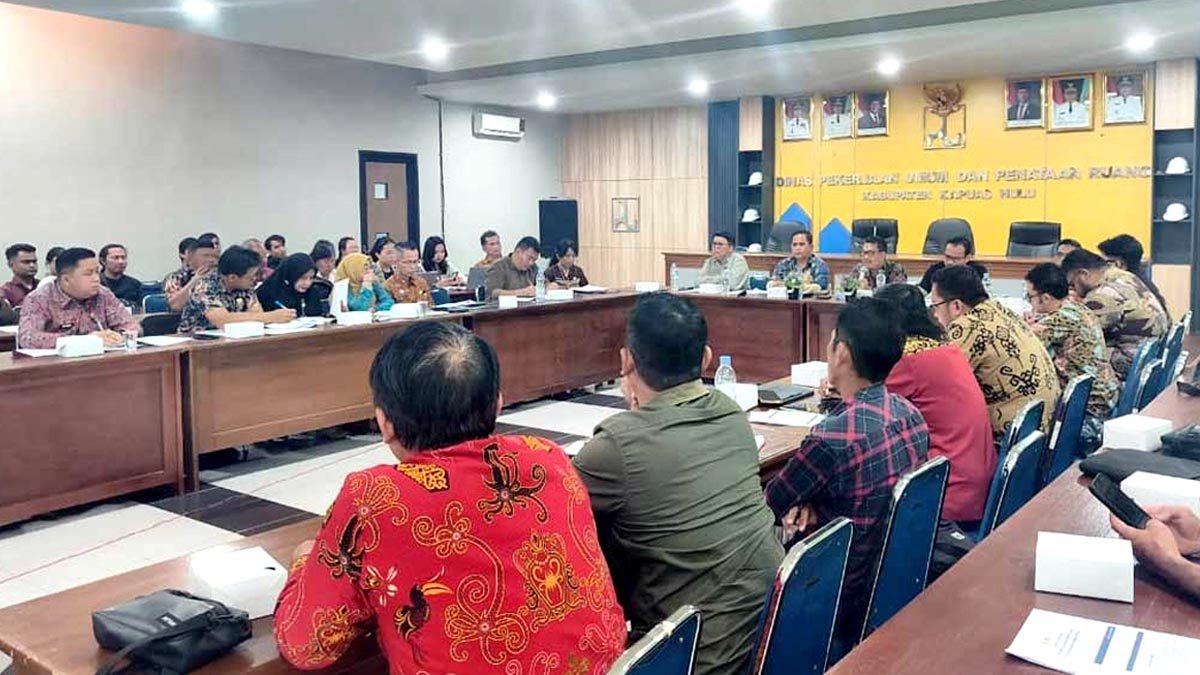
The review follows a mediation forum held at the Kapuas Hulu PUPR office on July 23, attended by around 60 participants representing the local government, Tanjungpura University, the West Kalimantan Planning Experts Association, civil society groups, the company and indigenous communities from Mensiau, Labian Iraang, Sungai Abau, Labian and Menua Sadap villages.
Also Read: 91 OKU Smallholders Join BPDP-IPB Training to Strengthen Sustainable Palm Oil Productivity
According to an official statement received by PalmOilMagazine on Wednesday (Aug. 5), participants called on the government to reassess PT ESR’s Persetujuan Kesesuaian Kegiatan Pemanfaatan Ruang (PKKPR), or spatial-use conformity approval, by taking into account applicable spatial plans and conditions on the ground.
The company’s PKKPR is due to expire in October 2026. The approval is a basic business licensing requirement introduced under Indonesia’s Job Creation Law to replace the former location permit and ensure that proposed activities comply with prevailing spatial plans.
Kapuas Hulu PUPR Head Marthen said the concerns raised during the meeting would be incorporated into the review process.
The local government plans to conduct field verification, remap areas proposed for exclusion, or enclave, from the company’s licensed area, and hold further internal discussions before determining the next steps.
“The input we received today is important material for evaluating PT ESR’s PKKPR. We will follow it up through field verification and further assessment so that any decision is consistent with factual conditions and applicable regulations,” Marthen said.
Deforestation and Orangutan Habitat Under Scrutiny
During the mediation, environmental group Satya Bumi presented monitoring findings alleging that PT ESR had cleared about 4,480.55 hectares of forest between 2024 and June 2026. The group said about 3,715.49 hectares of the area were located within Kalimantan orangutan (Pongo pygmaeus) habitat.
According to the organization, land clearing was identified in areas around Sungai Senunuk, Setulang and Sepandan villages.
Also Read: Indonesia Sets August Biodiesel Market Index Price at IDR14,924 per Liter
Satya Bumi also presented spatial analysis based on land-system data from Indonesia’s Geospatial Information Agency (BIG), which indicated that parts of the concession overlap with swamp areas identified as peatland.
The organization said drainage canals commonly associated with peatland drainage were also found in the field. However, government data from the Ministry of Forestry reportedly does not classify the area as part of a Peat Hydrological Unit (Kesatuan Hidrologis Gambut or KHG), highlighting the need for further verification of the differing datasets.
Also Read: KPBN Inacom CPO Offer Withdrawn at IDR 15,607/kg as Malaysia Palm Oil Futures Fall
Concession Overlaps With Strategic and Customary Areas
The mediation also addressed concerns that PT ESR’s concession overlaps with a Provincial Strategic Area under West Kalimantan Regional Regulation No. 8/2024 on the province’s 2024–2043 Spatial Plan.
The area is also reported to overlap with the habitat corridor of protected wildlife and two government-recognized customary forests: Hutan Adat Menua Kelayam in Menua Sadap Village and Hutan Adat Menua Ngaung Keruh in Labian Village.
Also Read: Jambi Palm Oil FFB Prices Fall Rp30.2/kg for Aug. 7–13, 2026
Four areas covered by the Recognition and Protection of Indigenous Peoples (Pengakuan dan Perlindungan Masyarakat Hukum Adat, or PPMHA) framework were also reported to fall within the concession.
Representatives of indigenous communities from several villages expressed opposition to PT ESR’s planned oil palm development. They raised concerns about the potential loss of community living space and managed areas, impacts on water resources and the reduction of customary forest areas that form an important part of local livelihoods.
Also Read: RSPO Certification Transforms Belayan Sejahtera Smallholders, Strengthens Village Economy
Link-AR Borneo Raises HGU Concerns
Link-AR Borneo also presented monitoring findings concerning deforestation, protected wildlife habitat and potential overlaps between the concession, Provincial Strategic Areas and areas identified as priorities under Indonesia’s FOLU Net Sink 2030 program.
Raden Deden Fajarullah, a researcher with Link-AR Borneo, said a clarification letter from the Kapuas Hulu Land Office under the Ministry of Agrarian Affairs and Spatial Planning/National Land Agency (ATR/BPN) indicated that the process of issuing a Cultivation Rights Title (Hak Guna Usaha or HGU) for PT ESR was still underway.
However, based on its monitoring, the organization alleged that land clearing and planting had taken place before the HGU was issued.
Also Read: Indonesia’s 50% DHE Policy Raises Liquidity Concerns for Palm Oil Industry
Local Government Says Company Holds Required Legal Permits
Responding to the concerns, Kapuas Hulu Secretary-General Ambrosius Sadau said PT ESR had obtained the necessary legal approvals through the applicable procedures.
He nevertheless stressed that the company should respect both communities that support and those that oppose its presence, while ensuring that its operations do not harm local residents.
Meanwhile, Tanjungpura University academic Dr. Erni Yuniarti said the Online Single Submission Risk-Based Approach (OSS-RBA), through which PKKPR approvals can be issued automatically, may not always fully incorporate all spatial information available on the ground.
Also Read: PP 45/2025: Regulatory Uncertainty Could Hamper Palm Oil Investment
Such gaps, she said, could contribute to social conflict, legal uncertainty and environmental risks if approvals are not followed by adequate verification.
She added that revisions or even cancellation of a PKKPR could remain possible through administrative procedures if sufficient legal grounds and factual evidence were established.
At the conclusion of the meeting, the civil society coalition recommended that the Kapuas Hulu PUPR conduct comprehensive field verification of social, ecological and spatial conditions within PT ESR’s concession.
The coalition also urged authorities to take into account the presence of strategic areas, customary forests and Kalimantan orangutan habitat, while ensuring that the evaluation process is transparent, participatory and supported by scientific evidence to reduce the risk of prolonged agrarian conflict. (P2)