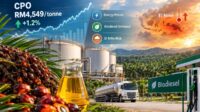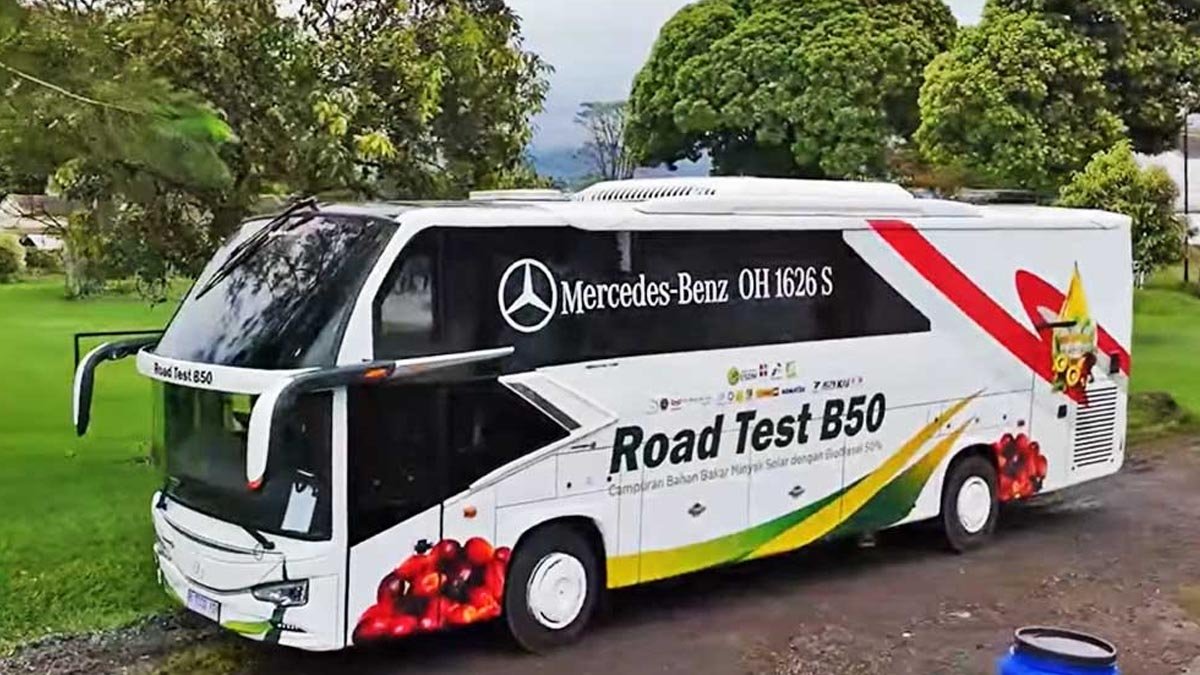
GAPKI says Indonesia’s biodiesel mandate is reshaping global palm oil fundamentals by diverting more crude palm oil to domestic energy use, providing structural support for prices despite rising production.
PALMOILMAGAZINE, Jakarta, Indonesia — Indonesia’s biodiesel program has evolved into one of the most influential drivers of global palm oil prices, fundamentally changing market dynamics by absorbing larger volumes of crude palm oil (CPO) for domestic energy consumption, according to the Indonesian Palm Oil Association (GAPKI).
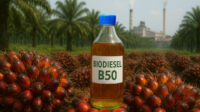
Fadhil Hasan, Head of Foreign Affairs at GAPKI, said Indonesia’s biodiesel policy has become a new price anchor for the global palm oil market. As the world’s largest palm oil producer, every increase in the country’s biodiesel blending mandate—from the current B40 program toward the planned B45 and eventually B50—reduces export availability by channeling more CPO into domestic biofuel production.
Also Read: Indonesia’s KPBN Inacom CPO Price Rises to IDR 15,800/kg as Malaysian Palm Oil Futures Rebound
Although the government has decided to maintain the biodiesel mandate at B40 this year, market expectations surrounding future blending increases continue to provide underlying support for palm oil prices.
“The biodiesel mandate directly diverts palm oil from export markets to the energy sector, significantly affecting global inventories and establishing a stronger floor for CPO prices,” Fadhil said.
The policy means that even if production continues to increase, exportable supplies may not expand at the same pace, creating structural support for international prices.
Also Read: Pakistan’s Palm Oil Imports Hit Record 3.48 Million Tons in FY2026 Despite Higher Tax Burden
Supply Growth Faces Structural Constraints
While global palm oil production is expected to rise, Fadhil noted that supply growth remains subject to considerable uncertainty.
Weather continues to be one of the most critical variables. A prolonged La Niña pattern, for example, could bring excessive rainfall that disrupts harvesting activities and reduces productivity.
Malaysia, the world’s second-largest palm oil producer, also continues to face structural challenges, including ongoing replanting programs, ageing plantations, and labor shortages that limit production growth.
Also Read: Indonesia’s Palm Oil Export Policy Spurs India’s Push for Edible Oil Self-Sufficiency
In Indonesia, meanwhile, land governance reforms, stricter plantation oversight, and evolving domestic policies could also influence production trends.
As a result, global palm oil supply is expected to continue expanding, but at a relatively measured pace.
With production growing moderately while domestic biodiesel consumption continues to increase, CPO prices are likely to remain well supported, although market volatility is expected to persist.
Also Read: Industry and Public Accountability in Efforts to Mitigate Forest and Land Fires
Prices Expected to Stay Elevated in 2026
Historically, palm oil prices remained at relatively high levels throughout 2025. The average CPO futures price on the Bursa Malaysia Derivatives Exchange reached RM4,285 per metric ton, slightly below the RM4,372 average recorded in 2024.
In Indonesia, the average KPBN Inacom reference price also eased modestly to the equivalent of RM3,708 per metric ton, compared with RM3,815 a year earlier.
Between September 2024 and March 2025, palm oil briefly traded at a premium to competing vegetable oils—particularly soybean oil—marking an unusual period when CPO became the highest-priced major edible oil.
Also Read: Malaysia CPO Futures Rebound to RM4,660 on Stronger Vegetable Oils, Crude Oil Recovery
That premium, however, proved temporary. Beginning in the second quarter of 2025, palm oil prices corrected and returned to more competitive levels relative to soybean oil, rapeseed oil, and sunflower oil.
According to Fadhil, the adjustment reflects palm oil’s traditional market position—not necessarily as the cheapest vegetable oil, but as the most cost-efficient option due to its superior yield and competitive pricing.
Looking ahead, GAPKI expects CPO prices to remain relatively strong in 2026, although below the average levels seen in 2025.
Also Read: GAPKI: Indonesia’s Palm Oil Output Slips in May 2026, but CPO Stocks Rise to 3.04 Million Tons
During the first half of the year, prices are forecast to range between RM4,100 and RM4,400 per metric ton, supported by seasonally lower production, post-year-end inventory adjustments, and steady biodiesel demand.
In the second half, prices are projected to moderate to around RM4,000–RM4,300 per metric ton as seasonal output increases and competition from soybean, sunflower, and other vegetable oils intensifies. (P2)