PALMOILMAGAZINE, JAKARTA – Crude palm oil (CPO) futures on the Bursa Malaysia Derivatives Exchange closed lower on Thursday (June 4, 2026), pressured by declining global soybean oil prices and weaker Malaysian palm oil export performance throughout May.
Negative sentiment across the global vegetable oils market triggered selling pressure in palm oil futures, as traders continued to assess sluggish export demand from Malaysia. Market participants cited weaker overseas shipments as a key factor weighing on palm oil prices.
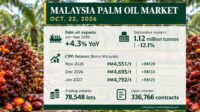
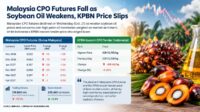
According to Bernama, the June 2026 CPO contract fell RM74 to close at RM4,531 per tonne, while the July 2026 contract declined RM72 to RM4,566 per tonne.
Also Read: DPR Calls for Transition Period Before Full Rollout of Palm Oil Export Reform
Losses extended across the forward months. The August 2026 contract dropped RM76 to RM4,601 per tonne, while the September 2026 contract also fell RM76 to RM4,629 per tonne. The October 2026 contract eased RM77 to RM4,657 per tonne, and the November 2026 contract lost RM75 to settle at RM4,686 per tonne.
Trading activity moderated during the session, with volume declining to 95,888 lots from 104,077 lots recorded previously. Despite the lower turnover, investor interest in palm oil futures remained evident as open interest increased to 298,582 contracts from 289,868 contracts in the previous session.
In the physical market, spot CPO prices for June delivery in Southern Malaysia also weakened, falling RM90 to RM4,550 per tonne in line with the decline seen in the futures market.
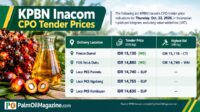
In contrast to the weakness in Malaysia, Indonesia’s domestic palm oil market posted gains. Based on the latest tender conducted by PT Kharisma Pemasaran Bersama Nusantara (KPBN), the domestic CPO reference price was set at Rp15,075 per kilogram on Thursday.
The price represented an increase of Rp50 per kilogram, or approximately 0.33%, compared with Rp15,025 per kilogram recorded on Wednesday. The increase suggests that domestic demand conditions remain supportive despite softer sentiment in the global market.
Also Read: Indonesia Warns Palm Oil Mills Over FFB Underpricing, Threatens License Revocations
Industry participants are now closely monitoring Malaysia’s export performance, movements in soybean oil prices, and demand trends from key importing countries, all of which are expected to influence the direction of global palm oil prices in the coming weeks. (P3)