PALMOILMAGAZINE, JAKARTA — Indonesia is positioning itself as a potential fertilizer exporter to India, leveraging a strong domestic surplus despite ongoing global supply chain disruptions driven by geopolitical tensions.
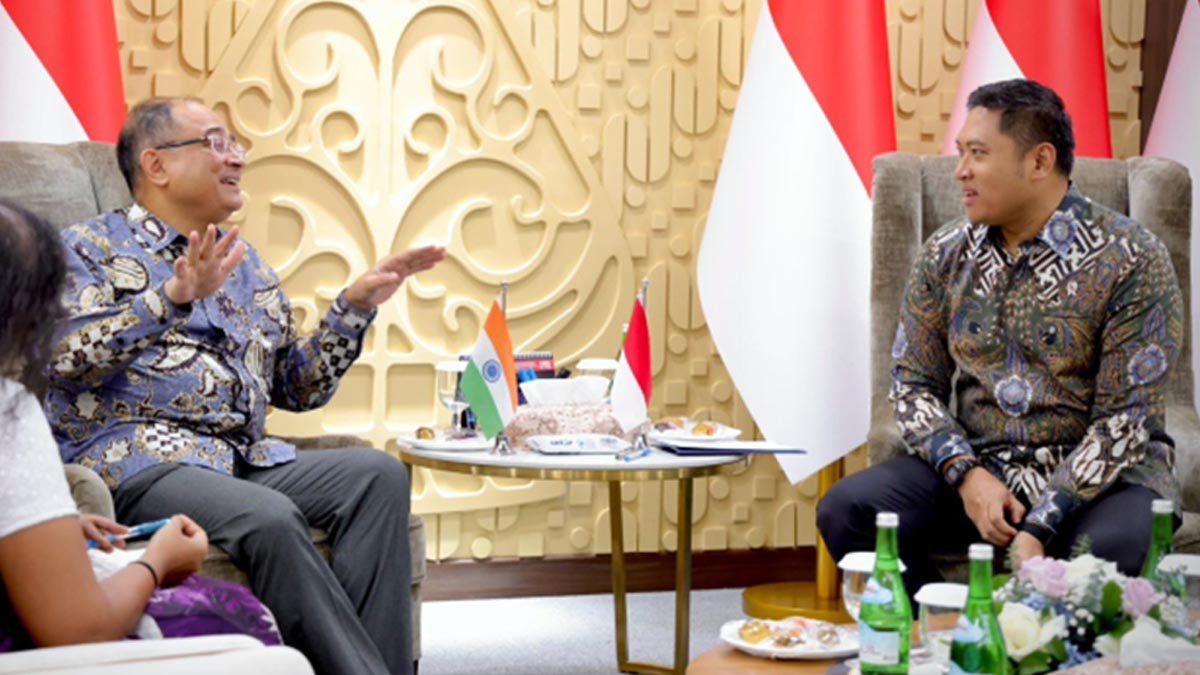
The opportunity emerged following a meeting between Vice Minister of Agriculture Sudaryono, Indian Ambassador to Indonesia Sandeep Chakravorty, and executives from Pupuk Indonesia Holding Company (PIHC) at the Ministry of Agriculture in Jakarta.
Sudaryono emphasized that Indonesia’s fertilizer resilience remains intact even as global markets face uncertainty. He assured that domestic supply for farmers is secure and unaffected by external pressures.
Also Read: Australia Eyes Indonesian Urea Imports, Government Prioritizes Domestic Supply
“This proves that we have fertilizer resilience amid this war situation; our fertilizer supply is robust. I want to assure all farmers in Indonesia that we have sufficient fertilizer and that it is not affected by the war, in fact, we have a surplus,” he said, as quoted by Palmoilmagazine.com from the Ministry of Agriculture’s website on Monday (April 20).
Indonesia’s robust position is underpinned by its large production capacity. PT Pupuk Indonesia (Persero) currently produces around 14.65 million tons annually, including 9.36 million tons of urea, 4.52 million tons of NPK, 750,000 tons of ZA, and 20,000 tons of ZK.
Based on current calculations, the country has an estimated surplus of about 1.5 million tons that could be allocated for export. However, the government maintains that domestic needs remain the top priority.
Also Read: Indonesia Accelerates B50 and E20 Rollout to Strengthen Energy Independence
“Indonesia will always prioritize domestic fertilizer demand. After careful calculation, we have an excess of around 1.5 million tons that can be exported,” Sudaryono explained.
India has emerged as one of the key countries expressing interest, with the potential trade supported by differences in planting seasons between the two nations—allowing exports without disrupting local supply.
“In principle, Indonesia is ready to export urea to India. The difference in planting seasons ensures domestic supply remains secure,” he added.
Also Read: GAPKI Pushes for Palm Oil Industry Synergy Through the 6th Andalas Forum
Ambassador Chakravorty welcomed the prospect, noting India’s readiness to import fertilizer through a government-to-government (G2G) scheme, provided Indonesia’s domestic requirements are fully met.
“There is demand from India to import fertilizer from Indonesia. As clearly stated, exports will only proceed after domestic needs are fulfilled. If there is surplus, we would be happy to procure it through a G2G mechanism,” he said.
Meanwhile, PIHC President Director Rahmad Pribadi stressed that any export policy would be carefully calibrated around Indonesia’s planting cycles.
Also Read: Andalas Forum VI: ISPO Gains Momentum, Indonesia Targets Global Market Trust
“We export only when domestic demand is fulfilled. While there is a national surplus, we must consider planting seasons. Exports will not take place during peak domestic demand periods,” he said.
He added that Indonesia’s position reflects growing resilience amid global volatility, allowing the country to support regional supply stability.
“This demonstrates Indonesia’s resilience. In the fertilizer industry, we are not vulnerable—in fact, we are in a position to assist countries in need,” Rahmad noted.
Also Read: SPKS Calls for Fairer Palm Oil Revenue Share as Regions Receive Minimal Returns
National fertilizer stocks remain ample, supported by steady production. Current reserves stand at around 1.2 million tons, with daily output reaching approximately 25,000 tons of urea and 15,000 tons of NPK.
With this strong supply base, Indonesia is not only safeguarding its domestic food security but also stepping into a broader role as a strategic partner in supporting global agricultural stability.
Previously, Sudaryono also met with Australian Ambassador to Indonesia Roderick Bruce Brazier to explore similar cooperation, including potential urea exports. At the same time, Indonesia continues to import key raw materials such as phosphate and DAP from Australia, highlighting a reciprocal trade relationship.
“This is a mutually beneficial relationship. We depend on each other. The key is to secure national interests while maintaining healthy trade relations,” Sudaryono concluded. (P3)