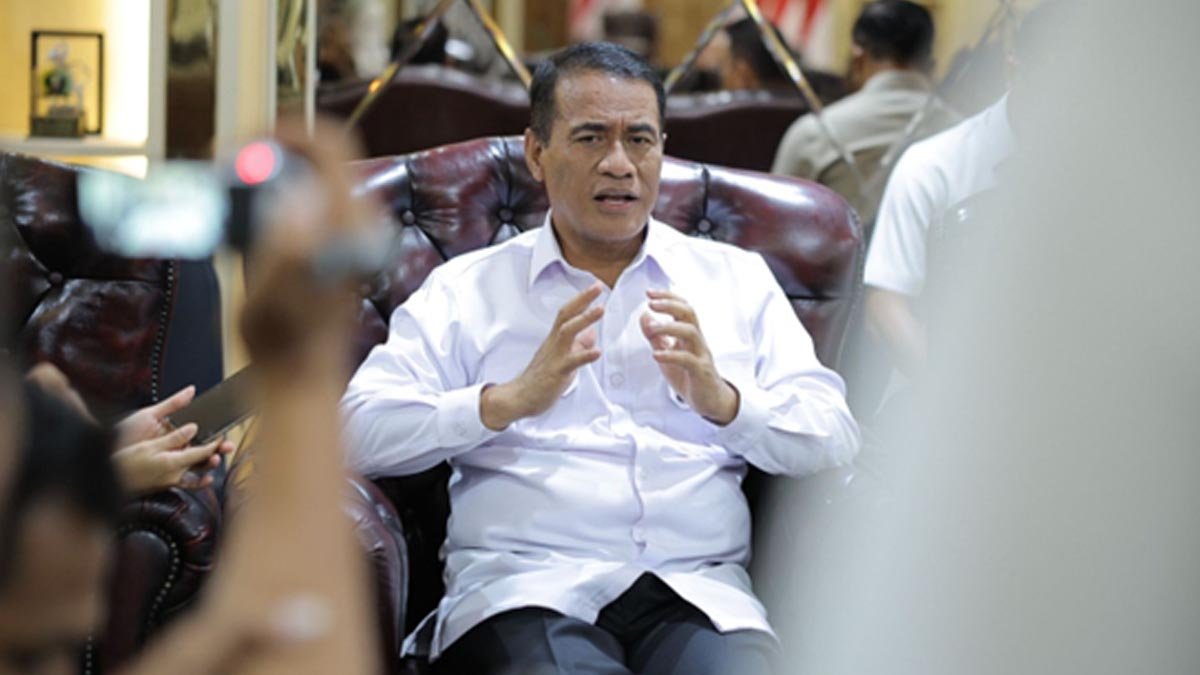
PALMOILMAGAZINE, JAKARTA — Minister of Agriculture Andi Amran Sulaiman has reiterated that Indonesia’s B50 biodiesel program is not responsible for rising cooking oil prices or supply shortages in the domestic market. His statement is supported by national palm oil production and supply data, which remain in a surplus condition.
According to Amran, the allocation of crude palm oil (CPO) for bioenergy does not reduce the availability of raw materials for cooking oil, as it is sourced from export volumes rather than domestic supply.
“B50 is not taken from cooking oil supply, but from exports. Exports have increased by 6 million tons, so there is no correlation,” he said, citing the Ministry of Agriculture on Sunday (April 19).
Also Read: Australia Eyes Indonesian Urea Imports, Government Prioritizes Domestic Supply
He further explained that Indonesia, the world’s largest CPO producer, controls around 60% of the global market, with initial export volumes of approximately 26 million tons before part of it was redirected for domestic energy needs.
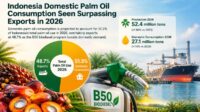
Of this amount, around 5.3 million tons are allocated to biofuel under the B50 program to reduce diesel imports, while also contributing to foreign exchange savings and strengthening national energy independence.
Meanwhile, higher commodity prices have encouraged farmers to improve productivity through more intensive crop management, resulting in an estimated 6 million ton increase in national output.
Also Read: Agrinas Palma Nusantara Partners KPBN to Boost CPO Market Efficiency
This surge in production has pushed exports up to approximately 32 million tons, underscoring that the diversion of CPO for biofuel has not weakened export performance or overall supply availability.
Amran stressed that production and export figures clearly show Indonesia’s ability to meet domestic demand while expanding exports, making concerns about supply disruption unfounded.
“Our exports have increased from 26 million to 32 million tons. That means raw materials are abundant. Prices should not be rising,” he said.
Also Read: GAPKI Pushes for Palm Oil Industry Synergy Through the 6th Andalas Forum
He added that from a production perspective, reallocating a portion of CPO for B50 does not reduce supply, as the increase in output exceeds the volume diverted.
“From 26 million tons of exports, we allocate 5 million, leaving 21 million. Then production increases by 6 million, bringing it to 27 million. Which is higher—27 or 26? It’s 27. So it is illogical for prices to increase,” he explained.
Amran described the rise in cooking oil prices amid ample supply as an anomaly that does not reflect market fundamentals.
Also Read: Andalas Forum VI: ISPO Gains Momentum, Indonesia Targets Global Market Trust
“If prices continue to rise while production increases by 6 million tons, it simply doesn’t make sense,” he stated.
The government has pledged to strengthen distribution oversight to ensure price stability and affordability for consumers. It also confirmed that the retail price ceiling (HET) for cooking oil will remain unchanged.
Additionally, the role of state-owned enterprises will be reinforced in distribution to help maintain stable prices at the consumer level.
Also Read: SPKS Calls for Fairer Palm Oil Revenue Share as Regions Receive Minimal Returns
With solid production growth and secure supply, the government maintains that the B50 program not only safeguards cooking oil availability but also reinforces Indonesia’s energy security and overall economic resilience. (P3)