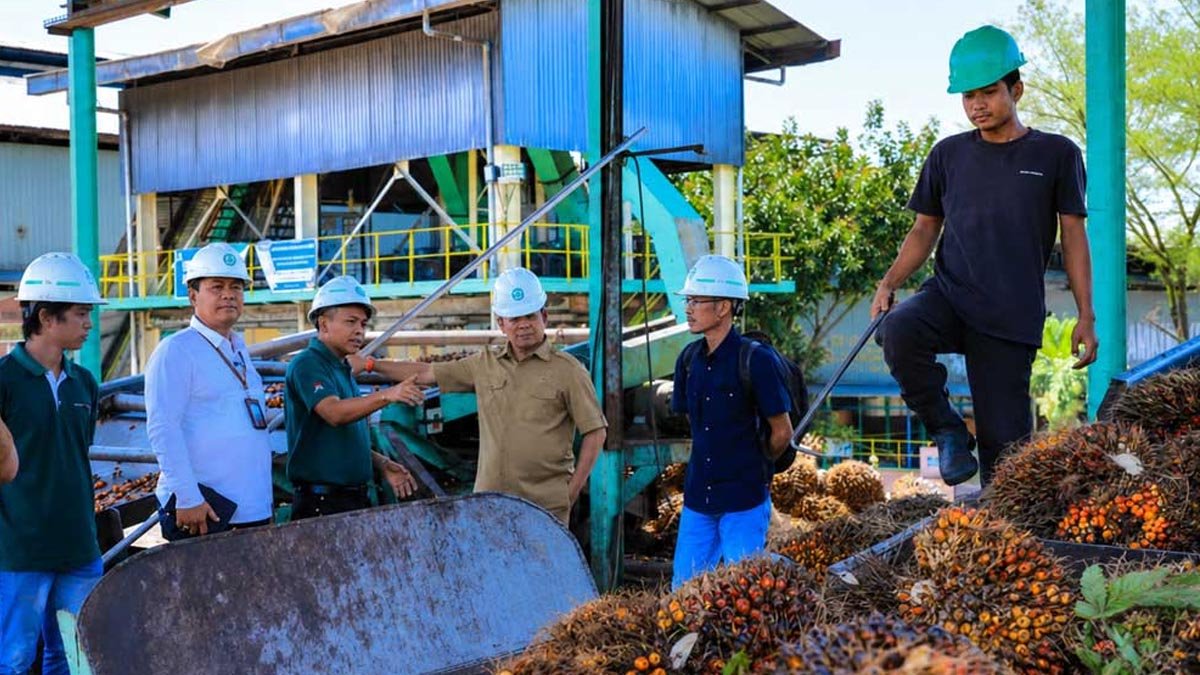
PALMOILMAGAZINE, ROKAN HULU – Rokan Hulu (Rohul) Deputy Regent H. Syafaruddin Poti conducted surprise inspections at several palm oil mills (PKS) across the regency on Tuesday in response to complaints from smallholders over Fresh Fruit Bunches (FFB) prices that remain below the levels established by the Riau Provincial Government.
The inspection team included Rohul Livestock and Plantation Agency Head CH Agung Nugroho, Acting Environment Agency Head Muzayyinul Arifin, and Trade and Industry Office Metrology Division Head Nasukha. The delegation visited three mills: PT Sumatera Karya Agro (SKA), PT Sawit Asahan Indah (SAI) in Rambah Samo District, and PT Rohul Sawit Industri (RSI) in Ujung Batu District.
Company representatives, including public relations officers, mill managers, and FFB procurement personnel, received the government delegation during the visits.
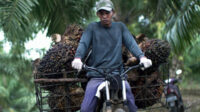
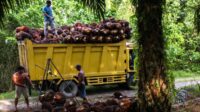
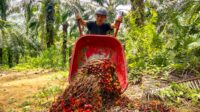
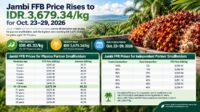
Field observations revealed ongoing disparities in FFB purchasing prices, particularly for independent smallholders. While prices paid to plasma farmers were generally aligned with government benchmarks, independent growers continued to receive lower rates.
At PT SKA, FFB was purchased at approximately IDR 3,100 per kilogram, while PT SAI offered only IDR 2,840 per kilogram.
“We went directly to the field to verify the actual conditions. Our monitoring confirms that some mills are still purchasing FFB below government-established prices. This is a serious concern because it directly affects the livelihoods and welfare of our palm oil farmers,” Syafaruddin Poti said as quoted by Palmoilmagazine.com from the Rohul Regency Government on Monday (June 7, 2026)..
Also Read: Minister Amran Warns Up to 300 Palm Oil Firms Over Depressed FFB Prices Despite Rising CPO Market
Rohul Pushes for Formal Partnerships
As part of a long-term solution, the Deputy Regent instructed all palm oil mills, particularly those without plantation estates of their own, to establish formal partnerships with independent farmers through legally recognized institutions such as farmer groups (Koptan), farmer group associations (Gapoktan), and village cooperatives (KUD).
According to Syafaruddin, these partnerships should be formalized through binding Memorandums of Understanding (MoUs), including clauses requiring mills to purchase FFB in accordance with prices determined by the Riau Provincial Plantation Agency under Governor Regulation No. 77 of 2020.
Also Read: Indonesia’s palm oil export reform risks leaving sustainability outside the gate
“If companies partner with farmers through Koptan, Gapoktan, or KUD, there must be clear and binding agreements. One of the key provisions should require FFB purchases to follow government pricing guidelines,” he said.
He further emphasized that partnerships should extend beyond simple buying-and-selling transactions. Palm oil companies should also actively support farmers through training, technical assistance, and productivity improvement programs.
“Partnerships are not only about purchasing farmers’ fruit. Companies should help farmers improve cultivation practices, plantation management, and productivity. Better-quality fruit benefits both sides because mills can pay better prices while securing higher-quality raw materials,” he added.
Also Read: SPKS Aceh Backs Police Crackdown on Palm Oil Mills Buying FFB Below Official Prices
Authorities Warn Middlemen Against Price Suppression
Syafaruddin also cautioned traders, collectors, and loading ramp operators against taking advantage of market conditions to push down prices paid to independent farmers.
“We urge traders and loading ramp operators not to exploit the situation by suppressing smallholder FFB prices. We want all stakeholders to help maintain price stability and protect farmers’ incomes in Rokan Hulu,” he said.
Also Read: Minister Amran Pushes for Higher Palm Oil FFB Prices, Vows Direct Oversight of Industry Compliance
Following the inspections, the Rokan Hulu administration plans to summon management representatives from all palm oil mills operating in the regency. The meeting will focus on evaluating FFB pricing practices and accelerating partnership agreements between mills and farmer organizations to create a more transparent and sustainable supply chain.
Meanwhile, the Rohul Livestock and Plantation Agency announced it would intensify monitoring of FFB prices across all mills through daily surveillance. The collected data will be reported regularly to the Riau Provincial Plantation Agency and the Directorate General of Plantations at Indonesia’s Ministry of Agriculture to support policy evaluation and future regulatory measures. (P2)