PALMOILMAGAZINE, JAKARTA – Indonesia’s Plantation Fund Management Agency (BPDP) has reaffirmed its long-term commitment to strengthening human capital in the palm oil sector, emphasizing that skilled smallholders are essential to improving productivity and ensuring the industry’s long-term sustainability. At the same time, the agency highlighted the implementation of the B50 biodiesel mandate as a major milestone in enhancing national energy security while significantly reducing carbon emissions.
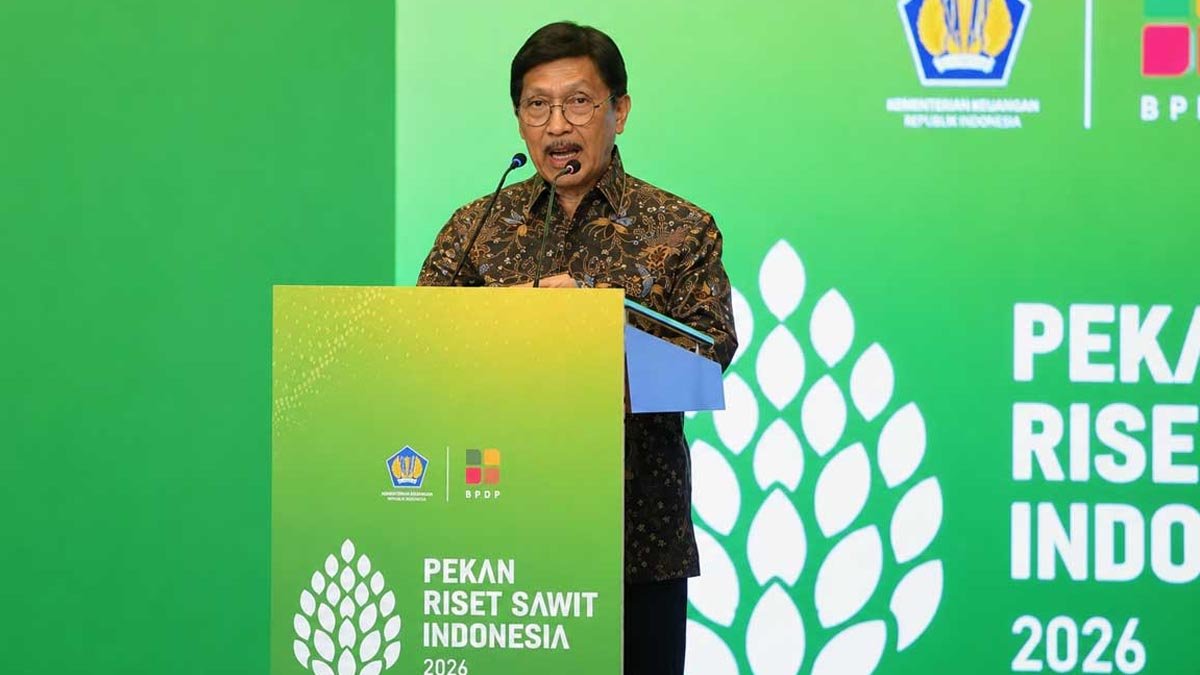
The remarks were delivered by BPDP President Director Eddy Abdurrachman during a press conference on the sidelines of the Indonesian Palm Oil Research Week (PERISAI) 2026 in Jakarta on Monday (July 20).
According to Eddy, BPDP continues to allocate funding each year for programs that improve the capacity of independent oil palm smallholders through education, technical training, and field assistance. These initiatives are designed to help farmers adopt Good Agricultural Practices (GAP) and improve plantation management.
“Every year we continue to invest in improving human resources through education and training programs so that smallholders can manage their plantations using sustainable and good agricultural practices,” Eddy said to Palmoilmagazine.com.
He stressed that improving farmers’ skills has become increasingly important as global markets continue to demand higher sustainability standards from palm oil producers.
Beyond human resource development, BPDP is also closely monitoring the nationwide transition from the B40 biodiesel blend to the B50 mandate.
Eddy explained that the B50 program is fundamentally ready for implementation. Although the transition period continues due to the remaining distribution of B40 biodiesel, extensive testing conducted by the government and industry stakeholders has delivered highly encouraging results.
“The preparations are essentially complete. There is still a transition period from B40 to B50, but the performance demonstrated through joint testing has been very satisfactory,” he said.
He described the successful rollout of B50 as a testament to Indonesia’s innovation in developing renewable energy based on palm oil.
“B50 is an achievement that Indonesians should be proud of because it can replace up to 50 percent of fossil fuel use in the targeted sectors,” Eddy added.
According to BPDP, the benefits of the biodiesel policy extend well beyond energy security. Biodiesel consumption is expected to reach nearly 18 million kiloliters this year and increase to approximately 21 million kiloliters next year.
The higher biodiesel utilization is projected to reduce carbon dioxide emissions by around 44 million tons, reinforcing the palm oil sector’s contribution to Indonesia’s national climate commitments.
Also Read: Indonesian Lawmaker Urges Stable CPO Supply as B50 Biodiesel Boosts Palm Oil Downstream Industry
Eddy also emphasized that Indonesia’s palm oil industry continues to strengthen its sustainability credentials by implementing standards and practices that balance economic growth with social responsibility and environmental protection.
While acknowledging that the industry frequently faces international criticism over sustainability and social issues, he argued that ongoing government reforms and stricter governance demonstrate Indonesia’s commitment to responsible palm oil production.
“This is clear evidence that Indonesia’s palm oil industry is managed sustainably by balancing economic, social, and environmental interests,” he said.
Also Read: B50 Biodiesel Mandate Requires a Cautious Approach
Looking ahead, BPDP pledged to deepen collaboration with government ministries, research institutions, universities, private companies, and smallholders to ensure that human capital development, technological innovation, and biodiesel implementation continue to reinforce the global competitiveness of Indonesia’s palm oil industry. (P2)