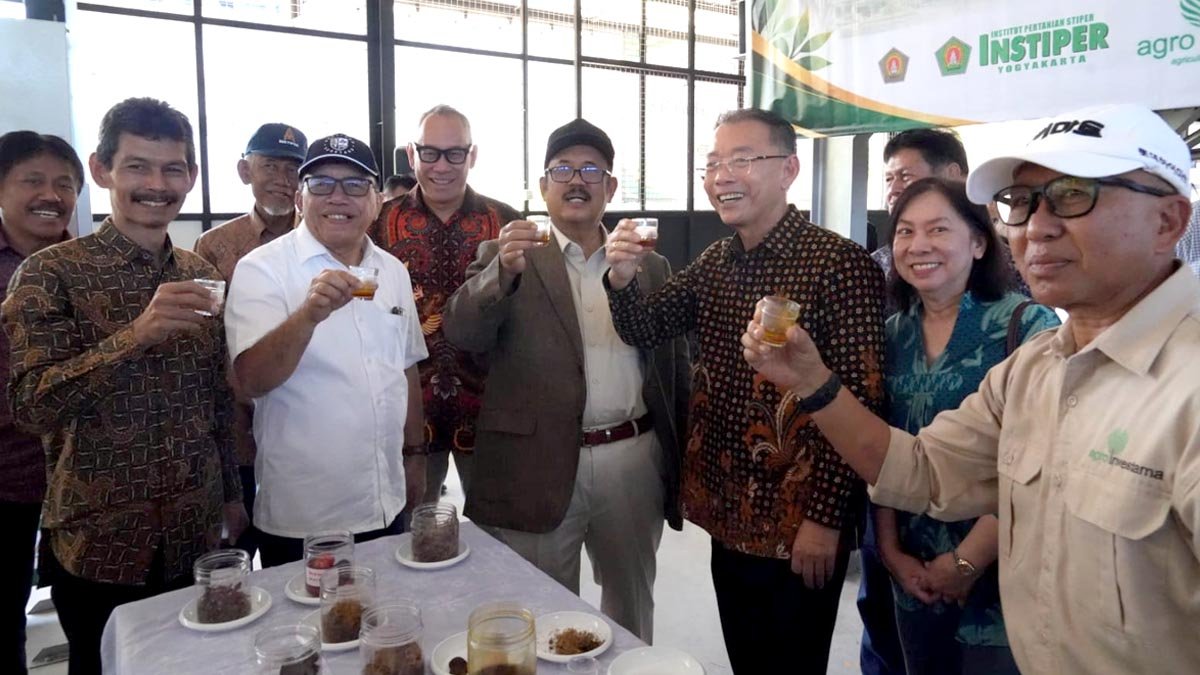
PPN Minister Rachmat Pambudy says SPOT technology at INSTIPER could offer a new model for palm oil processing with lower water and energy use and reduced carbon emissions.
PALMOILMAGAZINE, YOGYAKARTA, INDONESIA — Indonesia is looking to green processing technology to strengthen its palm oil downstreaming strategy, with the government emphasizing that higher-value products must be supported by a more productive, efficient, and sustainable upstream sector.
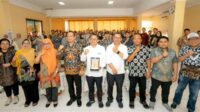
The issue came into focus during a visit by Minister of National Development Planning (PPN)/Head of the National Development Planning Agency (Bappenas) Rachmat Pambudy to the SPOT (Steamless Palm Oil Technology) palm oil processing plant at the Indonesian Stiper Institute (INSTIPER) Yogyakarta on Saturday (Sept. 5, 2026).
Also Read: INSTIPER and Industry Begin Construction of SPOT Palm Oil Facility
Rachmat said the technology offered a potential answer to one of the key challenges facing Indonesia’s palm oil downstreaming agenda.
“I have been given this task by the President for several months, but I hadn’t found the answer. Today, I found the answer,” Rachmat said in a statement received by PalmOilMagazine on Tuesday (Sept. 8, 2026).
The SPOT Teaching Plant is a pilot project developed through a collaboration between the Yogyakarta Plantation Cadre Education Foundation (YPKPY), which oversees INSTIPER Yogyakarta and AKPY, and PT Nusantara Green Energy (NGE).
Also Read: Airlangga: Research and Downstream Innovation Will Shape the Future of Indonesia’s Palm Oil Industry
Development of the technology began in 2022 through a palm oil research grant funded by the Plantation Fund Management Agency (BPDP). The project focuses on improving processing efficiency while reducing resource use and environmental impacts.
Downstreaming Starts at the Plantation
Rachmat stressed that downstreaming cannot be separated from improvements in the upstream sector.
“The essence is that Bappenas has been asked to handle downstreaming. Palm oil downstreaming. Palm oil downstreaming can only happen if the on-farm sector is in order, if the upstream sector is in order,” he said.
Also Read: Indonesia’s Non-Oil and Gas Exports Rise 6.84% in July, Vegetable Oils Lead Trade Surplus
For Indonesia, which remains one of the world’s largest palm oil producers, the challenge is increasingly shifting from simply producing more palm oil to creating greater value from the commodity while maintaining competitiveness and meeting sustainability expectations.
Rachmat said technologies such as SPOT could play a role in that transition by reducing the energy and water requirements of palm oil processing while lowering its environmental footprint.
Processing Without Sterilization
Petrus Tjandra, representing PT NGE, said SPOT differs from conventional palm oil mills in several key aspects.
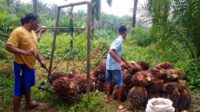
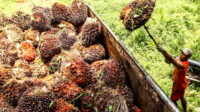
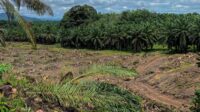
The system processes loose fruits rather than whole fresh fruit bunches (FFB). Empty fruit bunches are left in the plantation and can be used as a source of organic material.
Also Read: The Limits of the Market: Rethinking Palm Oil Sustainability Beyond Certification
“The SPOT plant has many advantages compared with current palm oil processing plants. At this plant, only loose fruits enter the facility, while the empty fruit bunches are left in the plantation as a source of organic fertilizer,” Petrus said.
Processing loose fruits reduces the energy required by the plant, while SPOT also eliminates the conventional sterilizer station used to sterilize FFB with high-pressure steam.
“The absence of a sterilization station means the plant has low water consumption and does not produce palm oil mill effluent. With no liquid waste, the plant can also be considered a low-carbon-emission facility,” Petrus said.
Also Read: East Kutai Accelerates Palm Oil Replanting, 1,900 Hectares Target ISPO Certification
The technology therefore targets three key areas increasingly important to the palm oil industry: energy efficiency, water conservation, and emissions reduction.
Beyond Conventional Palm Oil
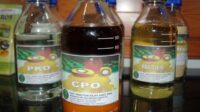
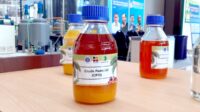
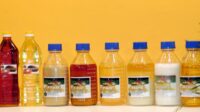
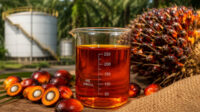
Petrus also highlighted the nutritional characteristics of oil produced through the SPOT process, saying it contains vitamin A, vitamin E, and antioxidants.
He suggested that the oil could potentially be incorporated into food products, including instant noodle seasoning, as part of efforts to expand access to vitamin A.
Also Read: Agrinas Palma Nusantara Launches Nutrition Program, Provides Education Support in Rokan Hulu
“Indonesia currently still imports vitamin A to meet national needs. If this palm oil is incorporated into instant noodle seasoning, for example, vitamin A could reach communities across Indonesia, including remote areas,” Petrus said.
The claim points to a broader opportunity for palm oil downstreaming: moving beyond conventional oleochemical and food applications toward products that combine economic value with nutritional benefits.
A New Benchmark for Green Palm Oil?
Rachmat said the SPOT technology had prompted him to promote a new concept for palm oil based on resource efficiency and a lower environmental footprint.
“Today I will declare palm oil that has low carbon emissions, low energy consumption, low water consumption, and high nutritional content. Low water consumption, low energy consumption, low carbon emission, and high nutrient,” he said.
Also Read: INSTIPER Launches National Coffee School, Integrating Education from Farm to Coffee Business
The concept could add a new dimension to Indonesia’s downstreaming strategy. Rather than measuring downstreaming solely by the value of products generated from palm oil, the government is also looking at how those products are produced.
That means reducing energy and water consumption, minimizing waste, lowering emissions, and maximizing the utilization of palm oil’s nutritional and industrial potential.
The SPOT Teaching Plant at INSTIPER Yogyakarta serves as a platform linking education, research, technology development, and industrial application. Its development through collaboration between YPKPY and PT NGE also illustrates the potential role of research-based innovation in supporting Indonesia’s palm oil industry.
If successfully scaled, technologies such as SPOT could contribute to a new generation of palm oil processing facilities that use fewer resources, generate lower emissions, and produce higher-value products.
For Indonesia, the opportunity is significant: making palm oil downstreaming not only about adding value, but also about producing that value with a smaller environmental footprint. (P3)