“Indonesia’s palm oil sector could become a major source of sustainable aviation fuel, but industry experts caution that impressive estimates of biological resources must not be confused with fuel that is already traceable, certifiable and commercially deliverable.”
PALMOILMAGAZINE, JAKARTA – Indonesia’s vast palm oil industry produces a large volume of residues that could support the development of sustainable aviation fuel, or SAF. Yet the central message emerging from the Sustainable Aviation Fuel and Feedstock Reality Check session at the Agriwaste to Value Conference, organized by Centre for Management Technology, in Jakarta, was clear: the size of a resource on paper is only the beginning of the story.
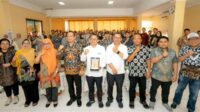
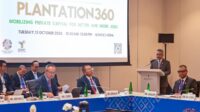
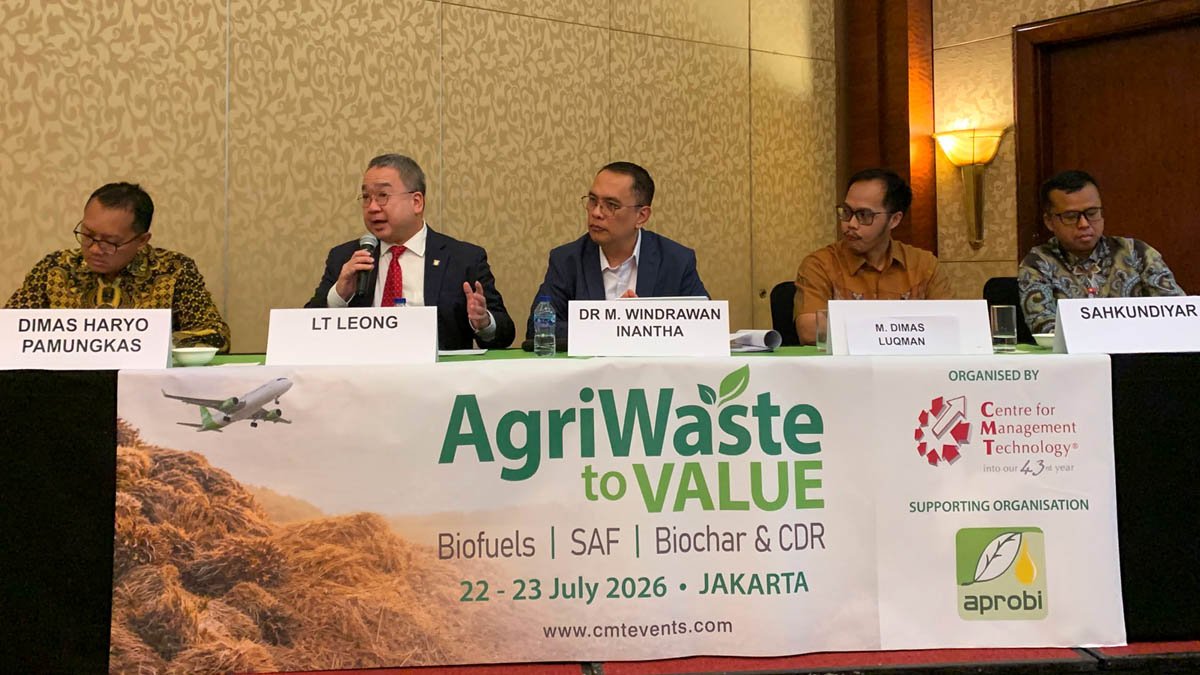
In a statement received by PalmOilMagazine.com on Saturday, July 25. The session, held at the JW Marriott Hotel Jakarta and chaired by sustainable development specialist Dr. M. Windrawan Inantha, examined whether Asia’s agricultural residues can genuinely power aviation and how the region can move beyond its current dependence on used cooking oil.
Also Read: ICAO Officially Approves POME as a Certified Feedstock for Sustainable Aviation Fuel
“Indonesia is not short of biomass. The real test is whether we can turn scattered residues into a consistent, credible and commercially reliable supply,” Windrawan said. “For SAF, feedstock potential must be translated into traceability, certification, logistics, technology readiness and long-term offtake. Otherwise, the numbers remain impressive but theoretical.”
Data presented in the session show the enormous scale of Indonesia’s palm-based residue base. Oil palm fronds are estimated at around 208 million tonnes of dry matter annually, making them the largest plantation biomass stream. Empty fruit bunches are estimated at about 48.2 million to 55.4 million tonnes, while mesocarp fibre reaches approximately 24.1 million to 36.1 million tonnes. Palm kernel shells, already widely used and exported as fuel, are estimated at 11.4 million to 16.9 million tonnes. Palm oil mill effluent, or POME, is also a major liquid resource and potential source of biogas.
Dimas Haryo Pamungkas, Senior Oil Palm Researcher at Indonesia Palm Oil Strategic Studies, or IPOSS, presented an even broader estimate of nearly 515 million tonnes of potential palm-based SAF feedstocks each year when main products, by-products, wastes and residues are considered across different technology pathways. Waste and residue streams account for approximately 88.6 per cent of that identified volume.
Also Read: Closing the Biomethane Loop: Why POME Must Become Part of Indonesia’s Energy Strategy
Pamungkas stressed that this volume should not be interpreted as immediately available supply. “Biological potential is not the same as commercial feedstock,” he said. “A feedstock must first be technically recoverable, sustainability-eligible, traceable to its point of origin and collectable at a price and scale that a SAF producer can rely on.”
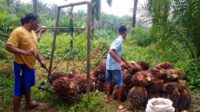
The distinction is important because many residues are dispersed across plantations and mills, vary in quality and moisture content, or already have existing uses. Empty fruit bunches, for example, are commonly returned to plantations as mulch or compost, while mesocarp fibre is often burned in mill boilers. Commercial use for SAF therefore requires a realistic assessment of competing uses, collection costs and the value of keeping nutrients or energy within existing production systems.
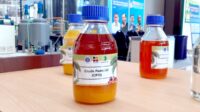
LT Leong, PMP, a sustainable aviation fuel specialist from NGen Malaysia, said the HEFA, or Hydroprocessed Esters and Fatty Acids, pathway is currently the most commercially mature technology. HEFA uses lipid-based feedstocks such as used cooking oil, animal fats and recovered oil residues. In the palm oil sector, potential inputs include oil recovered from palm oil mill effluent, oil recovered from spent bleaching earth and palm fatty acid distillate, or PFAD, provided they meet the applicable technical and sustainability requirements.
Also Read: Air New Zealand Secures Largest Sustainable Aviation Fuel (SAF) Supply from Neste
Leong cautioned that terminology must be precise. Liquid POME itself is not simply fed into a HEFA refinery. The potential HEFA feedstock is the oil fraction recovered from POME, while the organic portion of the effluent may be processed separately to produce biogas or biomethane.
“We must be careful not to oversimplify the innovation narrative. Each residue has its own characteristics and conversion pathway. Oil recovered from POME may have a route into HEFA, while solid palm biomass such as empty fruit bunches, fronds and other agricultural residues is more relevant to pathways such as Fischer-Tropsch after gasification,” Leong said.
The Fischer-Tropsch pathway could unlock much larger volumes of non-food material, including agricultural waste, forestry residues, palm biomass and municipal solid waste. However, it requires higher capital investment and more complex processing. Alcohol-to-Jet can use ethanol or other alcohols, while e-SAF relies on green hydrogen and captured carbon dioxide, although both cost and the availability of large-scale renewable electricity remain major constraints.
The IPOSS presentation identified aggregation as the largest practical challenge. A credible SAF supply chain requires a clearly defined feedstock, traceability to the first gathering point, protection against diversion and double counting, credible life-cycle emissions evidence, and the ability to deliver consistent volumes and specifications over time.
The presentation also highlighted oil palm trunks, which become available during replanting, as a promising but highly specific opportunity. Rather than calculating supply from the country’s entire planted area, availability must be based on the smaller area actually replanted each year. Oil palm trunk sap can potentially be processed through an alcohol-to-jet pathway, while its dry lignocellulosic biomass may be used through a Fischer-Tropsch pathway.
This could connect SAF development with Indonesia’s plantation rejuvenation agenda. However, speakers noted that the business case would depend on coordinated replanting schedules, machinery, collection hubs and fair arrangements with plantation owners and smallholders.
Also Read: From Palm Oil Waste to Energy: The Problem Isn’t Technology, but the Business Model
The session concluded that Indonesia has the resource base to become an important SAF feedstock hub, but commercial success will depend less on headline estimates and more on the credibility of each supply chain. The next phase will require demonstration projects that connect actual mills and plantations to conversion facilities, while measuring costs, emissions, traceability and social benefits. (P3)