PALMOILMAGAZINE, JAKARTA – Indonesian President Prabowo Subianto has raised concerns over significant foreign exchange leakages from the country’s natural resource exports, including palm oil, due to practices such as under-invoicing, transfer pricing, and inaccurate export volume reporting.
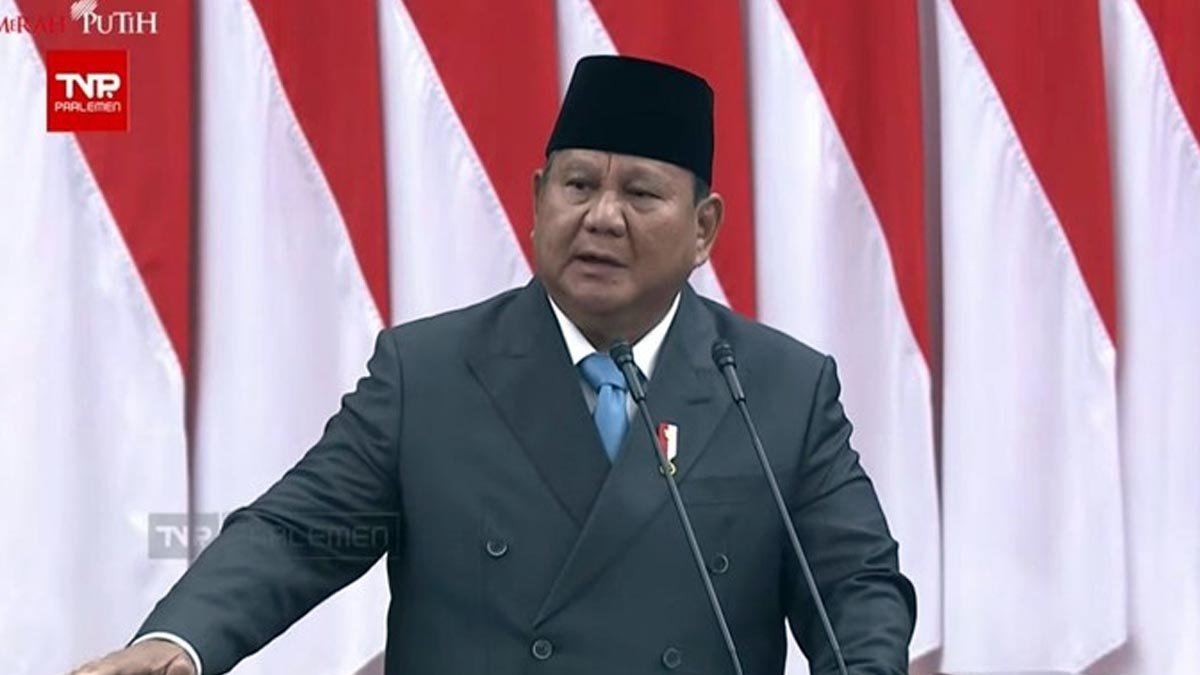
Speaking during the 19th Plenary Session of the House of Representatives on the 2027 Macroeconomic Framework (KEM) and Fiscal Policy Guidelines (PPKF) on Wednesday (20/5/2026), Prabowo said Indonesia has consistently recorded trade surpluses for decades, yet much of the wealth generated has not fully benefited the domestic economy.
“Our exports have always exceeded imports. Logically, this country should never experience an economic crisis. But instead, much of our wealth continues to flow overseas,” Prabowo said, as monitored by Palmoilmagazine.com.
The President cited United Nations data showing that Indonesia accumulated around US$436 billion in trade surpluses over the past 22 years, while capital outflows reached approximately US$343 billion during the same period.
According to Prabowo, one of the main causes of the leakage is the practice of under-invoicing, where export values are deliberately reported below actual market prices. He explained that the scheme is often conducted through affiliated overseas companies, allowing commodity prices to be recorded lower than their real value.
“This happens across various commodities, including palm oil. In some cases, only 50 percent of the actual value is reported,” he stressed.
Prabowo also highlighted export volume manipulation, smuggling, and weak supervision in the natural resource trade sector. He said these practices directly undermine the government’s ability to finance development programs and improve public welfare.
As the world’s largest palm oil producer, Indonesia should have stronger sovereignty in determining the price of its strategic commodities, he added.
“I do not want our palm oil prices to be determined by other nations. We must determine our own prices,” Prabowo said.
Government Preparing New Export Governance Rules
As part of the reform effort, the government plans to issue a new Government Regulation on the Export Governance of Natural Resource Commodities. The policy will initially target strategic commodities such as palm oil, coal, and selected minerals.
Under the proposed system, exports would be conducted through government-appointed state-owned enterprises acting as single exporters. Revenue from exports would then be distributed to relevant commodity businesses and producers.
Prabowo said the policy is intended to strengthen oversight of export trade while reducing under-invoicing, transfer pricing, and foreign exchange leakages.
“We do not want to be deceived any longer. The state must know in detail the value of the natural resources being sold abroad,” he said.
According to the President, several major resource-producing countries — including Saudi Arabia, Russia, Algeria, Malaysia, and Vietnam — have already implemented stricter controls over strategic commodity trade systems.
Prabowo emphasized that Indonesia’s natural resources must be managed in line with Article 33 of the 1945 Constitution, which mandates that national resources be utilized for the greatest prosperity of the people.
He estimated that the country could potentially recover up to US$150 billion annually by eliminating illegal practices in export trade.
“Whether we can achieve this or not depends on our courage and determination to reform governance,” Prabowo concluded. (P2)