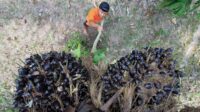
PALMOILMAGAZINE. ACEH — Indonesia’s central government has taken firm action to overhaul natural resource and forestry governance in Sumatra, following a surge in natural disasters in recent months. A number of large-scale business permits have been officially revoked after being deemed environmentally destructive and contributory to worsening hydrometeorological disasters.
Coordinating Minister for Human Development and Culture Pratikno said the policy was the result of a comprehensive evaluation of long-standing land-use practices that have proven unsustainable, particularly in disaster-prone areas.
“The central government, through the Minister of Forestry, has revoked large-scale land-use permits, including millions of hectares of oil palm plantation licenses and forest timber utilization permits,” Pratikno said in an official statement on Friday (26/12/2025).
Also Read:
He stressed that the decision was not made hastily. Authorities first conducted in-depth assessments of ecological impacts, corporate governance practices, and the extent to which these activities had contributed to environmental degradation. The review found that a number of permits had weakened environmental carrying capacity, significantly increasing the risks of flooding and landslides.
The revocations form part of a broader effort to restructure forest and land management toward a more sustainable, safety-oriented approach. The government emphasized that natural resource exploitation must not focus solely on economic gains, but must align with ecosystem protection and disaster risk reduction.
Beyond the forestry and plantation sectors, the government has also moved against mining operations deemed to pose serious environmental risks. Pratikno revealed that the Ministry of Environment has sealed several major mining companies.
“A total of five mining companies have been sealed for their potential to cause environmental damage,” he said, as quoted by Palmoilmagazine.com from Disway on Sunday (28/12/2025).
Also Read: Disasters Are Not About Commodities: Rethinking Palm Oil and Ecological Blame
The enforcement measures are intended as a strong signal that the government will no longer tolerate business practices that neglect environmental protection and public safety. The state, Pratikno said, is asserting its role to ensure economic activities do not leave long-term ecological harm.
The policy is also in line with President Prabowo Subianto’s directives on post-disaster management. The President has emphasized that recovery efforts should serve as a catalyst for comprehensive reform, rather than merely restoring physical conditions to their previous state.
“We are not just restoring conditions to how they were, but ensuring that moving forward, they become better,” Pratikno said, citing the President’s instructions. (P2)